Featured series

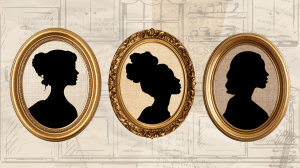
Janet Rich-Edwards.
Veasey Conway/Harvard Staff Photographer
Arts & Culture
‘New trick’ at 50: Fiction. And now, raves.
Janet Rich-Edwards on the Radcliffe moment that helped turn an epidemiologist into a novelist
The inspiration for a novel can come from anywhere. For Janet Rich-Edwards, it came from a lecture.
“Canticle,” Rich-Edwards’ debut novel, traces its origin to a presentation by fellow Radcliffe scholar Katie Bugyis on liturgical books created and used by medieval nuns. As she listened to the talk, Rich-Edwards, the 2018-2019 Helen Putnam Fellow at Radcliffe, felt a spark.
“You sort of feel a connection back through centuries,” she recalled. “As academics, we’re all book-lovers ourselves, and to be reminded how sacred books are feels a little bit like coming home.”
“You sort of feel a connection back through centuries. As academics, we’re all book-lovers ourselves, and to be reminded how sacred books are feels a little bit like coming home.”
Janet Rich-Edwards
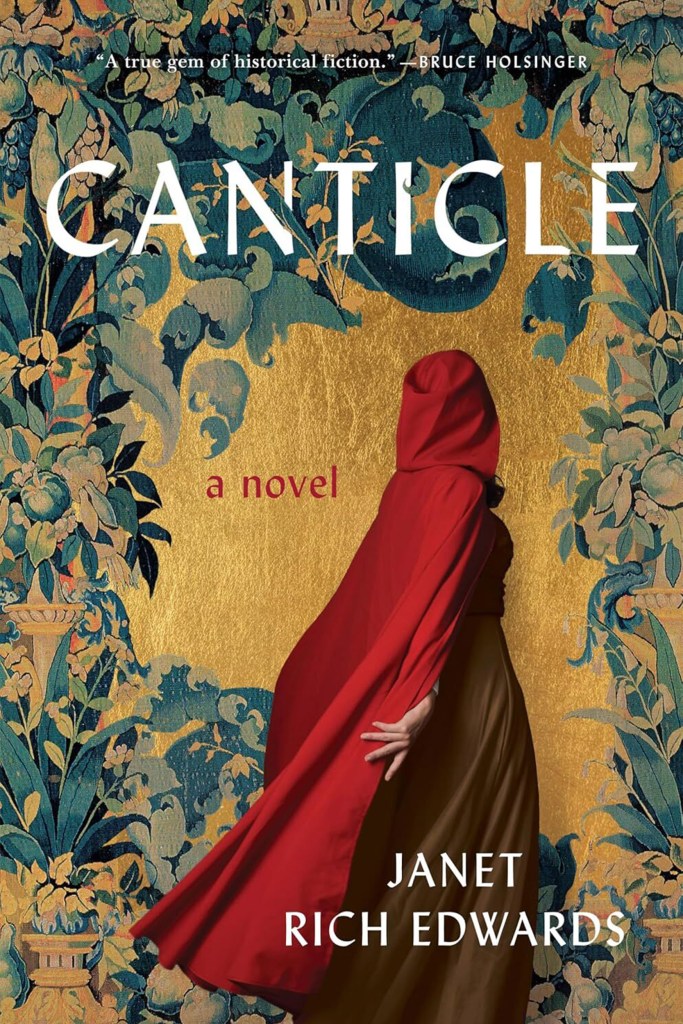
“Canticle” follows Aleys, a young woman in 13th-century Bruges who is prone to mystical visions. After fleeing an unwanted marriage, she finds herself with the beguines, a group of economically self-sufficient lay religious women who live outside the rule of the church. When Aleys begins to perform what might be miracles, everyone wants something from her, including an ambitious local bishop. The novel explores faith, doubt, and solidarity among women seeking spiritual and intellectual freedom. It has been recommended by publications ranging from The New York Times to People magazine.
Fiction might seem an unlikely pursuit for Rich-Edwards, an epidemiologist and a Harvard Medical School associate professor of medicine at Brigham and Women’s Hospital. Her own Radcliffe fellowship project focused on childhood trauma and its impact on addiction, appetite, and health. But she began writing fiction at 50 (“I’m a believer that every time you turn a decade, you ought to try a new trick,” she said) and just kept working at it.
By the time she was sitting in Bugyis’ lecture, she had a few finished manuscripts in the drawer and was looking for her next project. “I thought, ‘I would love to write about that.’” After the lecture, she approached Bugyis to ask for research advice.
“I set her up with materials, and she ran with it,” said Bugyis, the 2018-2019 Joy Foundation Fellow at Radcliffe, and now an associate professor in the Program of Liberal Studies at the University of Notre Dame. Watching Rich-Edwards’ novel gain attention and acclaim has been “really magical.”
Interdisciplinary exchange is at the heart of the Harvard Radcliffe Institute’s fellowship program, which every year brings together 50 scholars in the humanities, sciences, social sciences, and arts — as well as writers, journalists, and other professionals — to pursue ambitious research or creative projects.
“The Radcliffe Institute has always functioned as what I would think of as a true university,” said Rich-Edwards. “You really have your mathematicians next to your poets next to your social scientists, and we are all enthusiastically learning from one another.”
And Rich-Edwards knows Radcliffe well: Not only was she a fellow, but she served as faculty co-director of the institute’s science program for seven years.
Incredibly, “Canticle” is not the first work of fiction to emerge from the 2018-2019 fellowship cohort — or even from Bugyis’ lecture. Lauren Groff’s award-winning novel “Matrix” was also inspired by Bugyis’ research. Groff, the 2018-2019 Suzanne Young Murray Fellow at Radcliffe, told the Gazette in 2021 that the lecture sent her brain “exploding into rainbows.”
Bugyis, whose work examines the material culture of medieval nuns, spends lots of time scrutinizing overlooked manuscripts for traces of daily religious life. A drop of wax on a piece of parchment likely means the prayers on it were read in the evening, and an abbess or a prioress brought her candle a bit too close to the page. Notation added to the text might indicate where a cantor was to raise her voice or speak more slowly.
But as a historian, Bugyis said, she has to stay within the bounds of speculation.
“What I love about what Janet and Lauren have been doing is claiming a reality around that, and saying this is what it was like within this imagined past. I think fiction is able to take these little points of contact that I find and take them all the way.”
For Rich-Edwards, those points of contact with the past were personal, not just professional.
“I think all people, but especially women, need to carve out a space of freedom to follow their heart’s desire,” she said. “I felt a kinship with the beguines who did exactly that. I could only turn to writing after the busyness of raising children had passed. I think these women were looking for their own space for worship and work that didn’t involve traditional norms. It’s akin to a room of one’s own.”