Featured series


Arts & Culture
Is this art Celtic? It’s complicated.
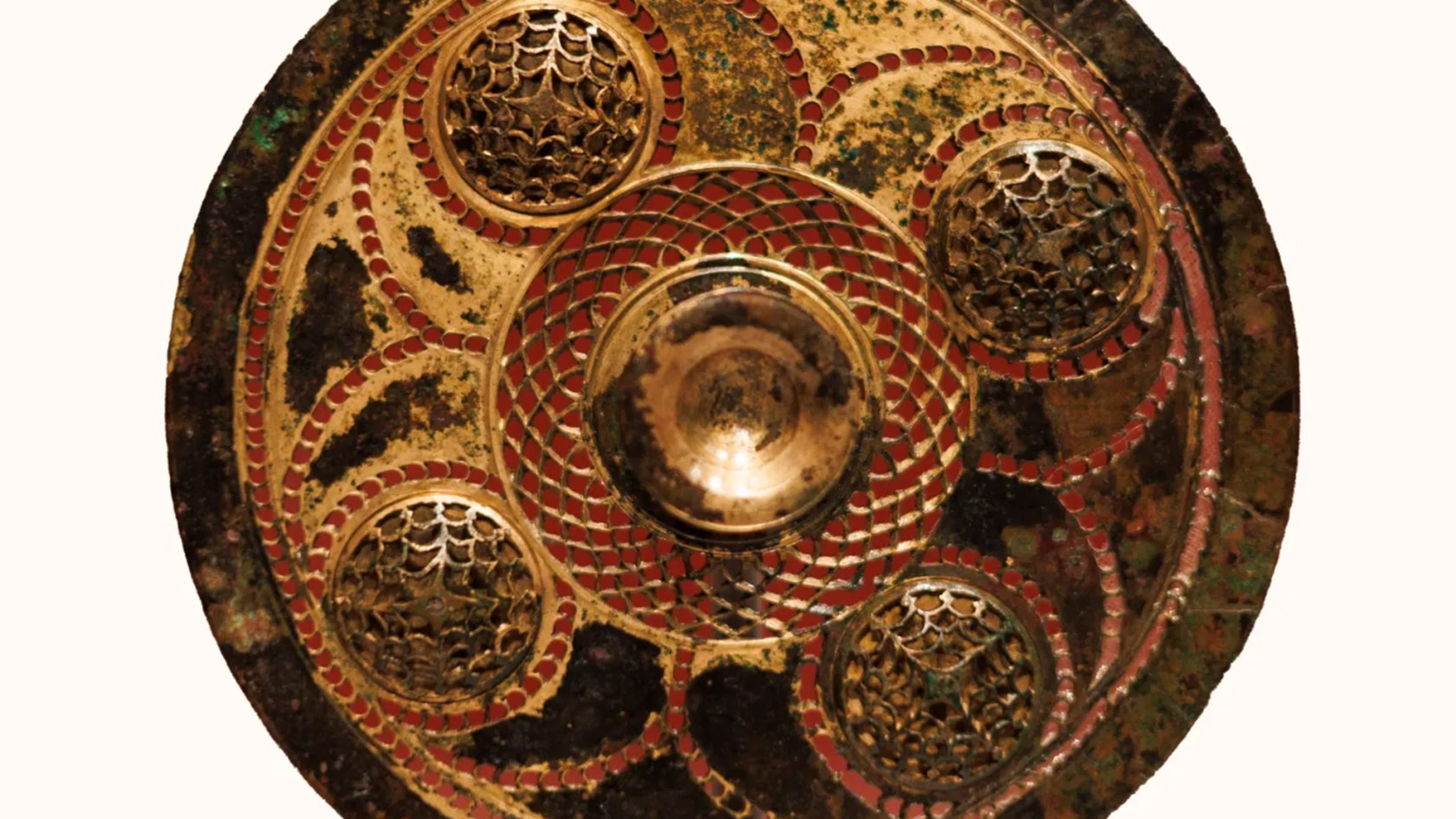
Photo by Grace DuVal
New Harvard Art Museums exhibition aims to upend expectations as it explores history, complexity of group of diverse peoples
Most envision the realistic style of the Greeks and Romans when thinking about the art of ancient Europe. But there were other peoples and ways to think about depicting the world, and that includes the Celts, the diverse group who inhabited Britain, Ireland, and a vast portion of continental Europe.
“Archaeology and art history are still very Greece- and Rome-focused in the United States,” said Susanne Ebbinghaus, the George M.A. Hanfmann Curator of Ancient Art and Head of the Division of Asian and Mediterranean Art. “So I thought, ‘Oh, it would be amazing to bring some of these objects here.’”
The Harvard Art Museums are sharing these artistic contributions in a new, first-of-its-kind exhibition called “Celtic Art Across the Ages,” which explores the objects created by those labeled “Celts” from the Iron Age to the early medieval period, as well as from the Celtic Revival of the late 19th and early 20th century and even more recent time periods.
“We’re deliberately trying to separate the clichés about Celts from art that has been called Celtic.”
Penny Coombe, Kelekian Curatorial Fellow in Ancient Art
It also considers the evolution of imagery and ideas in the region amid the spread of Roman rule.
Laure Marest, the Damarete Associate Curator of Ancient Coins, said that this exhibit seeks to question assumptions about long-held artistic narratives.
“History is written by the winners,” Marest said. She pointed out that the themes of Greek and Roman art have been revered for a long time by Western audiences, but Celtic art — which co-existed alongside them — is different.
Marest said she was struck by how contemporary some of the pieces feel, with their reliance on abstraction, ornamentation, and deconstruction of forms.
“The art they produce is actually surprisingly modern in some ways,” she said.
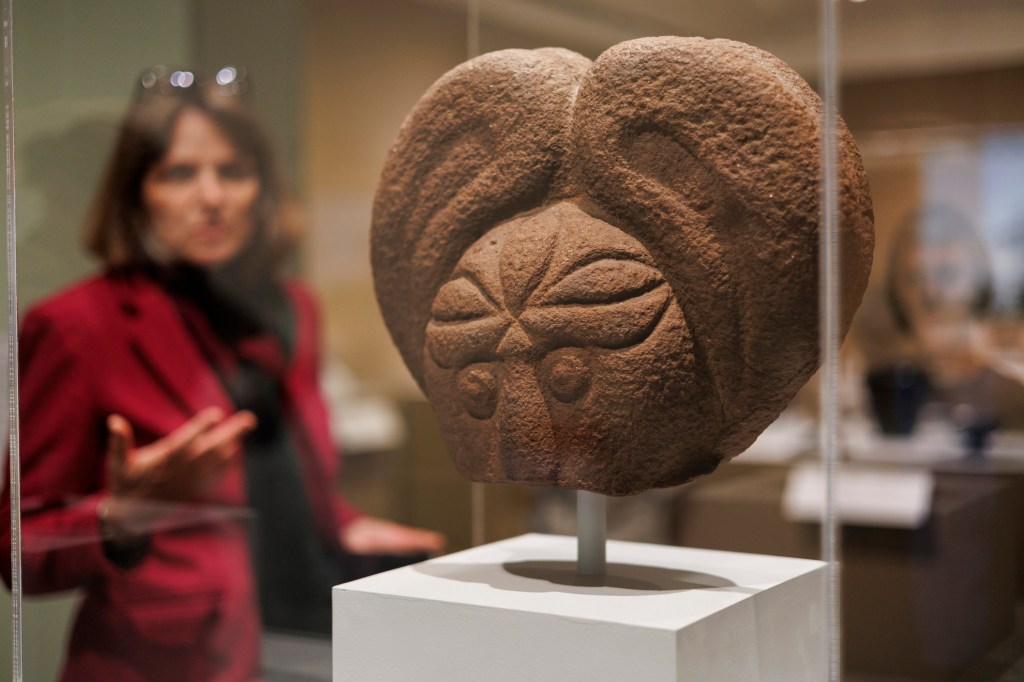
Sandstone Head from 450–380 B.C.E., found in Germany.
Photo by Grace DuVal
One such example is a fragmented piece of sandstone in the shape of a head, discovered in Heidelberg in southwestern Germany in 1893.
It was likely part of a warrior sculpture and often surprises viewers: It is not figurative, not clearly human, plant, or animal; it is almost cartoonish in its construction — features that are shared by other examples of Celtic art.
Other imagery in the exhibit is fantastical in nature — featuring dragon-like or other mythical creatures — or incorporate different ideas of deities.
There is also a bronze sculpture featuring the goddess Artio with a tree and a bear. Found in 1832 at Muri, near Bern, Switzerland, elements of the sculpture appear to have been changed and repurposed at different time periods.
Why? What significance did this deity hold to the people at the time it was created? What inspired the people who created — and changed — this divine image? It hints at the complexity of life for the various Celtic peoples under the spread of Roman rule.
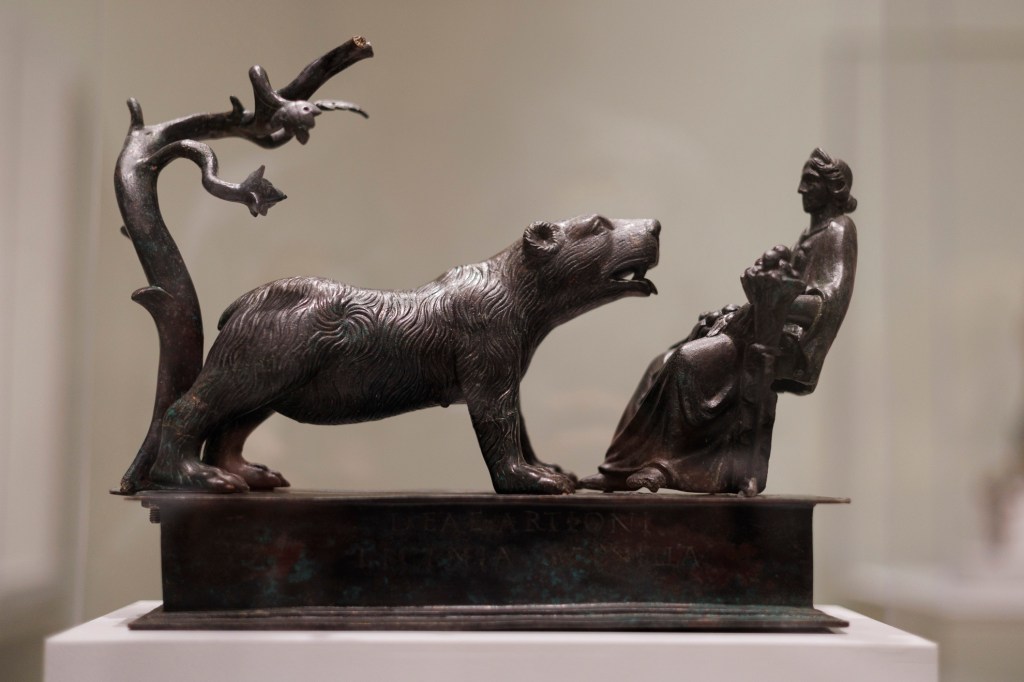
The “Dea Artio group,” a second-century C.E. bronze sculpture from Switzerland.
Photo by Grace DuVal
“Most of the ancient inhabitants of central and western Europe are unlikely to have considered themselves Celts,” said Ebbinghaus, even though they may have related languages, practices, and traditions.
She explained that the people we refer to as Celts, Gauls, or Galatians weren’t as homogeneous as we tend to think. These ancient populations spanned a large geographic area and each had its own name and culture.
“We’re deliberately trying to separate the clichés about Celts from art that has been called Celtic,” said Penny Coombe, the Kelekian Curatorial Fellow in Ancient Art.
Coombe said the exhibit invites viewers to reflect on what this means.
“This term Celtic has endured for nearly 3,000 years, albeit with a huge gap in when it was used … What does relate all these very different artifacts to one another and is that a real relationship?” she said. “How is this term repurposed and reused in different ways at different times, and how does it become politically relevant in later periods of building nationalism, building nationhood?”
The exhibition brings together nearly 300 objects from collections in France, Germany, Switzerland, Austria, Italy, Britain, Ireland, and the U.S.
Curated by Ebbinghaus, Coombe, Marest, and Matthew M.L. Rogan, senior curatorial assistant for special exhibitions and publications, the exhibit has taken years to come together and relies heavily on significant loans from many European museums.
It also features items from local collections, including items from the Peabody Museum of Archaeology and Ethnology, the John F. Kennedy Presidential Library and Museum, and Boston College.
Items range from jewelry to functional objects like arms and armor, horse trappings, chariot components, and feasting equipment to objects associated with the church.
One of the items on display is a pony cap, an ornamental hat with horns created for a small horse. This piece is loaned from Scotland and has an associated line drawing that shows how it would have looked on the animal’s head.
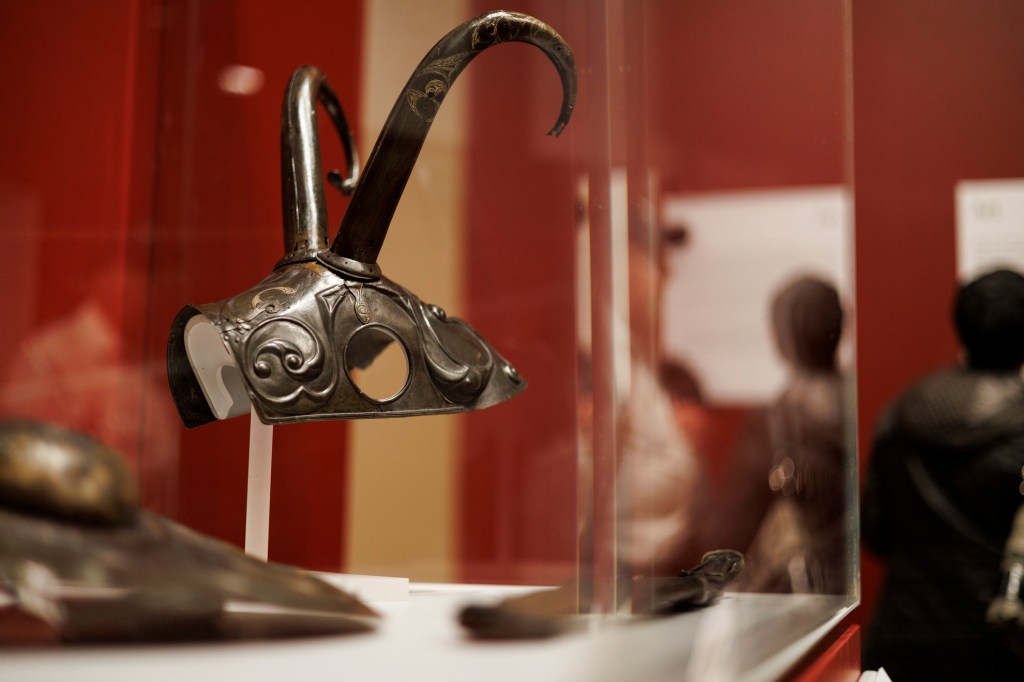
A third-century B.C.E. ornamental “pony cap” from Scotland.
Photo by Grace DuVal
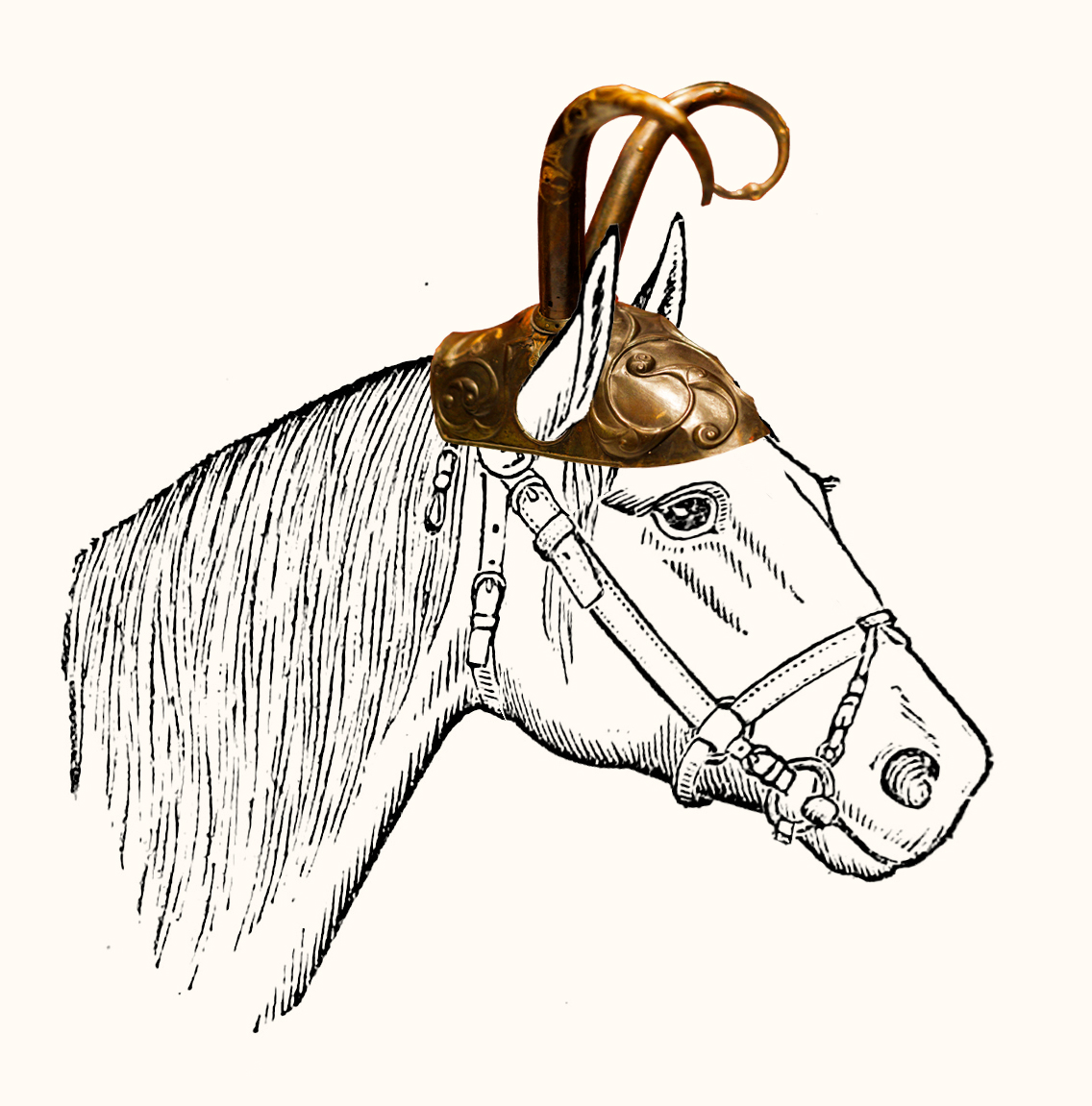
The pony cap as it would have been worn by a horse.
Graphic by Judy Blomquist/Harvard Staff
“It’s so unusual,” Coombe said. “Why would you dress up a really tiny horse with this piece of armor … What do the horns mean? They’re decorated with scrolling and incised patterns, which seems to be similar to ornament that’s seen on shields that come from the River Thames in a distinctly British style.”
The curators hope that Celtic Art Across the Ages will offer viewers an opportunity to deepen their understanding of art and appreciate what its nuances can reveal about the past.
“Many populations lived in the ancient world, and, yes, interacted with Greeks and Romans. We should be skeptical of written histories and think about who is the author,” Ebbinghaus said. “We can learn to see in different ways and unexpected ways.”
“Celtic Art Across the Ages” will be on display March 6-Aug. 2 at the Harvard Art Museums. A print catalog featuring more than 30 essays by international specialists accompanies the exhibition. The exhibition also features a variety of programming, including an Irish animated film marathon and Welsh poetry readings. The Museums are free and open to the public.