Featured series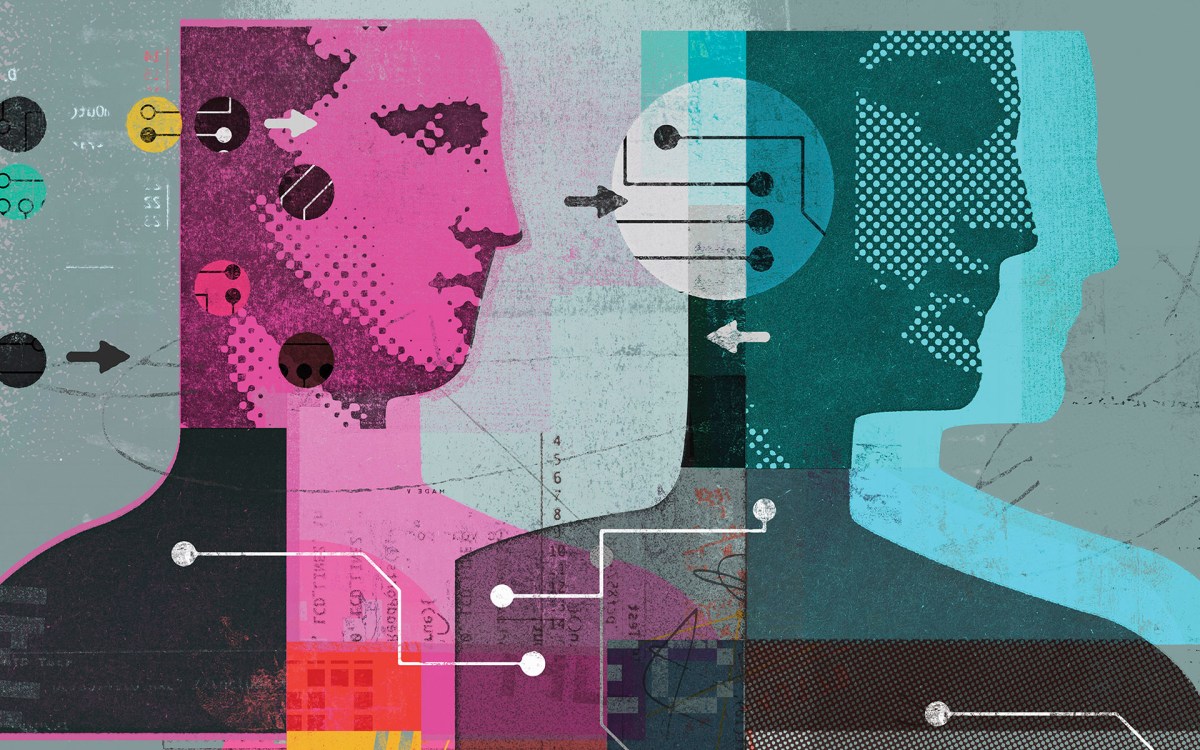
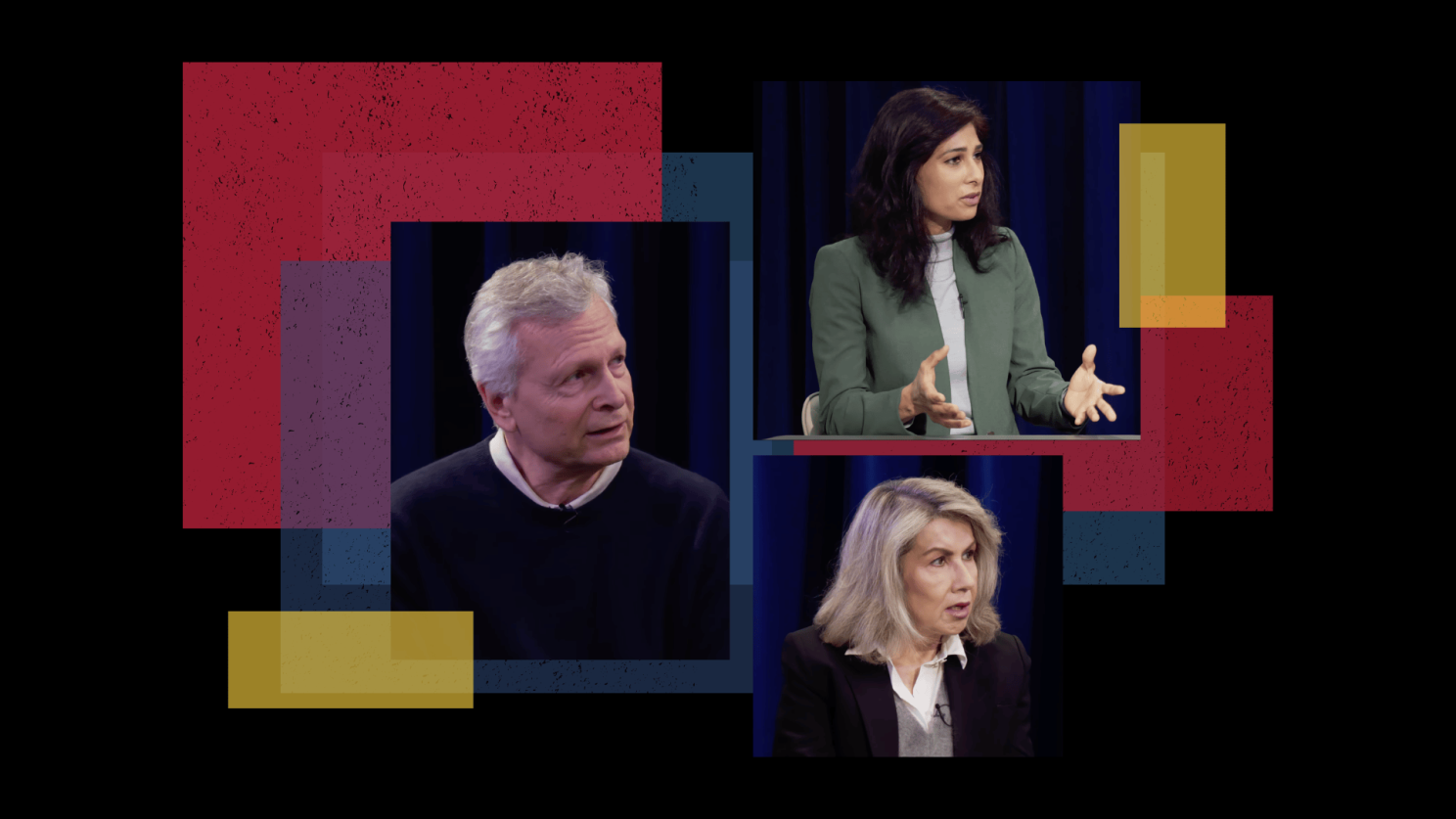
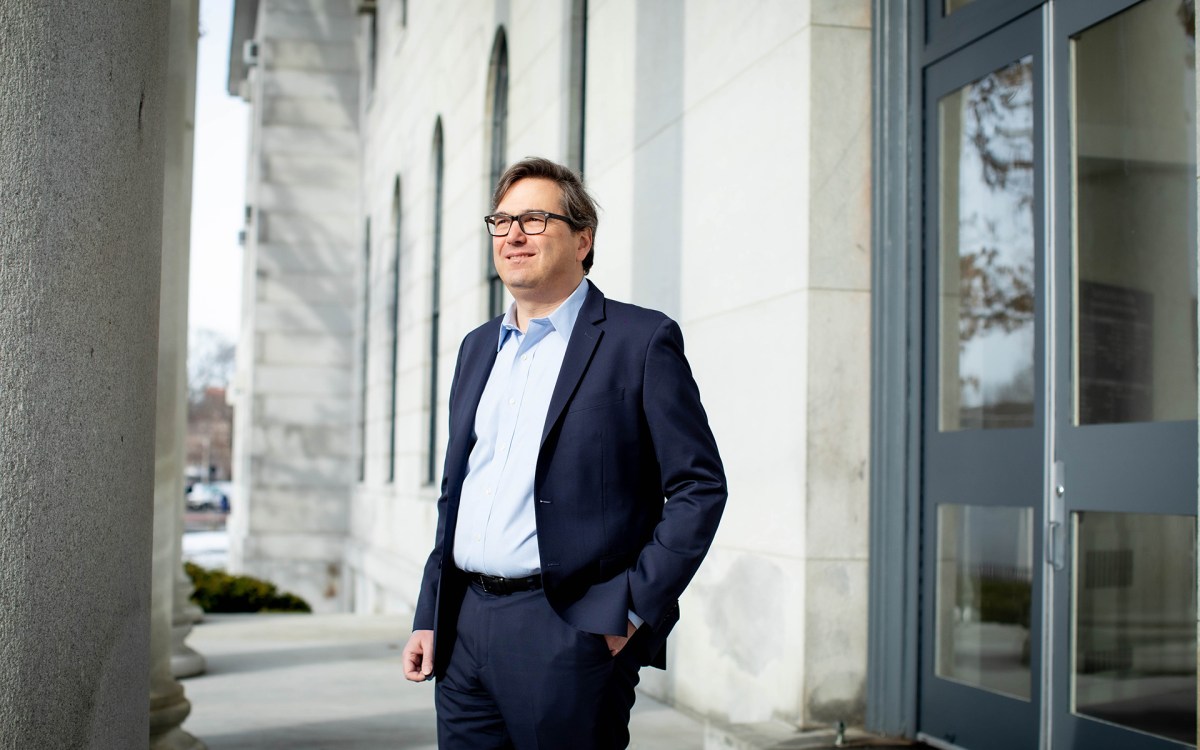
Dani Rodrik (left), Gita Gopinath, and Carmen Reinhart.
Work & Economy
Economists weigh consequences of war, tariffs, AI
Panel voices concerns over possibility of large job losses, widespread global financial instability
The “jobless recovery” from the 2008 global financial crisis was the most severe in U.S. and Western European history, according to researchers, as firms automated functions rather than rehire.
Today, threats to the labor market due to artificial intelligence are “of a much bigger magnitude,” said Gita Gopinath, the Gregory and Ania Coffey Professor of Economics. “The risk is that if we end up having a recession in a few years … we could go through a transition of very large job losses much bigger than what was seen after the great financial crisis.”
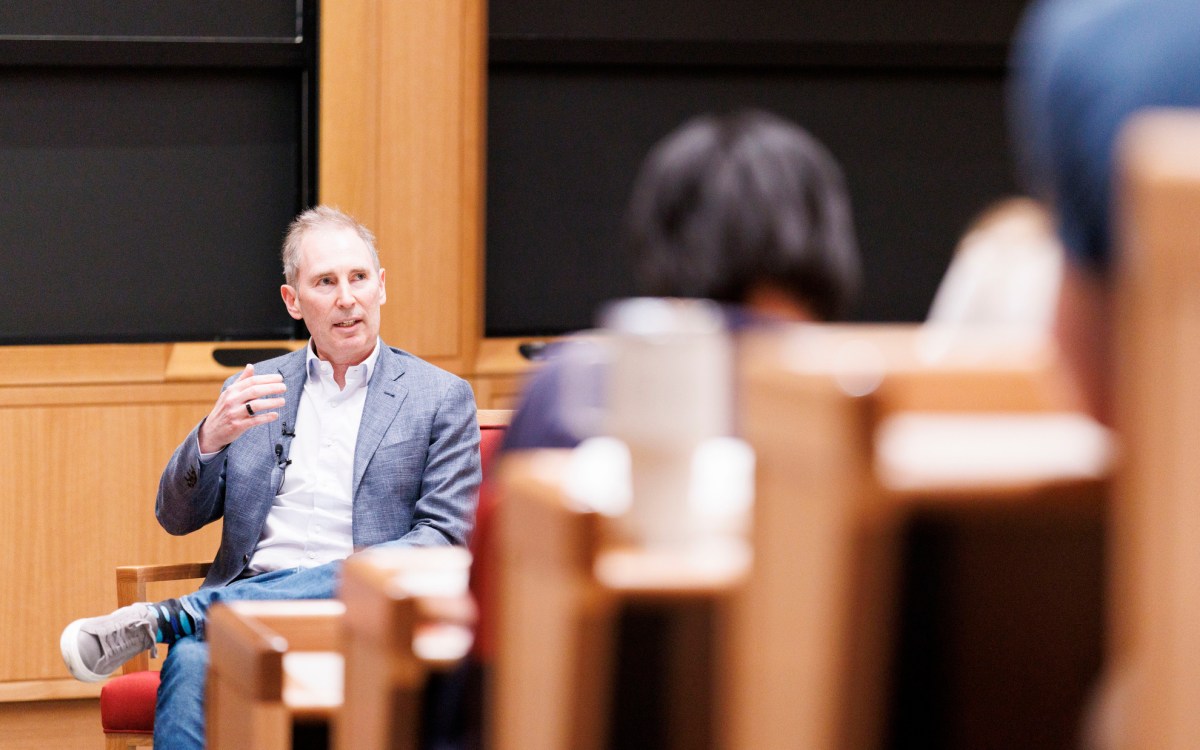
The former first deputy managing director of the International Monetary Fund was one of three faculty experts to appear at this month’s “From The Studio” FAS Symposium. The live-streamed conversation, hosted by FAS Dean of Social Science David M. Cutler, touched on geopolitical hostilities, shifting trade alliances, technological disruption, and other topics of urgent importance to the global economy.
“I thought we were going to open with the future of the dollar as a reserve currency or perhaps tariffs,” said moderator Ralph Ranalli, host and co-producer of the “Economics for Inclusive Prosperity” podcast. “But as the old saying goes, ‘No plan survives the first shot being fired.’”
The economic impacts of an extended U.S.-Israel war with Iran extend far beyond surging oil prices, said panelist Carmen M. Reinhart, Minos A. Zombanakis Professor of the International Financial System at Harvard Kennedy School. She foresaw the current spike in fertilizer prices.
“Translation: higher inflation risks,” Reinhart said, noting a possible interruption of moves by the U.S. Federal Reserve to reduce interest rates.
Panelist Dani Rodrik, Ford Foundation Professor of International Political Economy at HKS and co-director of the Economics for Inclusive Prosperity network, remarked that the global economy has proved “surprisingly, unexpectedly, relatively unaffected” by a succession of shocks due to tariffs and other actions since President Trump took office 14 months ago.
But the author of “Shared Prosperity in a Fractured World: A New Economics for the Middle Class, the Global Poor, and Our Climate” (2025) also sees a psychological disconnect with the fundamentals of a U.S.-dominated economy.
Rodrik worried that cumulative crises will eventually set off “a dissipation, dissolution of the kind of optimism that is still driving U.S. growth — and is driving a certain amount of stability in the rest of the world.”
A year ago, the world appeared to be backing away from the U.S. dollar. Rodrik recalled the dollar depreciating after Trump introduced his “Liberation Day” tariffs last spring.
Rodrik interpreted these events as “a very clear vote of no confidence in the U.S.”
But the new war in the Middle East appears to have bolstered the greenback’s standing as a safehaven with global investors and central bankers, the panelists agreed.
“We have seen a resurgence in the dollar as the classic ‘flight to quality’ has taken root,” said Reinhart, co-author of “This Time is Different: Eight Centuries of Financial Folly” (2009).
What could finally trigger “a stampede” from the dollar, when there’s no alternative in sight? Reinhart suggested it would take the reintroduction of capital controls, akin to restrictions on holding gold that President Franklin D. Roosevelt levied in 1933.
At the moment, capital controls are not on the table in the U.S., Reinhart noted.
“Then again, I didn’t think 19th-century tariffs were also on the table,” she said.
Britain’s exit from the European Union was recalled while weighing the possible long-term effects of U.S. tariffs. Both events were fueled by desires for tighter borders and greater support for domestic supply chains.
From the start, Gopinath said, consensus held that the 2016 Brexit referendum would damage the British economy. But after two years, rates of investment remained strong.
“It looked like, wow, that was much ado about nothing,” said Gopinath, who rejoined the Harvard faculty last fall following more than six years at the IMF. “But it slowly worked through the system. Now, if you look back, the estimates of the effect of Brexit on the U.K. economy were very large.”
Ranalli asked whether the global economy would be in recession if not for AI, alluding to recent investments of hundreds of billions of dollars in the technology. Gopinath replied quickly: “No.”
Did the panelists think current investments in AI, increasingly financed by credit, represent a bubble?
“Are the symptoms there? The answer is yes,” Reinhart said.
AI has the potential to act as an equalizer, Rodrik argued. “It takes the knowledge, the skills, the experience of more educated professionals and makes them available to those who are less skilled and less experienced,” he noted.
The challenge is that channeling the technology to serve the common good would require a level of democratic engagement not currently on view. According to one estimate, 30 percent of jobs in advanced economies like the U.S. are vulnerable to disruptions from artificial intelligence.
If there is an AI bubble, and if it bursts, the damage could extend far beyond individual households. Citing a 2021 paper by Princeton economist Atif Mian, panelists took turns gauging potential consequences for the globaleconomy.
In most countries, the majority of public revenue is raised by taxing labor income, Gopinath said. Capital income is taxed at lower rates for good reasons that boil down to encouraging investments.
“But if AI leads to a transformation, where the labor share goes down by a lot more and the capital share goes up by a lot more, you can’t run the kinds of programs you’re running, in terms of entitlements, without having a higher capital income tax,” she said. “It’s just not viable.”