Featured series

Arts & Culture
A treasure trove for K-pop fans
Photos by Veasey Conway/Harvard Staff Photographer
‘Korean Stars’ course inspires Yenching’s 17-box collection of merch spanning ’90s to today
Anyone who has tuned into an American radio station in the past year has likely been treated to the upbeat anthem “Golden” — a track from the animated phenomenon “KPop Demon Hunters” that became the most watched title on Netflix last summer. And while K-pop — Korean popular music — has been creeping into the consciousness of American audiences for the past decade through one-off hits like Psy’s 2012 “Gangnam Style” and idol groups like BTS and BLACKPINK, the genre has an even longer history of amassing enormous and dedicated fan bases overseas.
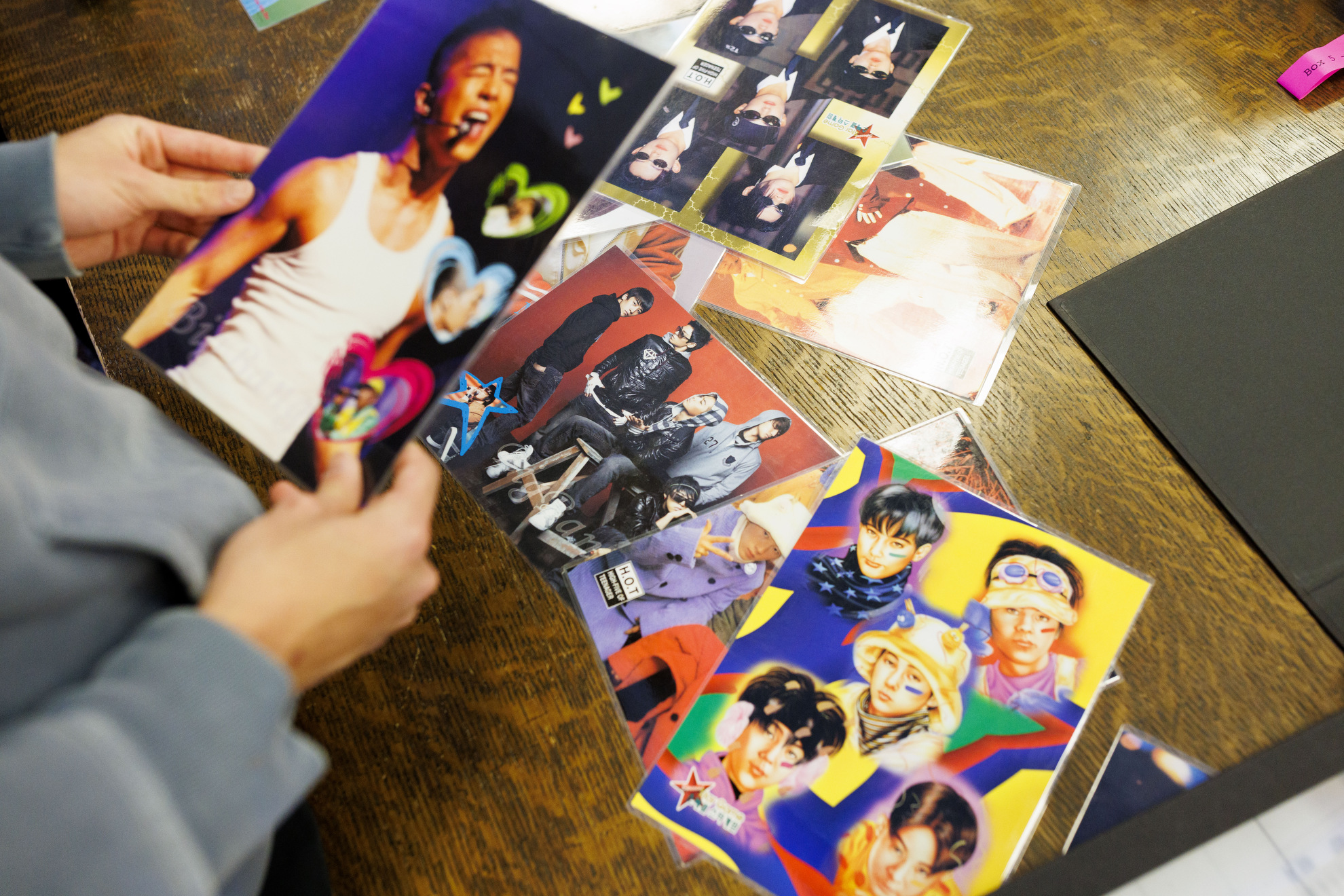
To chronicle the increasingly global world of K-pop, Harvard’s Yenching Library is in the process of curating a collection of commercial goods produced for fans of Korean musical groups and entertainers from the 1990s through now. The collection is partly inspired, and informed, by the “Korean Stars” course led by Professor Chan Yong Bu, who has used the objects to help his students better understand the dynamics behind K-pop fandom.
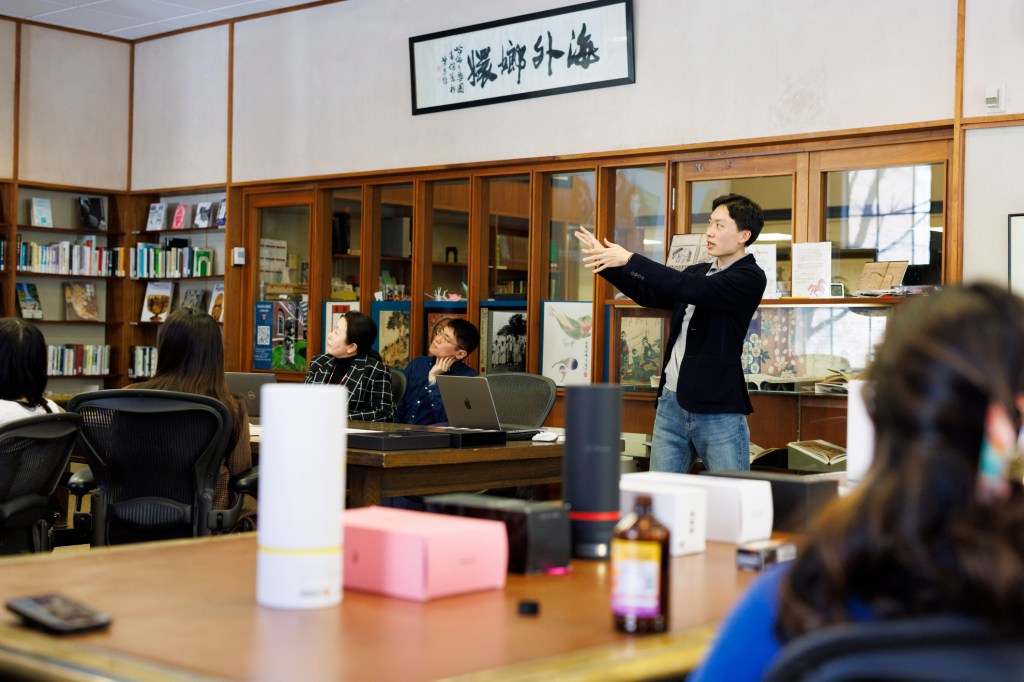
“The idea came from Professor Bu,” said Mikyung Kang, librarian for the Korean collection at the Harvard-Yenching Library. “We identified idol groups from the first generation until contemporary. And then with a vendor, we identified what’s available out there.”
Bu stressed that the merchandising and manufacturing of Korean stars, and later the K-pop stars audiences are familiar with today, have roots that date back to the stardom of silent-film narrators through the 1910s to the 1930s, who were idolized in Korean popular culture.
Through the 1980s and into the 1990s, Bu said, Korean television stars were plastered on fan merch sold to teens across the country. And in the early ’90s, the first K-pop groups like Seo Taiji and Boys and H.O.T. graced magazine covers and posters marketed to the country’s youth.
“I’m very interested in star images in general,” said Bu, an assistant professor of East Asian languages and civilizations. “I don’t want my students to just appreciate the design, but how these actually come into being and how they concretize into the tangible objects.”
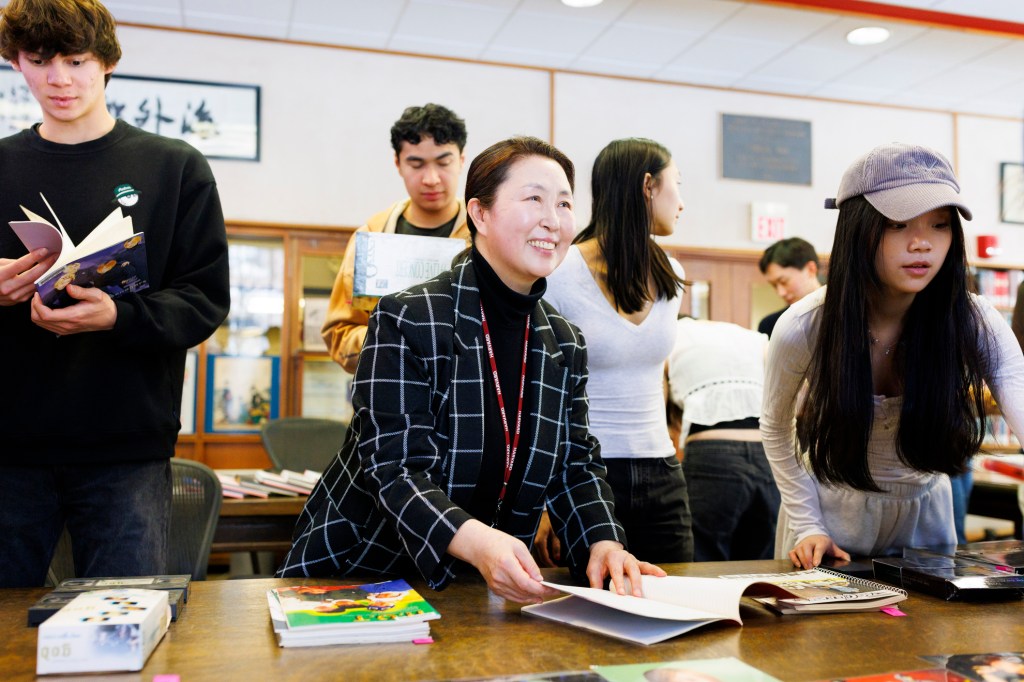
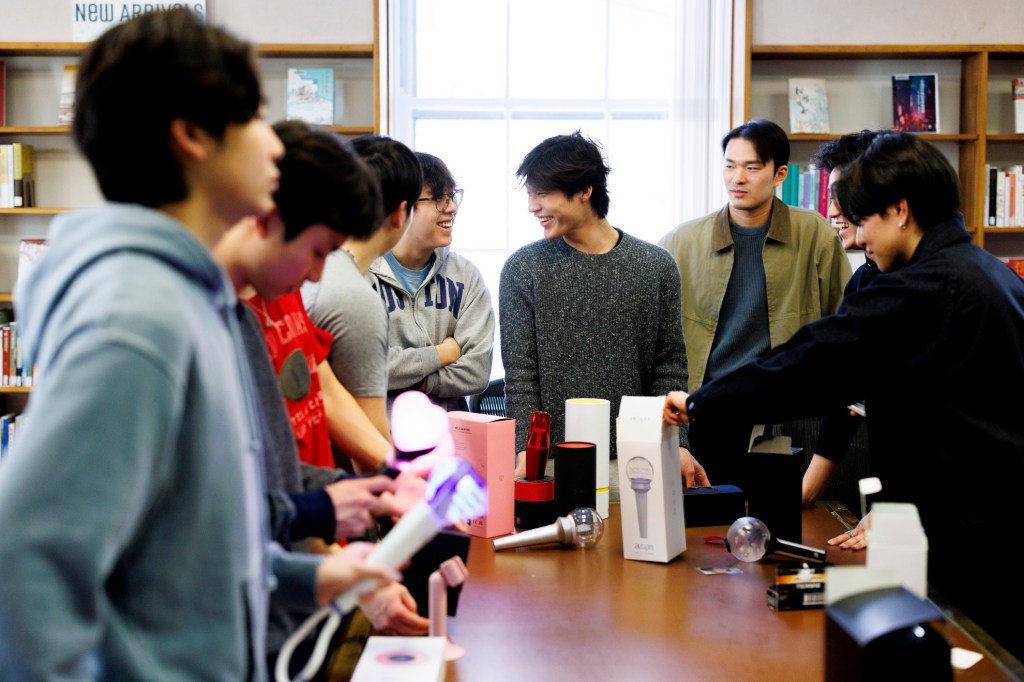
The collection, which Kang said is contained in 17 storage boxes so far, covers at least 26 groups spanning more than three decades. It includes concert paraphernalia and recordings, photo albums, posters, and anything else marketed to fans.
The items most familiar to students from Bu’s class, who pored over the materials in preparation for creating their own fan merch for a class project, were the light sticks — Bluetooth-enabled tokens that fans bring to concerts. Each one has unique imagery tied to a different K-pop group.
“Fan merch is really a very important medium in its own way, where you are truly connected to your beloved star on physiological and psychological levels, to the very extreme level,” Bu said.
Bu noted that the light sticks mark a point of evolution in K-pop fandom. Early on, he said, fans used different colored balloons to signify the fandoms to which they belonged. But as technology has advanced, so has the merch. The light sticks of today connect to performers’ sets and change color in sync.
“You are literally incorporated into this visual spectacle. So you’re really part of this performance as a whole,” Bu said.
Jenny Ng, a sophomore economics concentrator, said the hands-on experience of the “Korean Stars” class fuels her passion for learning. “I think that should be the point of a liberal arts education,” she said, “to learn these niche topics and enjoy them.”
For others who are interested in seeing the materials included in the collection, a small portion are on display in the Yenching Library’s Chinn Ho Reading Room. The students in Bu’s class will also display their own fan merch — created with 3D printing — later in the semester.
And according to Yuzhou Bai, the special collections librarian and archivist at the Yenching Library, the full collection is available through Hollis. However, viewing is restricted to the reading room by appointment.
“What looks like a book or a DVD actually carries with them a lot of smaller items, what we librarians would call ephemera, so smaller stickers or cards and that kind of stuff,” he said. “So it’s very difficult to control them if we just put them on the regular shelf and let everybody browse through and open them.”