Featured series
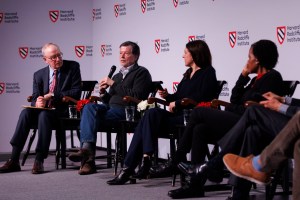
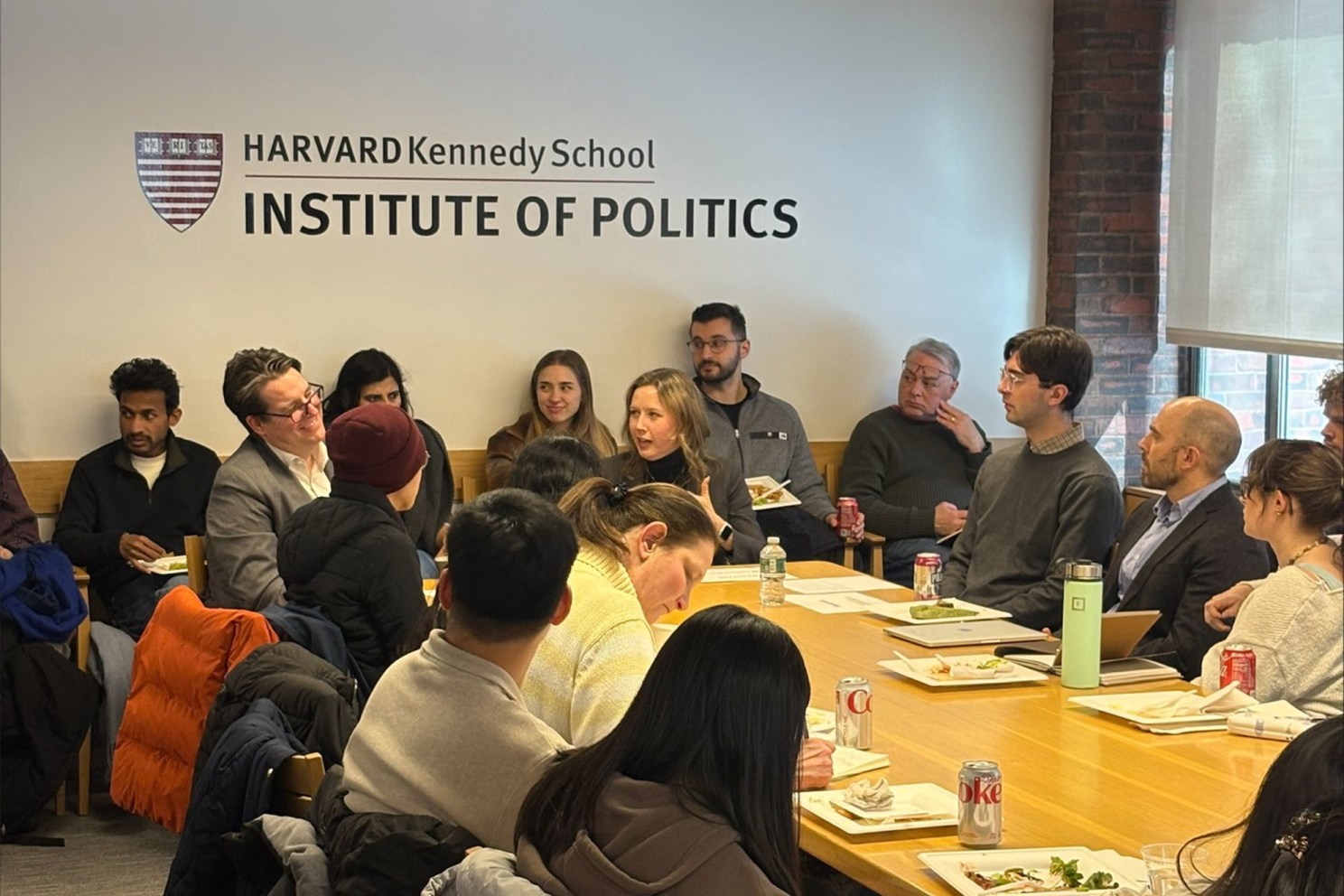
Jim Secreto and Jennifer Huddleston at a recent IOP event.
Nation & World
What would the Founding Fathers think of TikTok?
Experts weigh national security concerns against free speech in discussion of video app’s future
TikTok has been banned, un-banned, semi-banned, and brought back. As the U.S. government considers its relationship with China, and the national security risks of adopting its technology, the video app often serves as a proxy. Boosters and critics agree that its discovery algorithm is one of the best in the world. Whether that’s cause for praise or anxiety is debated.
Following years of government decision-making on the platform’s future — and more than a year and a half after former President Joe Biden signed a bill to ban TikTok from U.S. app stores unless the app was sold to an American company — TikTok’s parent company ByteDance created a joint venture to run the app in the United States.
The potential solution was a long time in the making. In December 2024, before President Donald Trump’s second term began, he announced that he hoped the U.S. and TikTok could find a “political resolution” that could keep the app available to the U.S. public. Since taking office, Trump has signed three executive orders to delay the ban.
By placing 80 percent of its U.S. assets under the control of non-Chinese investors, the joint venture aims to avoid an outright ban. The new investors include the technology company Oracle, the private equity company Silver Lake, and the Emirati investment firm MGX. ByteDance retains a stake of just under 20 percent and will license its algorithm to the new entity.
While the deal addresses some U.S. concerns, questions remain both about whether the partial sale protects the data of U.S. users, and how much power the U.S. government has over free speech on social media.
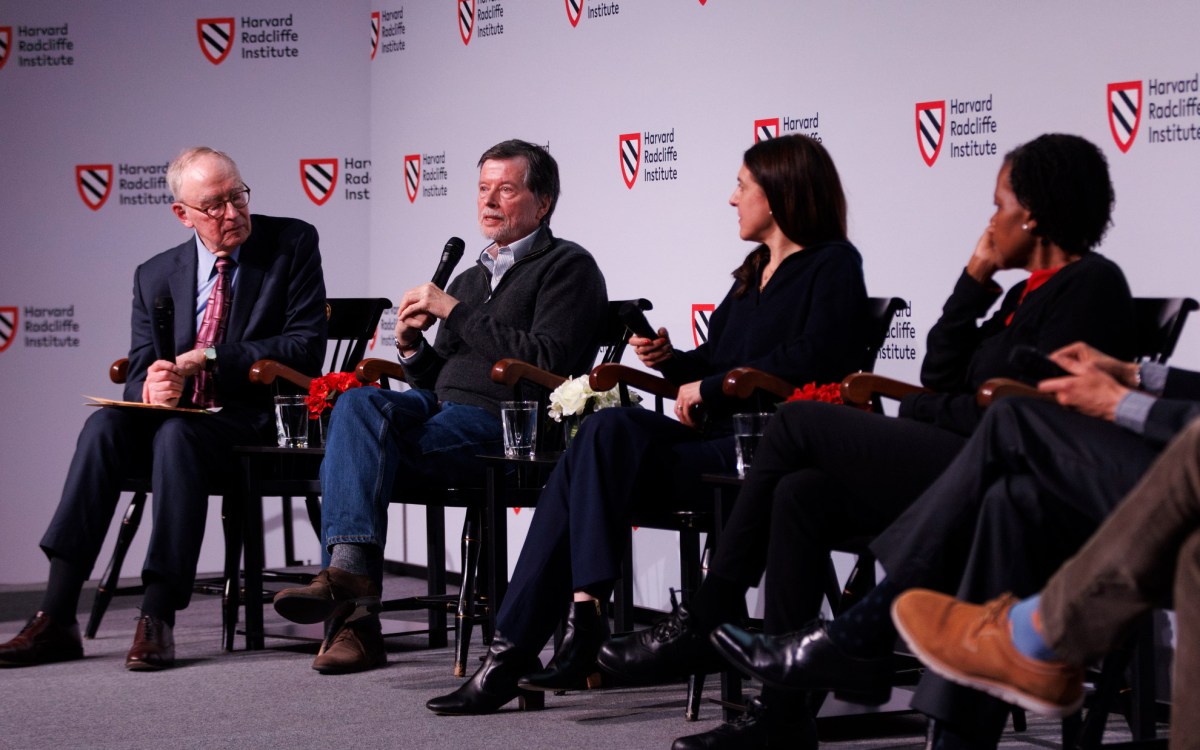
At a recent Institute of Politics event at Harvard Kennedy School, two experts discussed TikTok’s present and future in the U.S., debating how the government could best protect national security without sacrificing civil liberties.
Jim Secreto, who served in senior national security roles in the Biden administration and formerly lived in China, began by emphasizing the changing nature of national security concerns.
“When you think about national security today, I don’t want you to just think about tanks or bullets or guns,” he said. “Technology, and particularly cutting-edge technology, is really a huge part of how we protect ourselves and how we conduct ourselves in the world.” What’s unique about TikTok, he said, is the role of ByteDance, a Beijing-based Chinese company, and the leverage the Chinese Communist Party has to collect data from China-based businesses.
Jennifer Huddleston, senior fellow in technology policy at the Cato Institute, a libertarian think tank, said that during debates about TikTok, she often finds herself taking the free-speech and innovation point of view versus someone coming from a national security perspective. She said the disagreement lies in finding the appropriate balance between the two — and, ultimately, what role the government has in deciding that balance. In some ways, she said, “The debate over TikTok isn’t any different than the debate over social media platforms in general.”
She emphasized that while the language behind the TikTok ban identifies just the one app, “the law is drafted in such a way that it could be applied to other companies.” She worries whether the executive authority has appropriate checks and balances to prevent the ban from applying to other companies and countries that the U.S. considers foreign adversaries. She also said that the language of the ban punishes American companies, like Apple and Microsoft, which are penalized if they host TikTok on their app stores, versus TikTok and ByteDance themselves.
Though Secreto agreed that national security laws should take civil liberties into account, he argued that TikTok — and other recent technological advancements like artificial intelligence based on large-language models — are more threatening than past technological advancements. “We are addicted to our phones,” he said, “and we are not evolved to be able to handle what is coming. What we have before us are some profound choices about regulation, about free speech, and the role of technology in our lives.”
Huddleston mostly pushed back on the uniqueness of today’s technology, skeptical of Secreto’s argument that the Founding Fathers would have “no conception of this technology and the power that it brings to what people see on their phones.”
Though some authors of the Constitution would certainly be amazed and terrified, she said, “They did understand this. They understood the importance of anonymous speech. They understood that young people might have different points of view. The technology was different from ours, but those core values still apply.”
She stressed that banning TikTok, and other similar networks, could harm America’s standing abroad. “If we start saying it’s OK for governments to restrict access to speech, to information, to innovation because of these fears, what happens when our adversaries start doing it to Americans?” she asked. Countries that are not following democratic norms could use the U.S. example to further limit the rights of their citizens.
Secreto agreed that the government should mitigate national security risks in ways that most narrowly affect free markets and free speech. The difficulty, he said, is finding that balance. He talked about the idea of “small yard, high fence,” a policy to limit trade of critical technologies with countries like China while allowing broader trade to continue. “The problem is,” he said, “nobody could agree on how big a yard and how big a fence.” The same problem applies to drawing the line between national security and free online speech.
While Secreto praised certain elements of TikTok, he expressed more hesitancy about the technology than Huddleston. “I personally believe that it’s hard for us as humans to compete with the algorithm,” he said. “This is something that knows more about you than you know about yourself — and that’s scary.”
Though Huddleston acknowledged having some problems with TikTok and other social media companies, she worried more about government overreach. When it comes to divesting from or banning TikTok, she said, the decision comes down to erring on the side of trusting the government and its argument for national security or on the side of freedom of speech.