Featured series
Campus & Community
Of different faiths, but connected by belief
Photos by Veasey Conway/Harvard Staff Photographer
Community members gather to explore identity, spiritual experience at first ‘Across This Table’ interfaith dinner
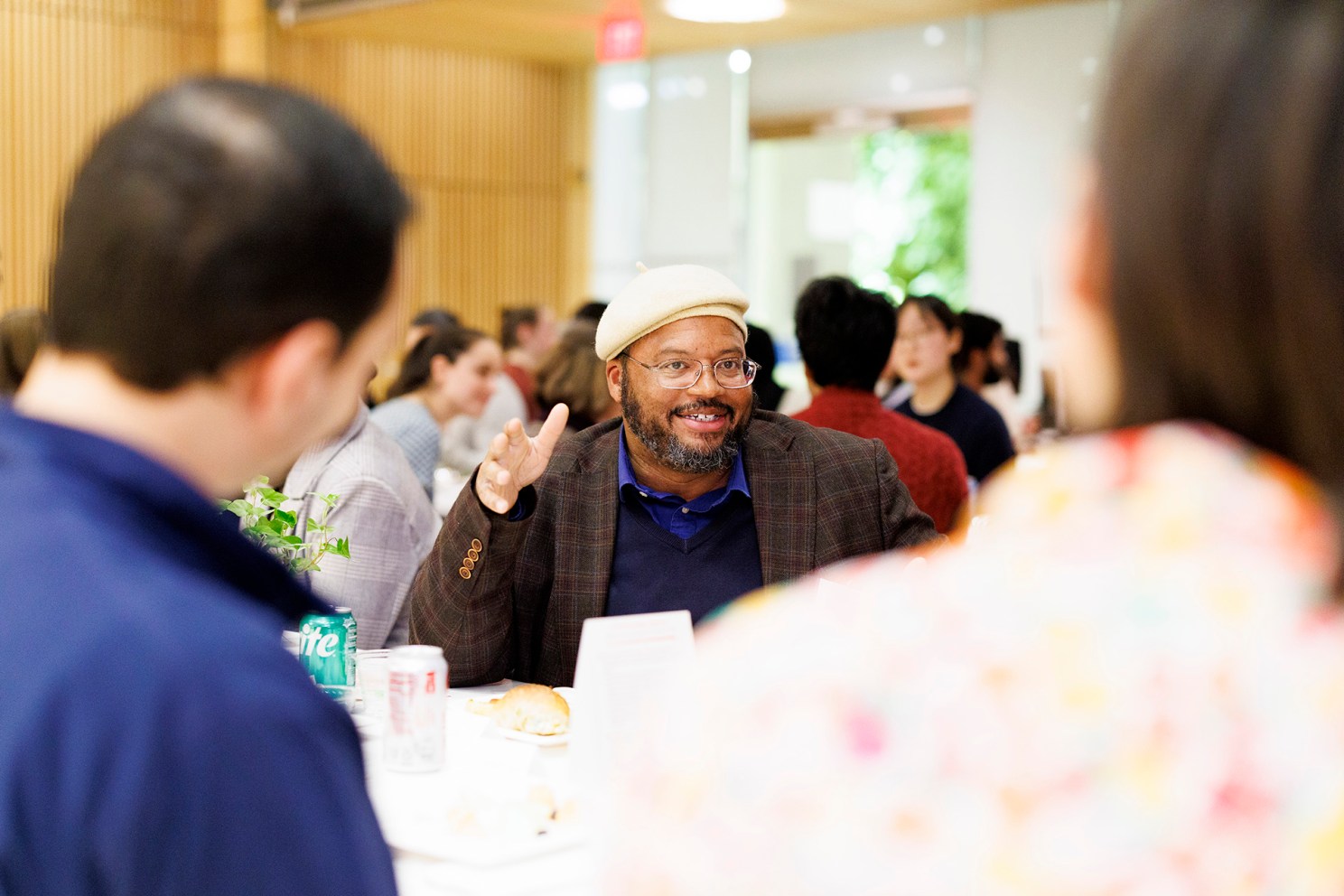
The evening was about faith, spirituality, and connection. Not just the ideas, but the lived experience of them — and the way they bind people of different religious identities and traditions.
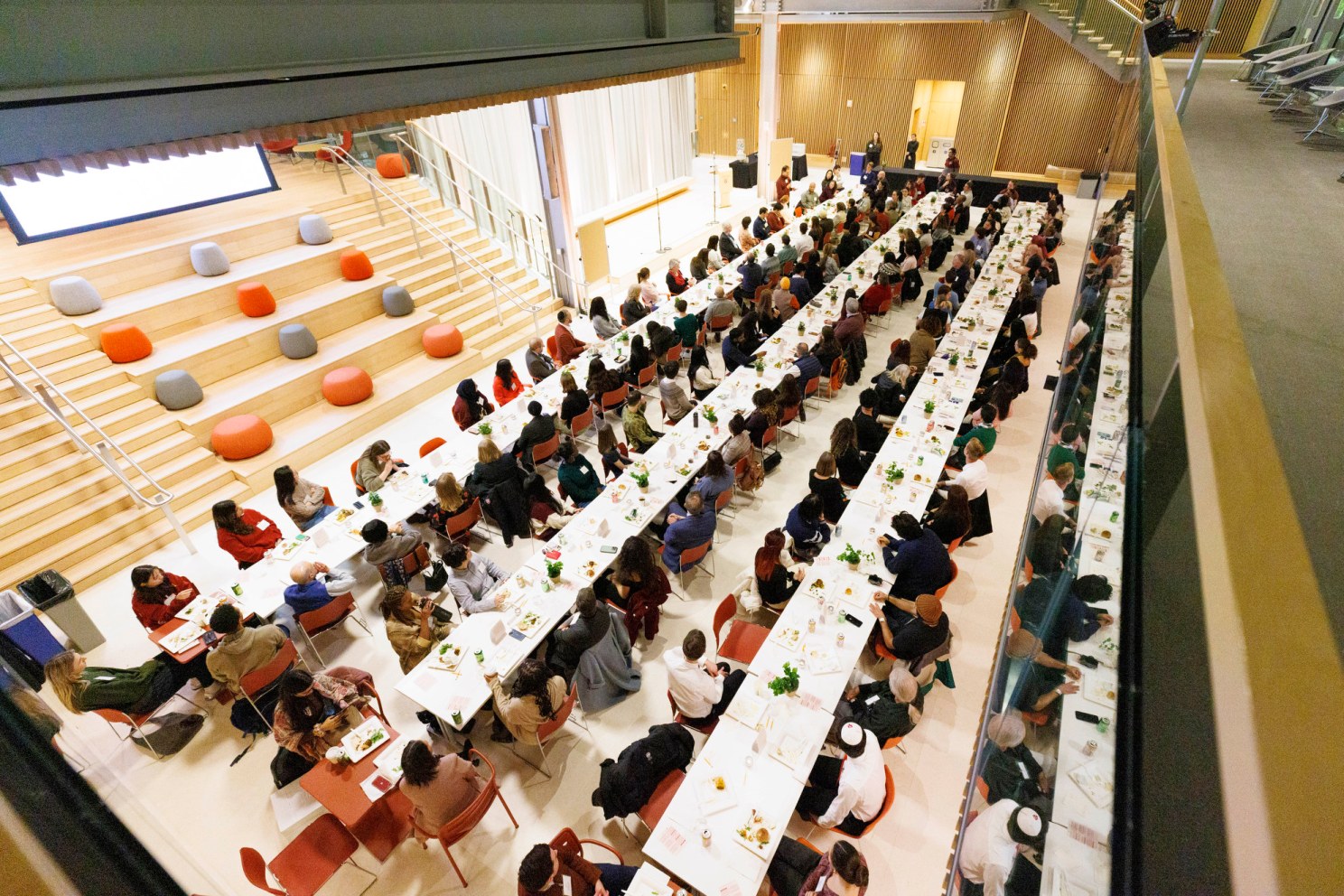
That was the message from Getzel Davis to the nearly 200 Harvard students, faculty, staff, and community members who joined the Interfaith Initiative’s inaugural “Across This Table” dinner last week at the Smith Center.
In his opening remarks, Davis, director of interfaith engagement, said the crowd brought together individuals who identified as everything from Hindu to Catholic to Taoist to humanist.
“In fact,” he said, “when so many of you registered, you used much more precise language to describe your identities than just one word — and that’s part of what we’re hoping you bring with you tonight.”
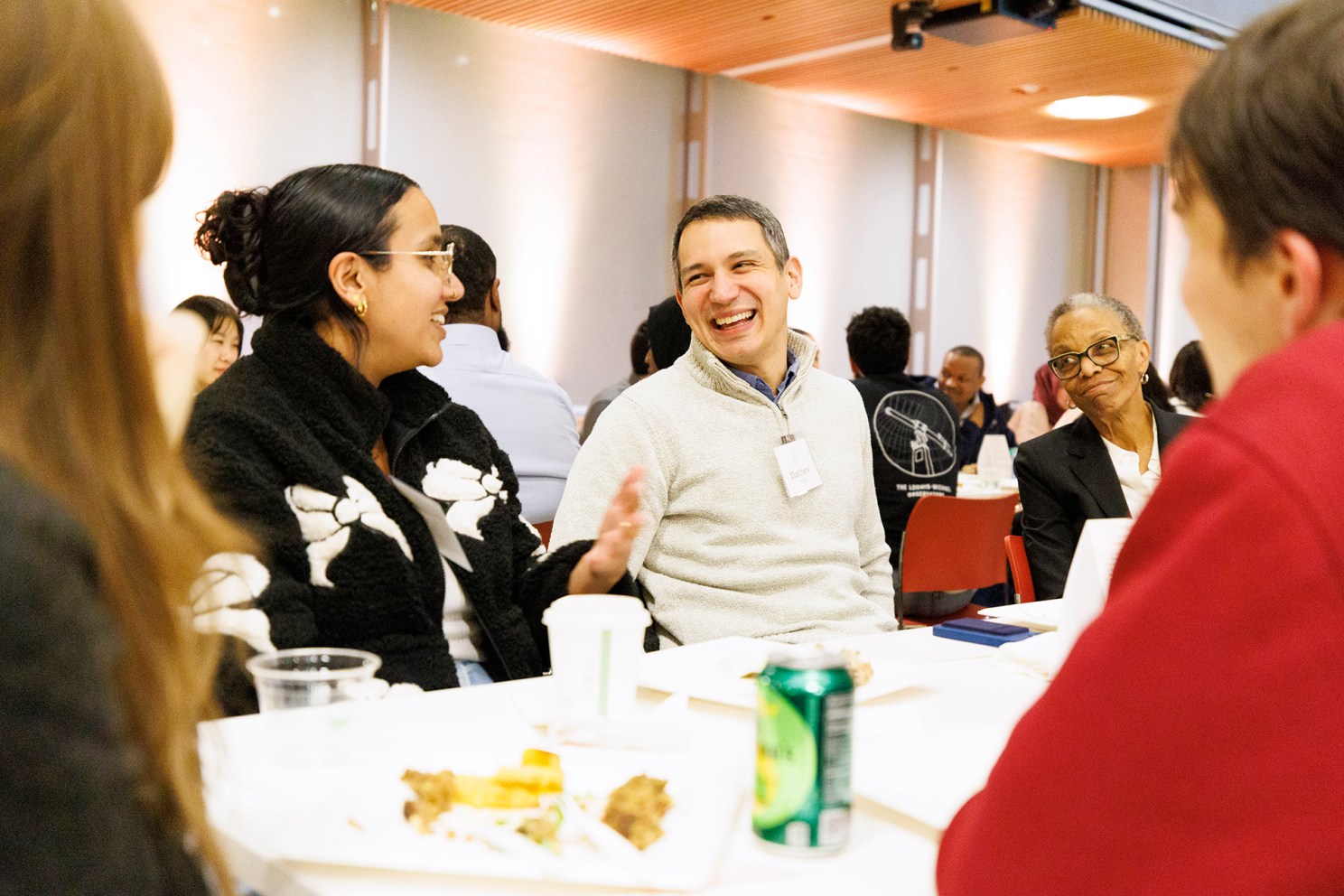
The evening’s purpose was to bring people into swift and intimate group conversations about topics that might not ordinarily pop up in a dining hall chat: faith, religious identity, belief or lack of belief, and how these ideas can shift over time.
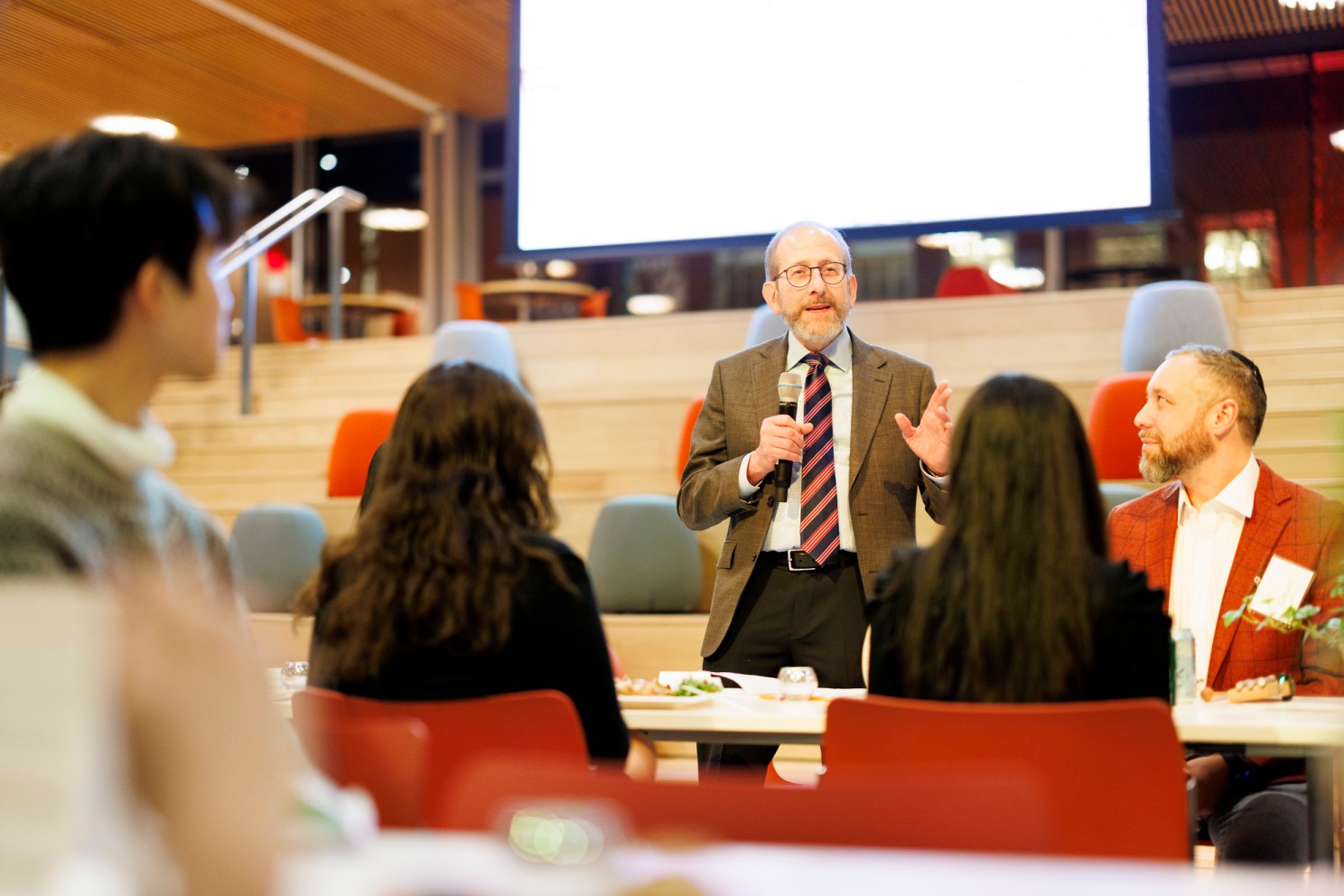
Harvard President Alan Garber.
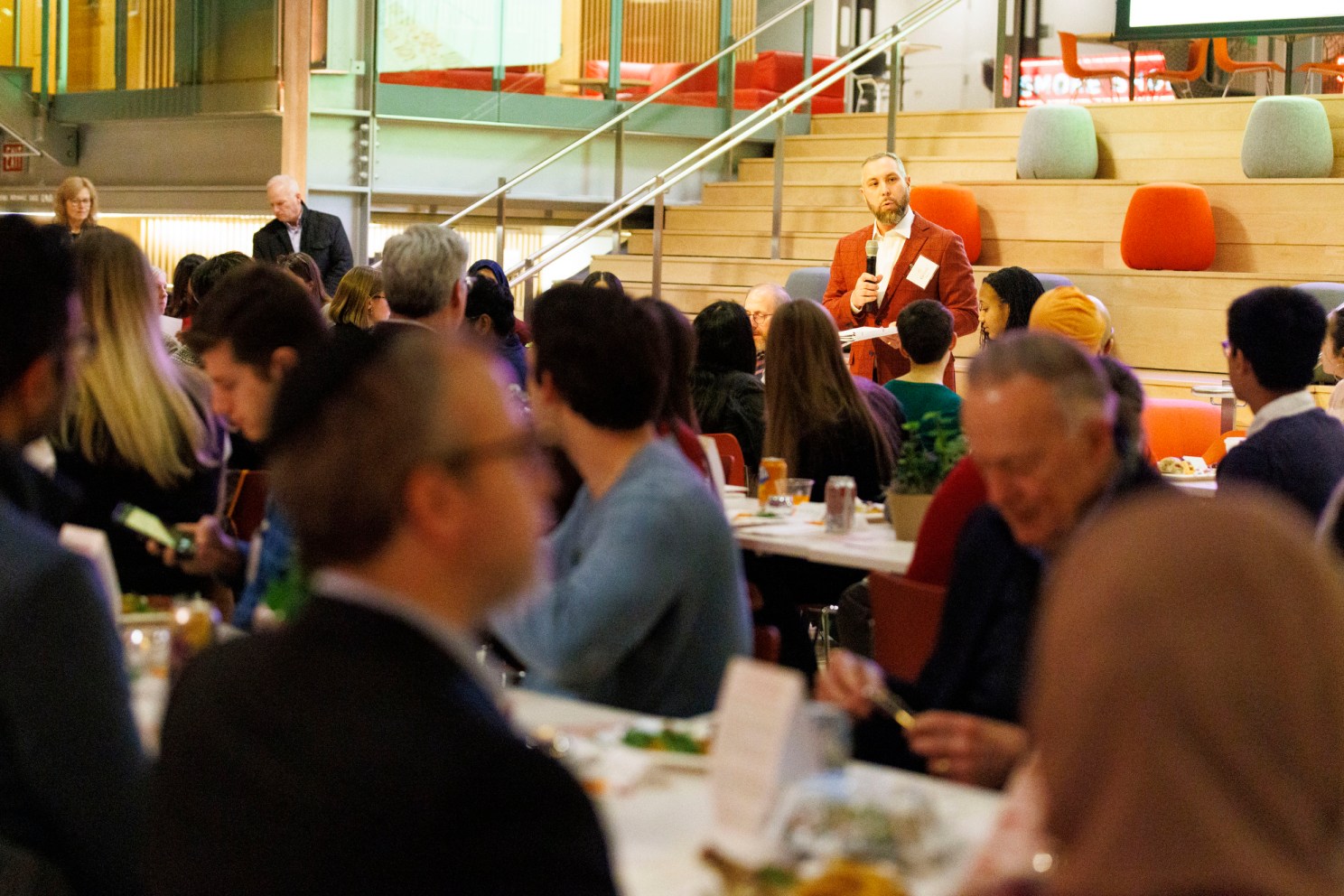
Rabbi Getzel Davis.
Imam Khalil Abdur-Rashid.
The Rev. Matthew Ichihashi Potts.
In a speech early in the evening, University President Alan Garber shared an anecdote about a memorable interfaith exchange from decades ago.
Garber, then a high school senior, lived in an apartment with his brother, a Yeshiva student, and some of his brother’s rabbinical school friends. One day, an alumnus visited to interview Garber for admission to a highly respected university and remarked, “I didn’t know so many books were written in Hebrew.”
Garber remembered being shocked and trying to suppress a laugh as he thought of an appropriate response. In the end, he said, “There are many, many more.”
The long-ago exchange came to mind when Davis invited him to the event.
“Religious identity is deeply felt,” Garber said. “Those books were part of my religion and part of me. It was unsettling to learn that they were so foreign to someone else — someone, I might add, who was very well-educated.”
In the end, the two had a great talk, one that reflected Garber’s ideas about how interfaith work should look today: “grounded in curiosity, generosity, and sincerity, nurtured by openness and patience.”
With the opening speeches concluded, groups of attendees spread out across three long tables and broke into conversation.
Helping guide the discussions were facilitators, a few dozen volunteers who arrived with questions to guide the conversations. Among many topics, guests talked about their religious upbringings, how their faith or lack of faith changed over time, and how they incorporate their beliefs into their lives and work.
Throughout the evening, a few students and staff rose to share stories about their own backgrounds and spur new conversation topics among the groups.
Sahar Khan, an LL.M. candidate at Harvard Law School who was raised in an Islamic Sufistic tradition, told a story about how, growing up, she felt compelled to explain, justify, and argue her beliefs and desires to God while she prayed.
“I thought that if I could just make my case clearly enough, God would be more inclined to rule in my favor,” she said.
Eventually, she said she came to understand, “The point of prayer is not to change God’s mind. It is to let God change mine.” She asked the crowd whether they could remember a time when they thought they knew what they needed, but their prayer was answered differently.
“It’s really cool to hear someone who’s not a technician or a specialist describe the palpability of their religious experience. There’s a mystery behind everyone.”
John Gehman
Daryush Mehta, Harvard’s Zoroastrian chaplain and an associate professor at Harvard Medical School, discussed his faith and its long-term effect on his life. He shared a story about his grandfather, Nowruz, a high priest in Mumbai.
To this day, he said, he hears from people about how much his grandfather meant to them, how he educated them, and even how he presided over their marriages.
Mehta isn’t ordained as a priest himself, but when he was asked 15 years ago whether he would like to represent the Zoroastrian faith at the University, “the answer was a reverberation from the past. It was a resonance of energy from my grandfather.”
Mehta shared that his grandfather’s first name means “new day” in Persian and that his own is equally weighty, translating to “upholder of goodness.” He asked the audience, “What is the story behind your name?”
John Gehman, a recent Divinity School alumnus, said he found the conversations he had throughout the night raw and refreshing.
“It’s really cool to hear someone who’s not a technician or a specialist describe the palpability of their religious experience,” he said. “There’s a mystery behind everyone.”
After a performance by the Kuumba Sisters — part of the Kuumba Singers, the oldest existing Black organization on campus — first-year Joshua Andrews shared a story about prayer.
Andrews, a Protestant, said he was traveling to Harvard for his first semester when he learned that his brother, Luke, had been in an accident and broken his back.
He prayed for hours on his flight that his brother would be OK. When he landed, he learned Luke had also broken his neck.
“In that moment on the plane, I was a very angry and upset kid with my Father,” he said.
Over time, though, his perspective changed.
He was thankful that after his brother had his accident, he was taken straight to Massachusetts General Hospital, one of the best back surgery facilities in the world. He was thankful that his family had friends in the area whom they could stay with as Luke recovered. He was grateful that his brother would be OK.
Though he acknowledged that he couldn’t pretend to know why Luke came out OK and others sometimes don’t, he said he was certain he still would have found solace in Jesus even if things had gone worse.
He asked the crowd, “What was a time when you got what you most deeply desired? How did it feel? And what was it like to look back at the time before you knew it would turn out the way you hoped?”
Before a performance by the Jewish a cappella group ApiChorus, Davis thanked guests for coming and encouraged everyone to suggest other interfaith events that he and his colleague Abby McElroy, an interfaith fellow, could help realize.
“Our theory of change is students- and faculty-focused,” he said. “You dream up these ideas, and we’re going to help support them.”