Featured series
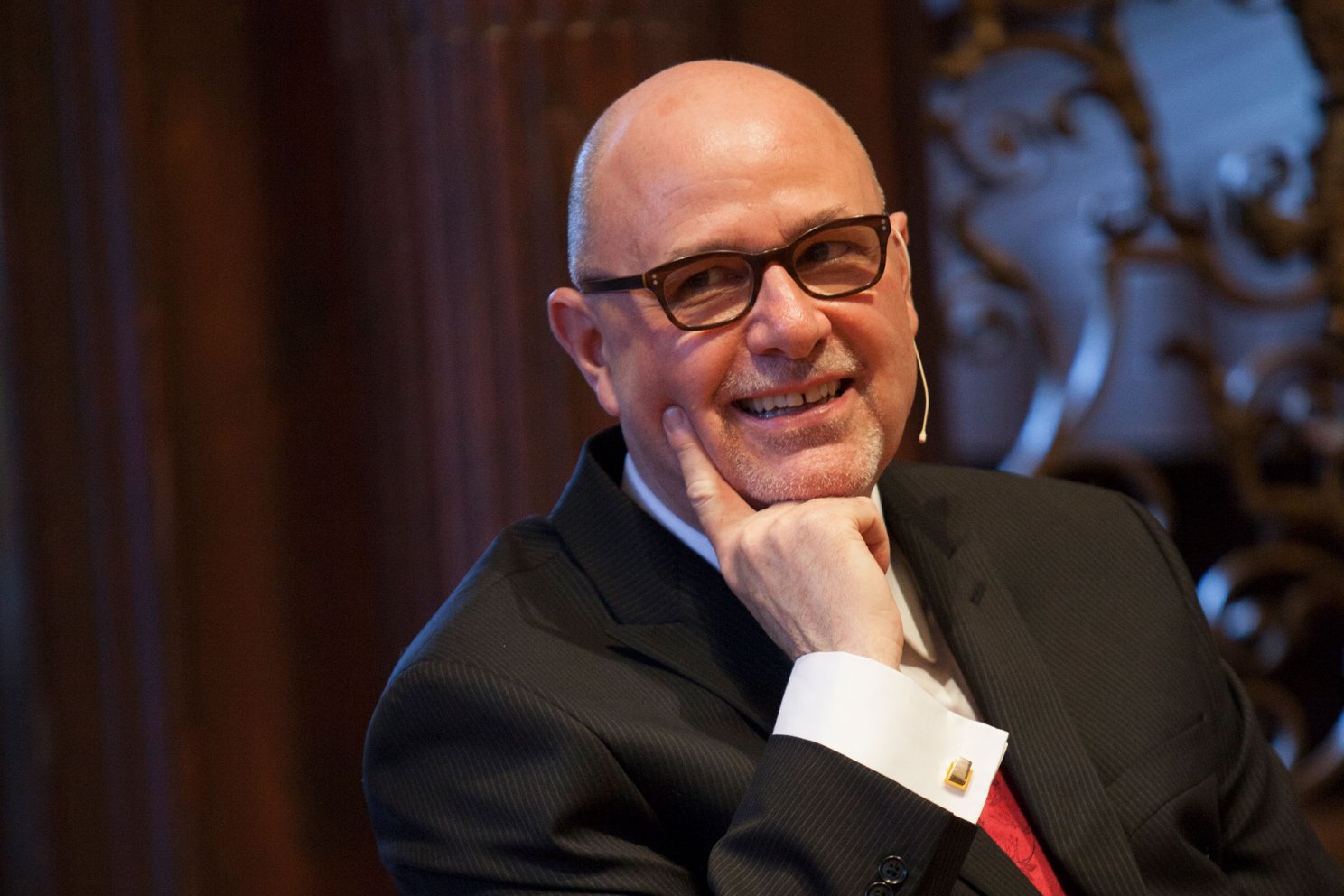
Carter Eckert.
File photo by Stephanie Mitchell/Harvard Staff Photographer
At a meeting of the Faculty of Arts and Sciences on Feb. 3, 2026, the following tribute to the life and service of the late Carter Joel Eckert was spread upon the permanent records of the Faculty.
Born: May 11, 1945
Died: December 13, 2024
Carter Joel Eckert was born on May 11, 1945, in Chicago, Illinois, to Emeline and Carter Harrison Eckert. He had an idyllic childhood at his parents’ farm in Wisconsin, where he rode horses bareback. A voracious reader, Eckert developed an interest in Roman and Greek history. At Lawrence College, “salons” hosted by the medievalist William Chaney and the German intellectual historian Elisabeth Koffka shaped his intellectual outlook for the rest of his life. His academic commitment to broad context, accessible writing, and topics of wide interest stemmed from this experience.
Eckert’s graduate training in European history at Harvard ended abruptly when he chose the Peace Corps over the Army. During his stay in South Korea from 1969 to 1977, he augmented his Peace Corps experience by learning the language and immersing himself in Korean culture. He became curious about the relationship between Korea’s autocratic government and its businesses within South Korea’s monumentally rapid postwar socioeconomic transformation. This experience led Eckert to pursue his Ph.D. at the University of Washington under the guidance of James B. Palais. His dissertation, which became the paradigm-changing book, “Offspring of Empire,” offered a history of capitalism in Korea based on close analysis of a Korean-owned textile company under the Japanese empire. Challenging dominant nationalistic scholarship and its simplistic binary of resistance and oppression, Eckert proposed a complex gray area between Korean collaboration and resistance by focusing on the intricate relationship between capital and government. While influenced by the theoretical works of Barrington Moore, Alexander Gerschenkron, and Ida Tarbell, his true intellectual commitment was to the primary sources, including pristine company records he obtained in Korea, as well as personal letters and conference transcripts in Japan. As a historian, Eckert was empirical to the bone.
Just before publishing “Offspring,” Eckert co-authored a widely used textbook, “Korea, Old and New.” Later, he produced a field-changing work with colleagues that developed the concept of “colonial modernity.” His scholarly efforts culminated in a masterful 2016 monograph, “Park Chung Hee and Modern Korea.” Park, a military dictator, is known as the central figure in South Korea’s emergence as an economic power in the 1960s and 1970s. Eckert’s biography of Park (intended as the first volume of a two-volume project that, sadly, was not completed) examines Park’s experience as a cadet and then a young officer in the Japanese military. Eckert teased insights from limited sources to understand how the Japanese military shaped Park’s life, outlook, and leadership. No other work in English, and possibly none in Japanese, so richly depicts the culture of military training in wartime Japan. It describes a terrifying world rooted in a philosophy of “always attack” that would prove to be both a bad tactic and a horrendous waste of life. Beautifully written and persuasively argued, the book is the product of numerous trips to Korea, Japan, and China to collect primary materials and conduct dozens of interviews. Eckert cherished this detective work and encouraged his students to emulate it.
Eckert was revered as a teacher and mentor whose prodigious scholarship was matched by a sense of warmth, care, and his copious deployment of the “so what” question. He taught an influential course on modern Korean history for decades. It transformed into The Two Koreas under the Core Curriculum and, later, the General Education program. The course evolved alongside momentous political developments in Korea, introducing generations of Harvard students to Korea long before the “Korean Wave” offered a glimpse of South Korea through popular culture.
Today’s field of Korean studies worldwide is shaped profoundly by the large presence of former Eckert students who were deeply influenced by his mentorship. In addition to direct advisees, Eckert co-advised virtually every Harvard Ph.D. student in Korean studies, working closely with his colleagues David McCann in Korean literature and Sun Joo Kim in premodern Korean history. His advising reached beyond Korean studies in a co-advising relationship with Andrew Gordon on the troubled but shared modern histories of Japan and Korea. His mentees’ loyalty was palpable in a packed room full of scholars from around the world who attended a symposium held in Eckert’s honor in September 2024, shortly before his passing.
A hallmark of Eckert’s career was his commitment to developing the study of Korea at Harvard. When he arrived in 1985 as an instructor in Korean (he would be appointed Assistant Professor two years later), the Korea Institute was four years old but existed in name only. It was subsumed within the John K. Fairbank Center for East Asian Research, with no significant endowment and few academic activities. Eckert radically changed all this. In 1993, newly tenured, he assumed its directorship and dedicated 11 years to strengthening the place of Korea at Harvard. He negotiated with FAS Dean Jeremy Knowles to make the Korea Institute an independent entity and spent many years raising funds both to support the Institute in perpetuity and to establish endowed professorships: the Korea Foundation Professorship emphasizing literature (1993) and the Yoon Se Young Professorship emphasizing Korea’s place in international affairs (1996). He offered dedicated service to many of Harvard’s most demanding centers and programs, including Regional Studies East Asia, the Asia Center, and the Harvard-Yenching Institute. All the while, he worked tirelessly to recruit new colleagues, mentor junior faculty, and maintain the highest standard for scholarship, collegiality, and stewardship for all that he had built. He also served as Harvard’s conduit to South Korea, accompanying scores of students, multiple deans, and two Harvard presidents across the Pacific. Beyond Harvard, he served in multiple editorial and advisory roles to develop the field of Korean studies. The fruits of his talents as an institution builder extended to South Korea, where he established, in 2006, a unique and successful summer school program with Ewha Womans University that is now preparing for its 20th anniversary.
Eckert passed away on Dec. 13, 2024. He is survived by his life partner, Sun Ho Kim, whom he met in 1990 during a research trip to Korea.
Respectfully submitted,
Andrew Gordon
Nicholas Harkness
Alexander Zahlten
Sun Joo Kim, Chair