Featured series


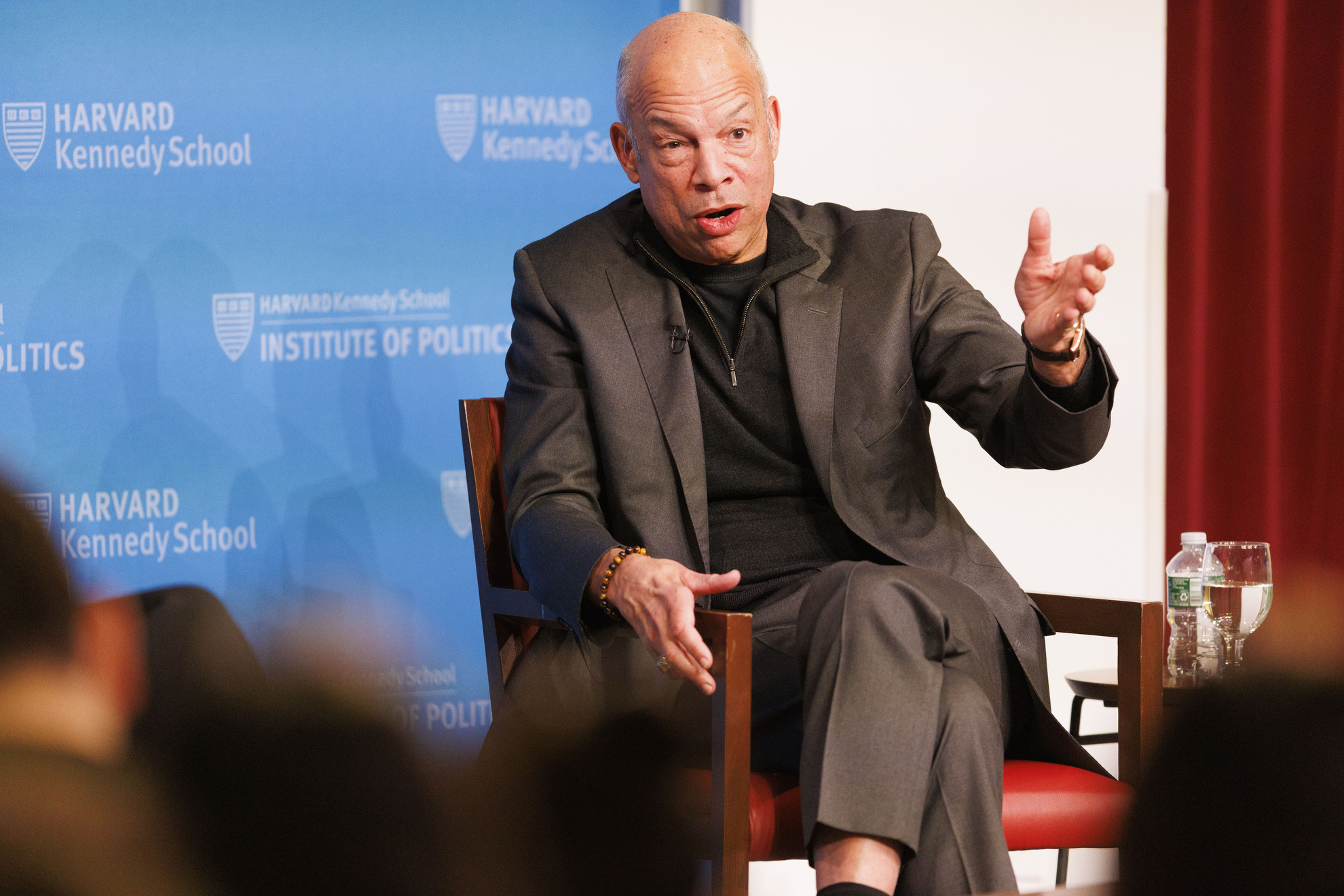
Jeh Johnson.
Veasey Conway/Harvard Staff Photographer
Nation & World
Border security isn’t really the problem
Former Homeland Security Secretary Jeh Johnson says current backlash is owing to cloudy mission, aggressive tactics
There is no question that having secure borders must be a national priority, former Homeland Security Secretary Jeh Johnson said during a discussion on the topic on Tuesday evening at Harvard Kennedy School.
But the aggressive practices of the thousands of Immigration and Customs Enforcement (ICE) and Customs and Border Patrol (CBP) officers who have been deployed to various U.S. cities in recent months are actually undercutting that effort, he said.
The killing of two Minnesota residents last month by federal officers have sparked a national backlash and raised broad concerns about both the tactics and the overall mission, Johnson said.
“When I look at the videos of the killing of Alex Pretti and the videos of the killing of Renée Good, I see a force — ICE, CBP — that I don’t recognize. I see an angry, ill-trained, undisciplined force that looks like they’ve come for a fight and that have lost their way,” he told Juliette Kayyem, assistant secretary for governmental affairs at DHS during the first Obama administration, and now Belfer senior lecturer in international security at HKS.
On Wednesday, the Trump administration “border czar” Tom Homan announced that 700 federal officers in Minnesota would be reassigned elsewhere. The turnabout comes in the wake of national public outcry over the killings of Pretti and Good — both U.S. citizens — during operations by ICE and CBP officers last month.
Both ICE and CBP fall under the umbrella of the Department of Homeland Security.
Johnson criticized DHS’ initial deployment of 3,000 federal agents to Minneapolis, saying such a heavy-handed approach undermines the Trump administration’s stated goals of securing the border and deporting those who entered the country illegally and committed crimes in two ways.
First, by diverting so many enforcement personnel to one city, agents are not protecting the U.S. southern border, where enforcement is most needed. Then, by making ICE “toxic” to many by its combative posture, local officials and citizens won’t want to cooperate with them.
If Americans don’t like what’s happening in cities like Minneapolis, Johnson said the solution is not to abolish ICE, but to change the nation’s immigration policies. And if elected leaders won’t change those policies, then voters need to change leaders in the 2026 and 2028 elections, he added.
Though it’s a complicated issue, the best resolution would be for lawmakers in Congress and the president to put aside politics and hammer out comprehensive immigration reform legislation, one that includes robust border security measures as well as relief for undocumented people who have been living in the country for decades and have otherwise been law-abiding or may have American-born children or family, Johnson said.
“The best immigration policy is one that you hear almost nothing about from either the right or the left.”