Featured series
Campus & Community
Alumni rally to support next generation of researchers
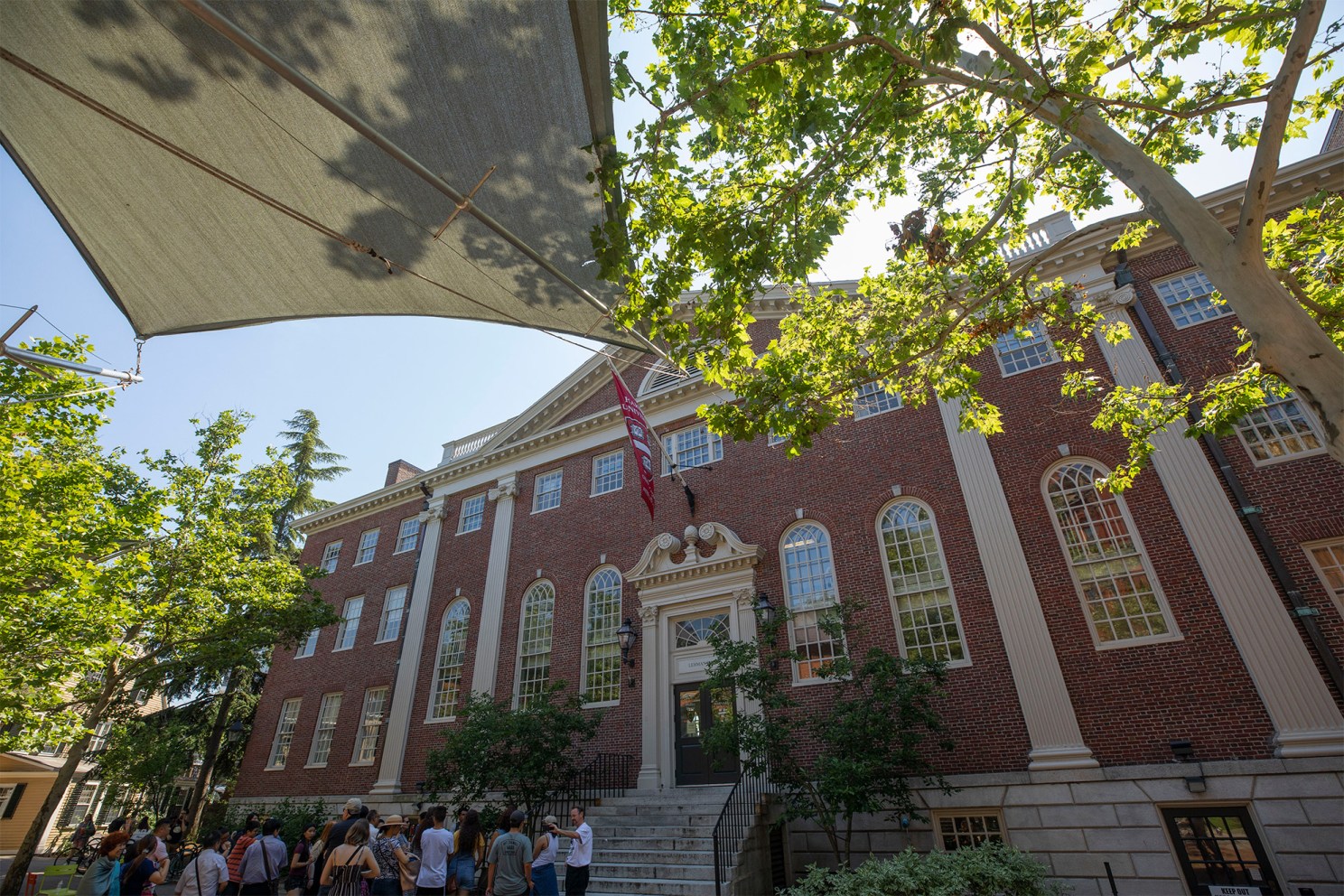
Lehman Hall at Harvard Kenneth C. Griffin Graduate School of Arts and Sciences.
Harvard file photo
FAS launches match to secure $100M for Ph.D.s
With the future of traditional research funding uncertain, a group of Faculty of Arts and Sciences (FAS) alumni has stepped forward to support graduate students — and to inspire others to do the same.
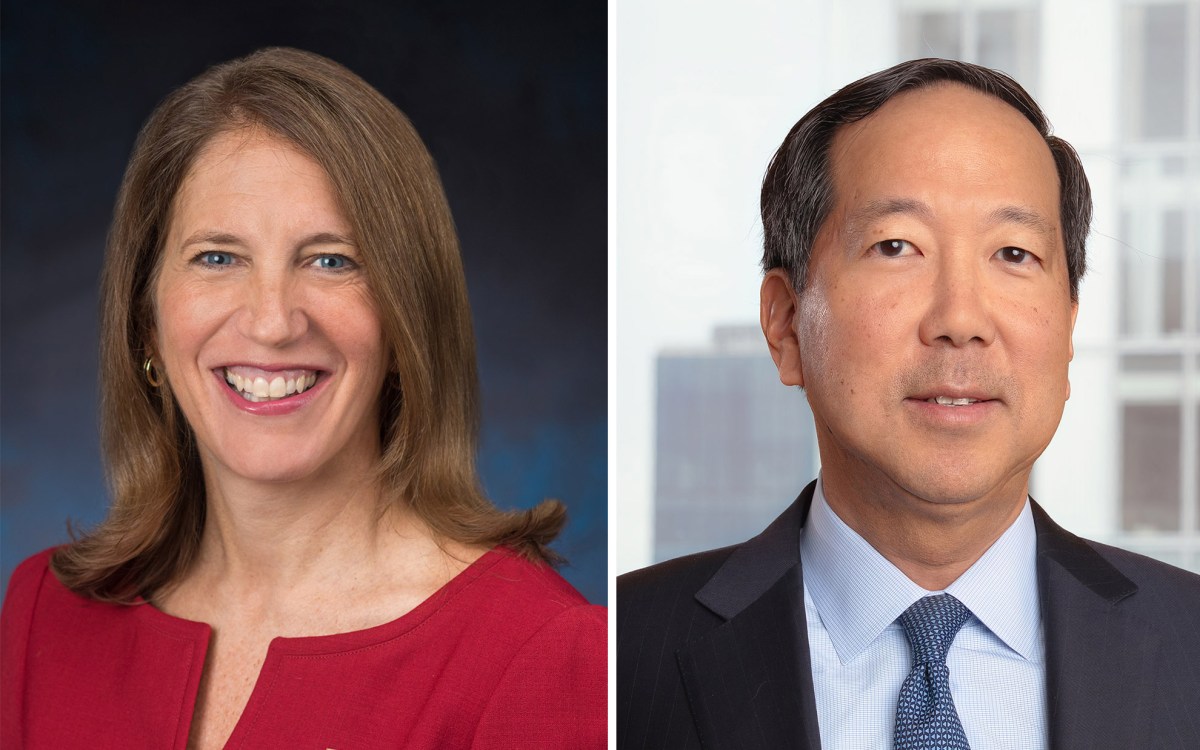
The Research Accelerator Challenge seeks to raise 50 new, endowed Ph.D. fellowships by June 30. New gifts to establish named fellowships will be matched through the fundraising challenge, made possible by a $50 million commitment from a group of dedicated donors. This includes a lead gift by Alfred ’94 and Rebecca ’94 Lin; support from Rui Dong ’05 and Thor Johnson and Brian Young ’76 and Anne Young; and additional gifts committed to ensuring research continuity.
“I am thankful for the partnership of our alumni to help ensure that Harvard remains a magnet for exceptional scholars,” said Hopi Hoekstra, Edgerley Dean of the Faculty of Arts and Sciences, who identified this effort as a top fundraising priority this year. “Ph.D. fellowships support bold thinkers, students who play a critical role in world-class research and go on to become the next generation of scientists and scholars.”
As part of the Harvard Kenneth C. Griffin Graduate School of Arts and Sciences, more than 2,500 Ph.D. students are engaged in research and scholarship in leading programs across the FAS and the Harvard John A. Paulson School of Engineering and Applied Sciences (SEAS).
Endowed fellowships are a critical tool for attracting the most promising Ph.D. students to the FAS and SEAS. The Research Accelerator Challenge will provide comprehensive student support, including tuition, health insurance, and a stipend, as well as greater flexibility for students to follow their paths of inquiry and work at the boundaries of fields. At a time when competition for public and private funding is increasing and the number of federally funded fellowships is decreasing, Harvard fellowships provide reliable support for students and the faculty whose research relies on them.
Ph.D. students have made key contributions across the FAS and SEAS to breakthroughs in gene editing, quantum science, hidden barriers to economic mobility, storytelling through sound, materials science, and neuroscience, among others. The impact of their work continues well beyond Harvard, with graduates awarded 53 Nobel Prizes, 18 Pulitzer Prizes, 61 MacArthur Foundation fellowships, 79 Guggenheim fellowships, 48 National Medals of Science, and 10 John Bates Clark Medals.
“Giving our Ph.D. students the freedom to advance the boundaries of knowledge is where truly transformative discoveries happen,” said Harvard Griffin GSAS Dean Emma Dench. “We want to do all we can to make sure our students remain supported so that they can continue to do extraordinary work.”
Ph.D. students are at the center of Harvard’s intellectual ecosystem. They work closely with undergraduates as teaching fellows, mentors, and advisers. Having the most promising Ph.D. students is also crucial for retaining and recruiting top faculty because they play critical roles in labs and as research partners.
“At SEAS, we have Ph.D. students from bioengineering, electrical engineering, applied physics, all within one lab. It’s these incredible Ph.D. students who drive our interdisciplinary research forward,” said David C. Parkes, John A. Paulson Dean.
Examples of their impact are wide-ranging. Hannah McCalmon, a Ph.D. student in molecular and cellular biology, is making new strides in how the brain recognizes smell over time. Ph.D. student Alex Berry is creating novel methods to monitor food security via satellite imagery in southern Madagascar, where drought has left about 1.6 million people dependent on food aid. Lucas Woodley ’23, a Ph.D. student in psychology, co-developed a cooperative online quiz game that can reduce animosity between partisan groups.
“Put simply, the only reason I was able to attend Harvard and discover psychology research was because of alumni generosity,” said Woodley.