Featured series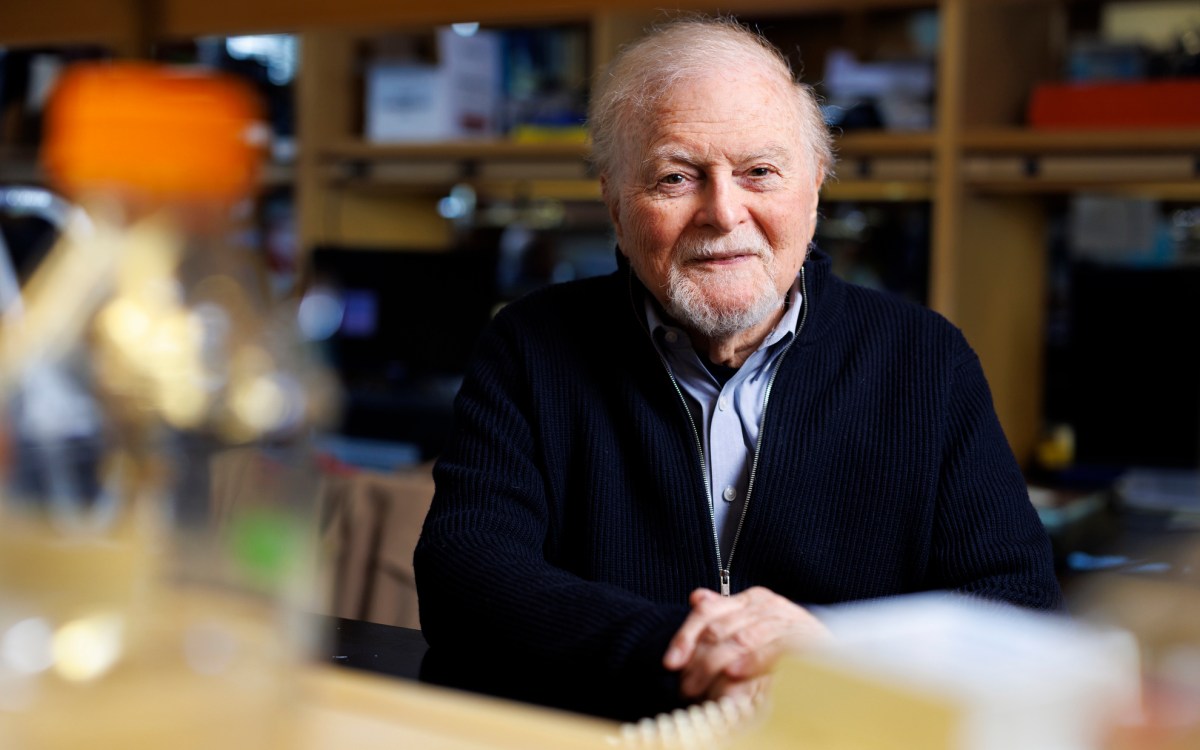

Illustration by Liz Zonarich/Harvard Staff
Health
6 keys to a long, healthy life (ice cream included)
Also, why reading Ben Franklin beats climbing Mount Everest
Leading a healthy life is simple, said Ezekiel J. Emanuel, M.D. ’88, Ph.D. ’89, professor at the University of Pennsylvania Perelman School of Medicine, in his latest book “Eat Your Ice Cream: Six Simple Rules for a Long and Healthy Life.”
In this interview, which has been edited for length and clarity, Emanuel talks about his six no-nonsense rules for achieving wellness and longevity, which includes having the occasional ice cream as part of your healthy diet.
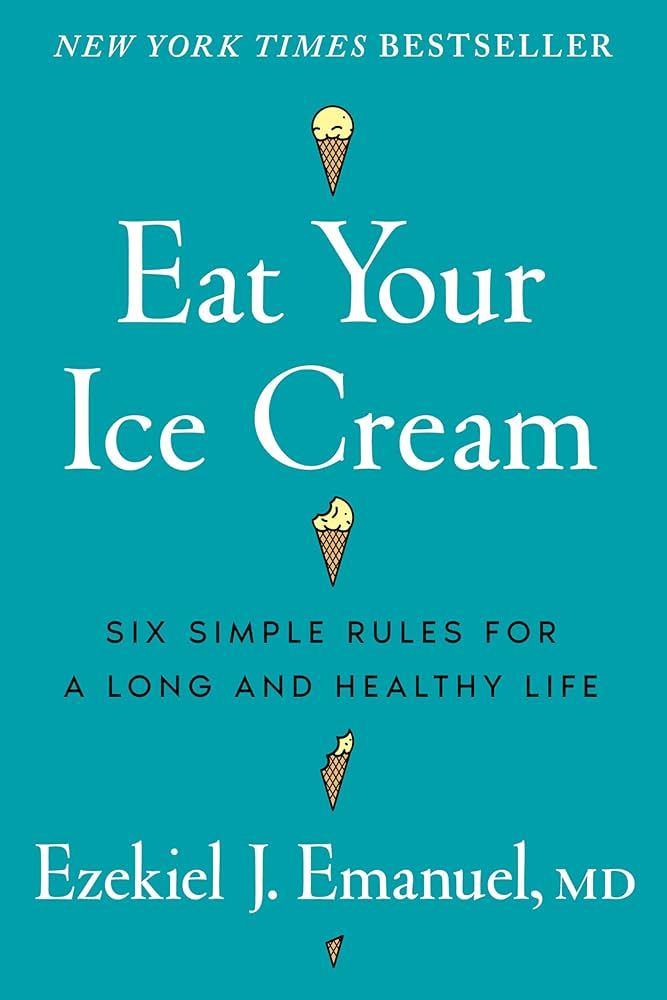
Your book starts with the first rule, “Don’t be a schmuck,” and ends with a plea to “Be a mensch.” How can these two principles help us live a long and healthy life?
“Don’t be a schmuck” is mostly a recommendation to not do risky, stupid things such as smoking, drinking alcohol, doing drugs, or not taking your vaccines. But there are other schmucky things you can do. When I was writing this chapter, I was thinking, “What’s the stupidest thing you could do?” I thought it was BASE jumping, which is jumping off a mountain in one of those wingsuits. I looked up the data, and the chance of dying doing that is one in 2,300, and I went, “Wow, that’s pretty bad.” But then I learned that the risk of dying climbing Mount Everest, even if you’re an expert mountaineer and a Sherpa, is one in 100. That takes the cake. Almost nothing can be schmuckier than that. It’s true that the riskiest thing we do every day is start the ignition on our car, but we have to calibrate the risks by recognizing the risks that are worth it and the risks that are not.
When I say, “Be a mensch,” what I want to communicate is that the purpose of your life should not just be to live longer. It should be greater than that; it should be trying to make the world a better place. Benjamin Franklin said it best when he said, “The noblest question in the world is, ‘What good may I do in it?” That’s part of what being a mensch is.
Social relationships are considered one of the strongest predictors of a long healthy life, but how can they affect our physical health?
When you tell people that having social interactions is good, they immediately think you’re talking about psychology or spirituality, but interacting with people actually changes the brain as well as the body. A social interaction leads to the release of oxytocin, the so-called love hormone in the brain that makes us feel better and promotes bonding. It also increases dopamine in the brain, which is the neurotransmitter related to the reward system, so it feels like a reward to interact with people. We also know that social interactions regulate the sympathetic nervous system by decreasing the release of cortisol, the stress hormone. Most recently, researchers who used data from the UK Biobank, where hundreds of thousands of people have donated their genetic codes and have filled out lots of questionnaires about their social life, compared people who are lonely and don’t have a lot of social interactions to people who do. They found specific proteins that are elevated in people who are more lonely and socially isolated that relate to increased inflammation and lead to increased heart disease and risk for cardiovascular problems, including stroke.
What is the most effective way to keep our minds active?
Keeping your brain healthy is about creating neural connections and making them stronger so that they don’t deteriorate. You can’t just do the same thing over and over again. You have to do new things and do them seriously, so that they actually make solid brain connections. But as you age, you’re going to inevitably lose neuron connectivity. The best way to keep your brain healthy is by learning new things and challenging yourself by taking up new hobbies or activities. About a little more than a decade ago, I committed myself to doing something totally new every year. One year, I learned how to make chocolate bars from bean to bar. I went to Madagascar, harvested beans, and made a chocolate bar. My most recent one, the Zeke Bar 4.0, is a dark chocolate with dried cherry in it, and it’s a big award winner. In 2025, I began raising bees and put hives in my backyard and harvested the honey and put it in contests and also got awards. This year, I’ve begun ballroom dancing. I’m a terrible dancer, but I’m going to learn to be better. It will force different parts of my brain to work, and it’s all to strengthen the brain and keep it active.
“The best way to keep your brain healthy is by learning new things and challenging yourself by taking up new hobbies or activities.”
Eating healthy is key to a long and healthy life, but what about diets and fasting? And how bad is the occasional indulgence in treats like ice cream?
We have to do the wellness behaviors for years and decades if they are going to do any good. Constant deprivation requiring great expenditures of willpower are not the way to wellness. Indeed, people who constantly diet with willpower fail at it and never lose weight.
We have to develop good habits and stick to them. Habits we enjoy are ones we will stick to. Furthermore, wellness behaviors are not like an Olympic gymnastics event. Perfection is not required. Ninety-percent is an A, and eighty-five percent is a B+ — good grades for wellness and organic chemistry. That is what is needed. Eating should be pleasurable — eating good food with people you like, and an occasional treat is a wellness trifecta.
What are the biggest misconceptions about exercise and sleep?
On exercise, one misconception is that people focus on aerobics, or vigorous exercise, but you actually need three different kinds of exercise. You need the aerobics to get your heart rate up; it’s good for the heart and your brain circulation. But you also need strength training because it keeps us from becoming frail. You also need to exercise for balance and flexibility, and the best answer is yoga. The second big misconception about exercise is that more is better. You reach a plateau after about 150 minutes a week of vigorous exercise, and you get no added benefit. Plus, you risk repetitive motion injuries. Many of the wellness gurus talk about 10 hours a week of exercise, and that’s way too much, in my opinion.
About sleep, the biggest misconception is that sleeping pills work. They don’t. There are other things you can do to sleep better: Sleep in a cool, dark room. Don’t look at your phone for the hour before. The dinner glass of wine can disrupt your sleep. Don’t take a nap or consume caffeine after 2 p.m.