Featured series


Elizabeth McCracken.
Photo by Edward Carey
Arts & Culture
What karaoke taught Elizabeth McCracken about fiction
In new guide to writing, novelist details value of being able to live with failure — and why she no longer sings in public
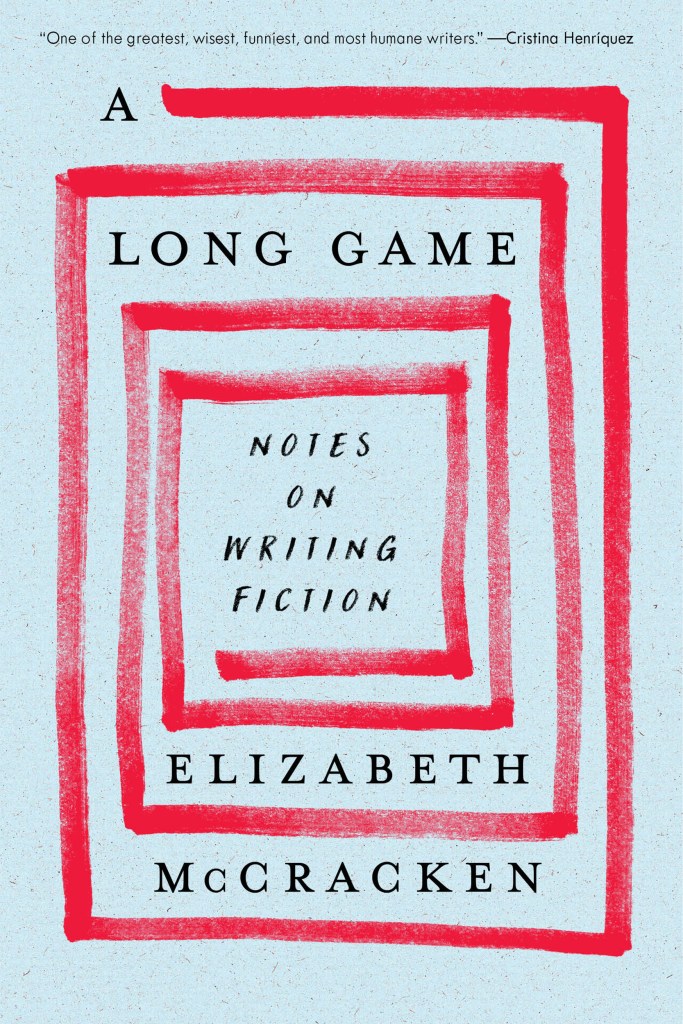
Excerpted from “A Long Game” by Elizabeth McCracken, Radcliffe fellow ’08
Once at an excellent weekend writers’ conference, I gave a craft talk. It was called “On Failure” and at least partly concerned why I refused to participate in karaoke. In the car from the airport to the conference site, one of my fellow writers had asked me what my go-to karaoke song was. I didn’t have one. Everyone else in the car — two fellow faculty and the conference’s organizer — seemed shocked. I tried to explain my own limitations — I don’t like people and I don’t like fun and I don’t like being the physical center of attention, or playing pretend, or ordinary competition — but the truth was more complicated.
I am in my late fifties. Most of the odd mental habits of my teenage years are behind me. I no longer think that an article of clothing might change my life. I don’t believe I can transform my bad habits in the course of a summer in such a way as to cause my enemies pain. I don’t memorize long poems under the delusion that someday I will be at a party where the ability to recite much of “The Ballad of Reading Gaol” will come in handy. But when I hear a song I love, late at night or driving alone, I sing along, con brio, pretending that I’m in front of a small adoring crowd, just as I did when I was 14, that much yearning and delusion.
There are plenty of talents I’d like to have: painting, acting, close-up magic. I’d like to tap-dance. To dance in general. To draw. To lecture off the top of my head. But I’m fine not doing any of these things. Perhaps I even believe I could, if I applied myself; perhaps one day I’ll take lessons. I’ll be a diligent student. I will practice, as I never did the flute. Would I trade writing for sculpture or grace on the dance floor? Of course not.
Would I trade it for the ability to sing really well in front of people? I’m not talking about a career as a vocalist, just the ability to floor a local audience, a room full of astounded listeners, a song in which I specifically command people to love me and they do. (The subtext of all my writing is love me.)
“Treat me like a fool, treat me mean and cruel …”
“We didn’t know she could do this,” my dream audience thinks. “We didn’t understand.”
But I can’t trade, can’t sing, and so I write on.
To generalize: most fiction writers wish they were really vocalists, and some fiction writers love karaoke because it allows them to live out their dreams. I save that longing for my fiction. I edit by reading aloud; I imagine myself in a packed theater, houselights down, no specific face in the audience visible. Man, do I knock ’em dead …
One of the karaoke-performing writers at the conference — she owned a karaoke machine, so she’d given it some thought — told me that karaoke is about confronting your mortal self. (Karaoke is a kind of mirror.) What I think she meant: you put yourself in peril and you push through doubt and survive. The centerpiece of my craft talk on failure was my one experience attempting karaoke, during which I did think I might die. It took place in Provincetown, Massachusetts, a place I have made important, improving mistakes. I’d gone to Drag Queen Karaoke at the Governor Bradford, not intending, never intending, to perform, when I decided to sing a truly awful, retrograde, sexist song: “A Hundred Pounds of Clay.” It’s about God creating “a woman and a-lots of lovin’ for a man.” Perhaps you’ve never heard of this song. Nobody at Drag Queen Karaoke had, nor anyone years later at the craft talk.
“I prefer failure to doubt. Doubt’s a wavering thing, never solid underfoot. It’s tough to launch from the bog of doubt. Failure is hard, motivating.”
Even now I don’t know why I decided to sing it, other than it was on the menu of available songs and I recognized it from the oldies station. Perhaps I thought the oddity of the choice would mask my inability to carry a tune. In other words, I had no connection to my material, and I hated my narrator, and I hadn’t considered whether my audience would have any interest at all.
I know exactly nothing about music, but “A Hundred Pounds of Clay” wasn’t in my range, no matter how you define “range.” I made it one line in, or three. If I recall correctly, the drag queens did nothing to stop me from bailing. Some failures aren’t worth watching, even by those in the business of mockery.
What I discovered singing three lines of karaoke was that I didn’t have the stomach for failing at it. To do anything, and enjoy it and improve, you have to have the stomach — the heart — for failure. “This is painful. I’m awful at it. A flop. Better not quit.”
I prefer failure to doubt. Doubt’s a wavering thing, never solid underfoot. It’s tough to launch from the bog of doubt. Failure is hard, motivating. Those kinetic swings between delusions of grandeur and extreme self-loathing are how I get anything at all done. If you suffer from these extremes, they will afflict you all your life. At least, they have me: I require the momentum, which means I must accept sometimes that I’ve absolutely failed. Otherwise, I’m in the quivering zone of uncertainty, where I might be okay and might not. Quivering is movement without progress.
“A Hundred Pounds of Clay” was the last time I sang in public. The time before that was in the eighth grade, when I decided to try out for the school production of “Oliver!” My best friend had a piano, and we flipped through her family sheet music and discussed what we might choose for our auditions, in the way that we readied ourselves together for school dances, curling and feathering our hair and wondering what we might dance to. I was aware that my friend was more musical than me, though like most 13-year-olds I still had one foot in fairyland; I thought it was possible that I had a beautiful singing voice that I’d managed to keep secret from everyone, myself included, like a birthmark that proved I was royalty.
I have always been given to fits of honesty over things about to become self-evident. In Paris, I declare, “Je ne parle Français trés bien.” At the “Oliver!” audition, I stood in front of the assembled music teachers and said, “I can’t really sing.”
The song that I’d chosen, which I had practiced alone and in front of my friend, was “The Theme from M*A*S*H.” Perhaps you didn’t know that “The Theme from M*A*S*H” has lyrics. It grieves me to report that it does. Not only is it a challenging piece of music, covering octaves and key changes, but its actual title is “Suicide is Painless.”
It was this that I had decided to belt out in front of my junior high school music teachers, hoping to land the part of a plucky orphan.
“Congratulations,” the nicest of them said when I had finished. “Most kids don’t know they can’t sing. You do!”
What’s the moral of this story? For years I took the congratulations to heart. “Know thyself.” I never again tried out for anything musical.
Now I think it’s a story about ambition and longing. What I didn’t tell those teachers, or my friend: I was obsessed with “Oliver!” When I felt misunderstood by my family I would go into the book-lined spare room we grandly called The Library, which also housed the hi-fi and the convertible sofa upholstered in an ugly, durable fabric called Herculon, and I would put on our copy of the cast album. I knew every word of every song. I was particularly devoted to “Where Is Love?,” the eponymous Oliver demanding: “Love me.” I would sit under a table and mouth the words with passion and hand gestures.
The “where” of “Where Is Love?” is five syllables long, and I knew better than to sing that for the teachers, but I might have managed a painless “Consider Yourself.” Painless for both me and the teachers. Instead, I chose an unrelated song, because I dreaded the judgment of grown-ups, not about my voice, but my longing. I didn’t want them to know how much I cared.
I have written a lot of bad fiction in my time, not wanting to reveal my own longing to the world. I have worried about what I’m good at in writing and what I’m bad at, and every second of that worry has been wasted.
The most difficult thing for ambitious writers is to dismiss thoughts of what other people think. It’s a paradox. You write because you want people to read what you’ve written and swoon or weep or even fling the book across the room. At the same time, you cannot care. Fiction writers are particularly liable to be control freaks, will want to manage reader interpretations. This is the reason for 97 percent of misused adverbs.
You have to write the best work you can and cede all interpretive control. Readers will think what they want, goddammit, God love them.
Why do I write these days? I want to be loved. But I don’t care whether anybody approves of me.
Copyright © 2025 by Elizabeth McCracken. Excerpted by permission of Ecco, an imprint of HarperCollins Publishers.