Featured series


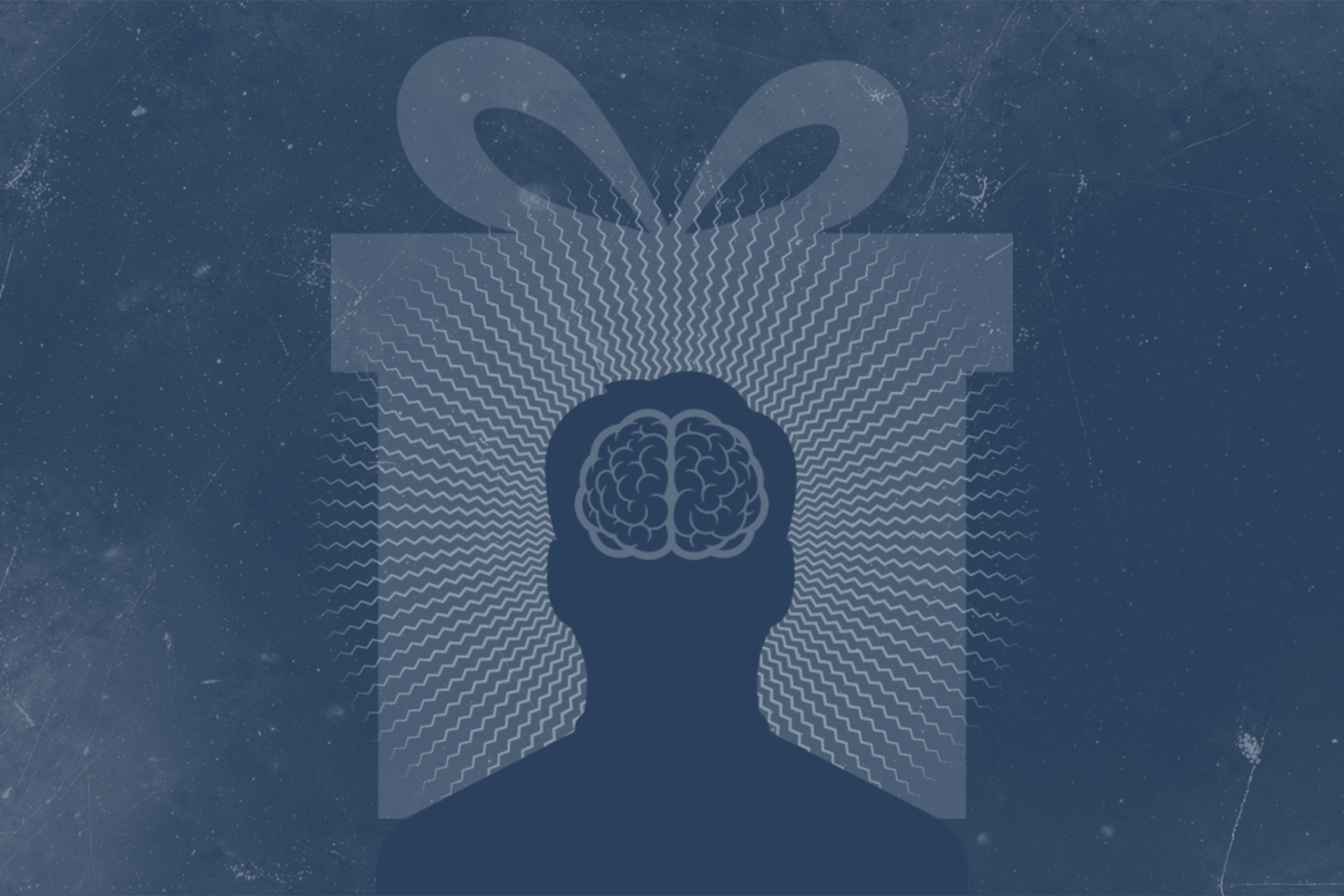
Illustration by Liz Zonarich/Harvard Staff
Nation & World
‘Gifted’
Rooted in values, scorned as elitist, and now, in the age of AI, about to go extinct?

A series about meanings
Ellen Winner is a senior research associate at Project Zero at the Harvard Graduate School of Education and author of “Gifted Children: Myths and Realities.” For our new series “One Word Answer,” we asked to her discuss the history and connotations of “gifted.”
“Gifted” is a loaded term. A “gift” connotes something bestowed rather than achieved — and a label of gifted may sound elitist. Some people reject the very idea of giftedness. Instead, they offer the “feel-good” view that all children are gifted, or that giftedness is not inherent but just a matter of hard work and intensive practice.
When the concept of giftedness is embraced, what follows depends on what the culture values. In hunter-gatherer societies, sharp eyesight and bodily endurance are valued. In Polynesia, where navigators travelled the seas without instruments, spatial intelligence was prized. In the Jewish tradition, the ability to read sacred texts was recognized, and those who could do so at an early age might be selected to become rabbis or scholars. In the Catholic tradition, those with behavioral traits of reverence and humility might be selected to enter the priesthood.
With the rise of industrialization and mass schooling in the late 19th century, giftedness came to mean school smarts. The IQ test was invented in 1905 by Alfred Binet to help the French government recognize children who would need special help in school, though now it is used equally to identify giftedness.
Most people would agree that there are many non-academic areas in which one can be gifted — art, music, athletics, dance, understanding others, and more. Nonetheless, when we hear the term “gifted child,” we think school-gifted — and that means getting high grades and scoring way above average on standardized or IQ tests.
“In most societies, schools are designed for the typical child, and gifted children are atypical.”
Gifted children typically have what I call a “rage to master,” and this is true of those gifted in scholastic as well as non-scholastic domains. They are intensely internally driven. And they are often bored in school, becoming restless or disruptive or simply tuning out. What should be done?
Schools in the U.S. have tried a number of approaches to differentiated instruction for gifted children (typically identified by standardized test scores). One solution is grade-skipping. That might work for one or two grades, but some profoundly gifted kids are five, six years ahead — there are cases of children who go to college at 11. I’m not sure that’s a very good thing to do, socially or psychologically.
A less radical solution is to allow a child gifted in math, for example, to stay chiefly in their assigned class but take a math class that’s several grades higher — but this only works if the school is willing to make accommodations, and if the schedule aligns. Additionally, there are pull-out programs — after-school enrichment where gifted children get to be with others like themselves. But these programs do not solve the problem of boredom and lack of challenge when these students go back to their classrooms.
None of these solutions is perfect. In most societies, schools are designed for the typical child, and gifted children are atypical.
Some worry that gifted programs contribute to perfectionism in children, accompanied by fear of failure. It’s true that perfectionism can be a problem among gifted children because they push themselves to attain high standards, and sometimes their parents are pushing them, too. But it’s not necessarily the programs themselves that are the problem.
There is good news ahead. In this era of AI, education can be radically individualized, with children getting their own tutor bot tailored to their level. Children would not need to be labelled as gifted; they would simply advance at their own level. Finally, gifted children might get the education that they deserve, and concerns about elitism would likely dissipate.
One final thought. In an age in which machines seem to be able to do everything better than humans, it is hard to know whether there will be such a concept of giftedness, and if so, what it will mean.
— As told to Sy Boles/Harvard Staff Writer