Featured series
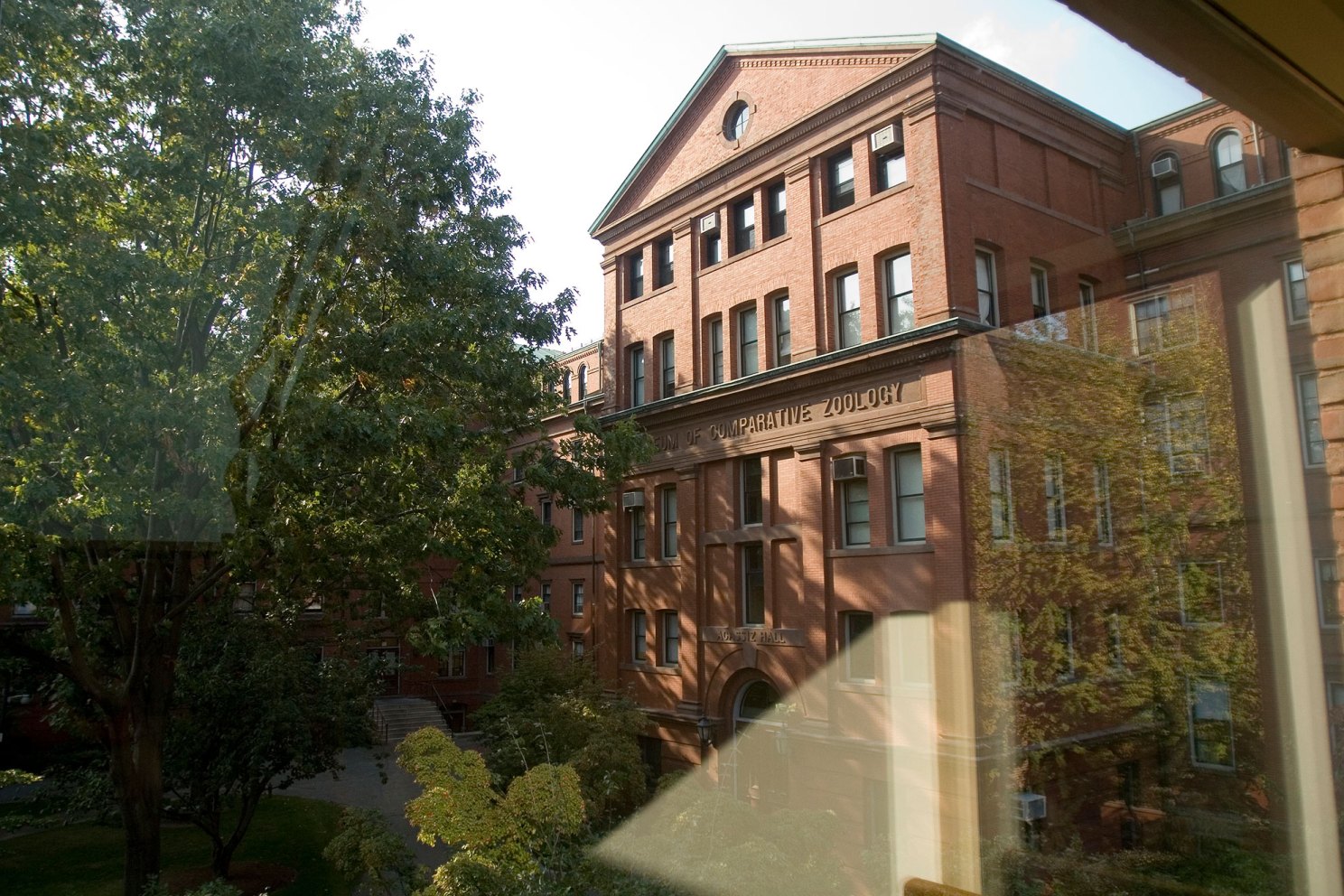
The Museum of Comparative Zoology at Harvard University.
Harvard file photo
At a meeting of the Faculty of Arts and Sciences on Dec. 2, 2025, the following tribute to the life and service of the late Karel Frederik Liem was spread upon the permanent records of the Faculty.
Born: November 24, 1935 | Died: September 3, 2009
The first thing visitors noticed when opening the door to Karel Frederik Liem’s laboratory in the Museum of Comparative Zoology (MCZ) was the sound of laughter emanating from his office. During his 37 years as a Harvard faculty member, Liem kept his students and colleagues laughing with him. His practical jokes and office memos had everyone on their toes, never quite sure if his latest communication was real or if he was trying to tell them that they were taking themselves too seriously.
Liem was born in Jakarta, Indonesia, in 1935. He received B.S. and M.S. degrees from the University of Indonesia and a Ph.D. in zoology from the University of Illinois Urbana-Champaign in 1961. He taught at Leiden University, the University of Illinois, and the University of Chicago and was Associate Curator of Vertebrate Anatomy at Chicago’s Field Museum of Natural History. As a Harvard faculty member from 1972 until 2009, Liem was the Henry Bryant Bigelow Professor, Professor of Biology, and Curator of Ichthyology in the MCZ. Together with his wife, Hetty, he was faculty dean of Dunster House for twelve years. He was also a visiting scholar at the Woods Hole Oceanographic Institution (WHOI), the University of Hawaiʻi, the University of Washington, the University of Vienna, and Wageningen University in the Netherlands. Liem received two Guggenheim Foundation Fellowships and was a Fellow of the Linnean Society of London.
Liem was an exceptional teacher. His enthusiasm and unpretentious approach to interacting with students, coupled with numerous jokes and stories about his life during class, meant that students, ranging from freshmen to advanced postdoctoral fellows, felt comfortable learning from him. Liem enjoyed being disagreed with and relished academic discussions, especially when there was a chance of overturning conventional wisdom and dogma.
For many summers between 1985 and 1997, Liem taught part of the fish biology class at the Friday Harbor Laboratory of the University of Washington. He relished his time in the San Juan Islands and took great pleasure in supervising the original research projects of students in this class. Incorporation of student-led projects was a key part of Liem’s teaching philosophy, and, for many years, this was an important component of his Biology of Fishes course at Harvard, which launched many former undergraduates into academia.
Liem also played an active role in numerous scientific societies, serving as President of the American Society of Zoologists and as an editor of eight journals.
When, in 1972, Liem took over as Curator of the fish biodiversity collection in the MCZ, the collection was in a sorry state. Liem acquired funds from the National Science Foundation and began a substantial multi-year renovation of collection infrastructure. This renovation included improving specimen storage and curation, hiring staff, implementing computer-based record keeping, modernizing the facilities, adding over 500,000 specimens, and incorporating a priceless collection of larval fishes donated by WHOI. This effort resulted in greatly increased usage of the collection, which has led to Harvard becoming one of the world’s leading centers for aquatic biodiversity research.
Liem’s research focused on the morphological and functional diversity of fishes. He played a foundational role in establishing cichlid fishes of the African Great Lakes as a model system for studying evolutionary biology. These fishes, which have speciated to a remarkable degree within only a few thousand years, have become a textbook example of how speciation occurs and of the genetic, ecological, and morphological underpinnings of biological diversification. Liem described and named several new cichlid species in a series of publications that focused particular attention on some of the group’s more remarkable specializations, such as species that feed by eating the scales of other fishes. Liem was the first to explore the functional diversity of cichlid fishes, focusing on how their jaw morphology and the function of the feeding mechanism allow resource partitioning among species. He identified plasticity of neuromuscular physiology as a critical feature that allows cichlid fishes to exploit a diversity of resources and he argued that such key innovations were an important factor in facilitating morphological diversification.
In the 1970s, analyses of animal morphology and evolution were based primarily on static anatomy. Liem was a leader in applying newly developed experimental techniques in physiology and image acquisition to such studies. He quantitatively measured the activity of head muscles during prey capture by using the technique of electromyography, used pressure transducers to directly measure hydrodynamic performance of the fish feeding system, and used high-speed video and x-ray cinematography to understand how the bones of the head function during prey capture and respiration. Use of the MCZ x-ray imaging facility allowed, for the first time, an analysis of air-breathing mechanisms in a wide variety of fish species. Through these studies, Liem revealed a remarkable diversity of respiratory function in air-breathing fishes and provided insight into the evolution of aspiration breathing in early land-dwelling vertebrates. Liem’s analysis of larval fish respiration demonstrated how some small fishes use their entire body as a countercurrent exchanger to aid oxygen intake in hypoxic environments.
An additional interest of Liem’s was the ecology and evolution of fishes that change sex as adults; he studied the remarkable synbranchid eels of Asia as examples of this phenomenon. Because these fishes also are capable of extensive overland excursions, Liem conducted a series of experimental studies of movement and feeding by fishes on land, a topic that is of considerable contemporary interest.
Liem’s research was not limited to fish biology. During the early years of his career, he studied the biology of amphibians and reptiles, publishing on frog reproductive biology and the anatomy of snakes and crocodiles.
Liem embodied warmth, humor, and a deep commitment to the welfare of his students. He is survived by his wife, Hetty; his daughter, Erika; and his son, Karel, Jr.
Respectfully submitted,
James Hanken
Farish A. Jenkins, Jr.†
Robert M. Woollacott
George V. Lauder, Chair