Featured series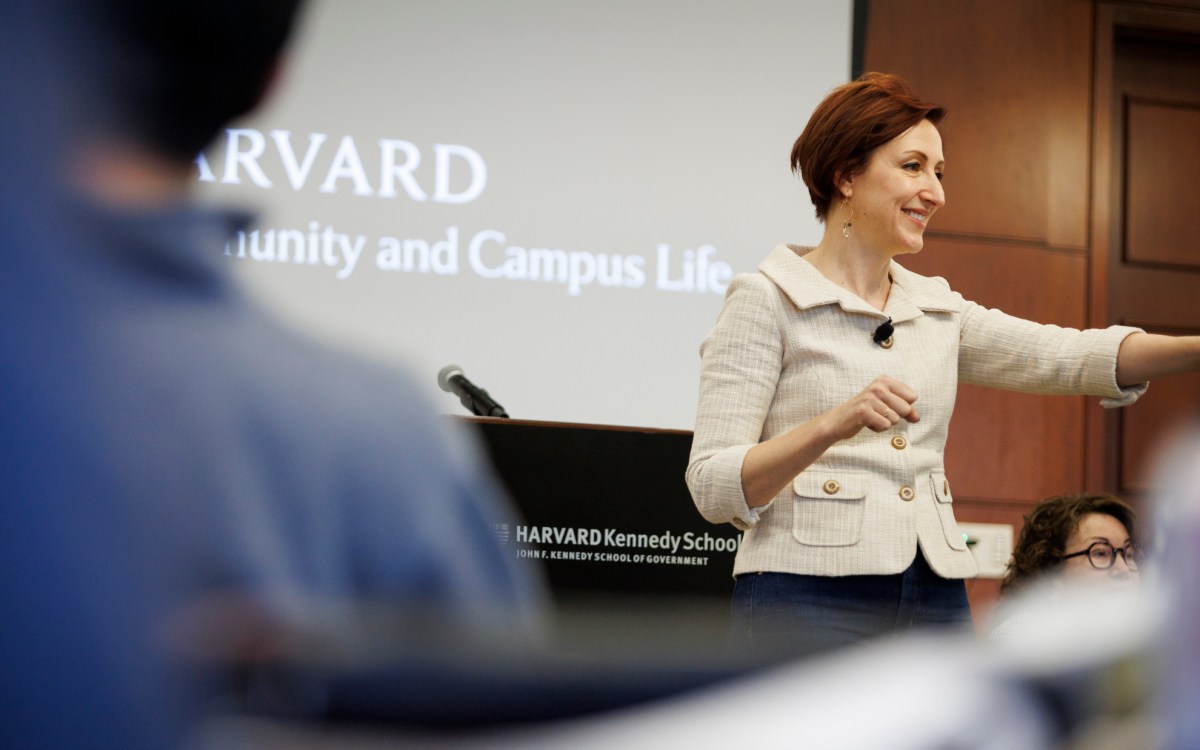
Campus & Community
Building interfaith community
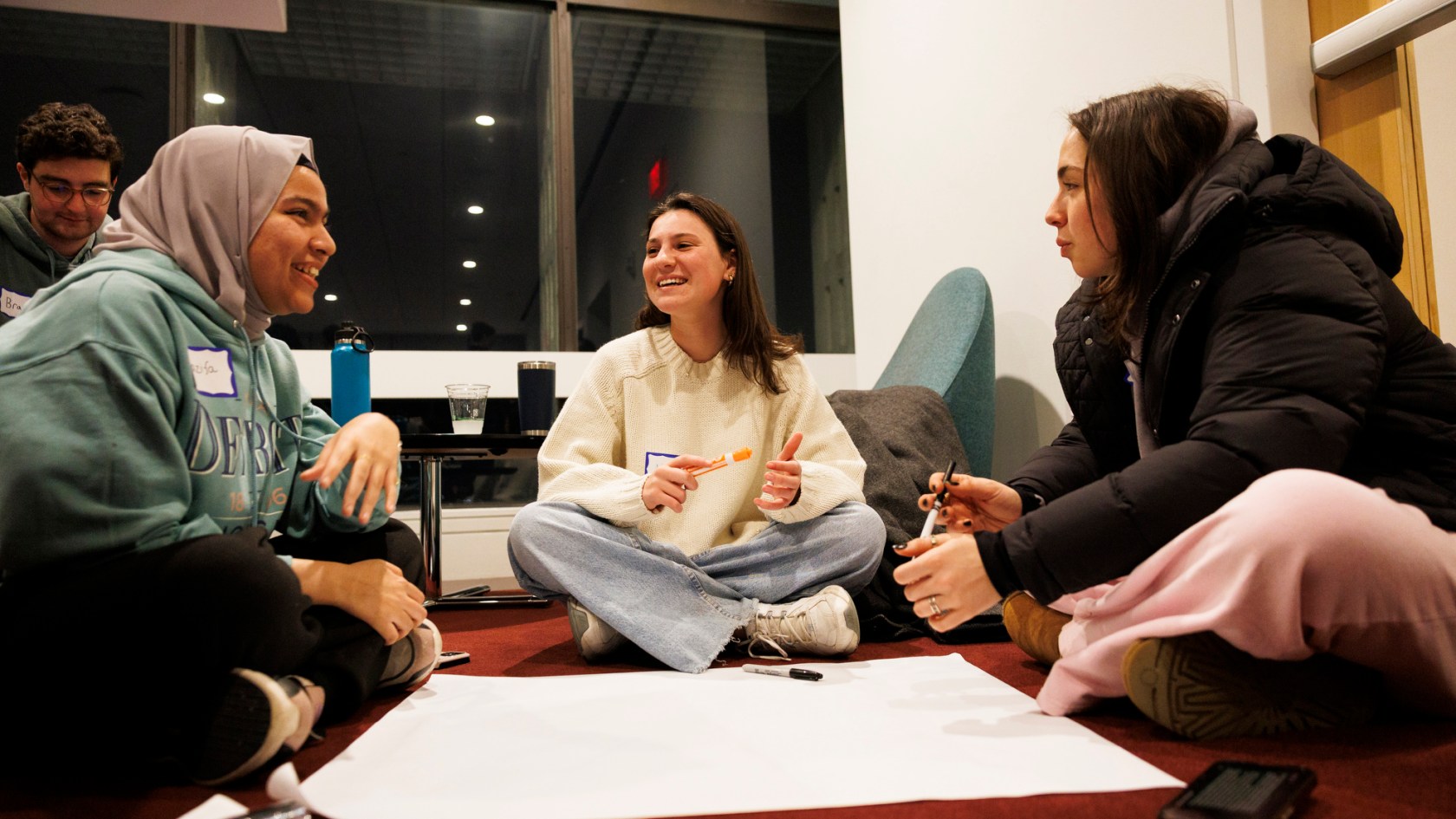
Nazifa Muntaha ’29 (from left), Noa Rone ’29, and Brooke Johnstone ’29 working together during the event.
Photos by Niles Singer/Harvard Staff Photographer
New initiative draws students seeking connection across difference
As 30 undergraduate students gathered in the Smith Campus Center’s Riverview Commons, the goal was simple: Come up with a new interfaith event for the spring semester.
The group didn’t have to limit itself to one. Getzel Davis, inaugural director of Interfaith Engagement at Harvard, encouraged everyone to break off into pairs. Within two minutes, students had spread across the room, workshopping more than a half-dozen ideas on big sheets of paper that they stuck to the walls.
The group represented the inaugural class of First-Year Religious, Spiritual and Ethical Life Fellowship. They had spent a semester together, learning about one another’s religious and spiritual backgrounds, talking through one another’s biggest challenges on campus, and discussing the hopes they brought to campus.
Now, Davis was asking them to pay it forward. How could they bring more students into meaningful discussions? How could they forge closer connections with one another?
In its first semester, the Presidential Initiative on Interfaith Engagement has pushed these questions to the center of campus discourse. Led by Davis, with support from multifaith engagement fellow Abby McElroy, the program has brought more events, resources, and support for students looking to engage in religious, spiritual, and ethical questions in curious, nonjudgmental environments.
In addition to the First-Year Fellowship, the presidential initiative put on a wide variety of activities that have attracted hundreds of attendees — including twice-monthly interfaith dinners, expert panels, and community service, as well as programs like Frames of Connection and Pluralism Passports that began in previous years.
The increase in activities and resources has been dramatic, said Deexa Kachhia, a Hindu junior in Winthrop House, who organized her first interfaith event last year after completing a fellowship through the nonprofit Interfaith America.
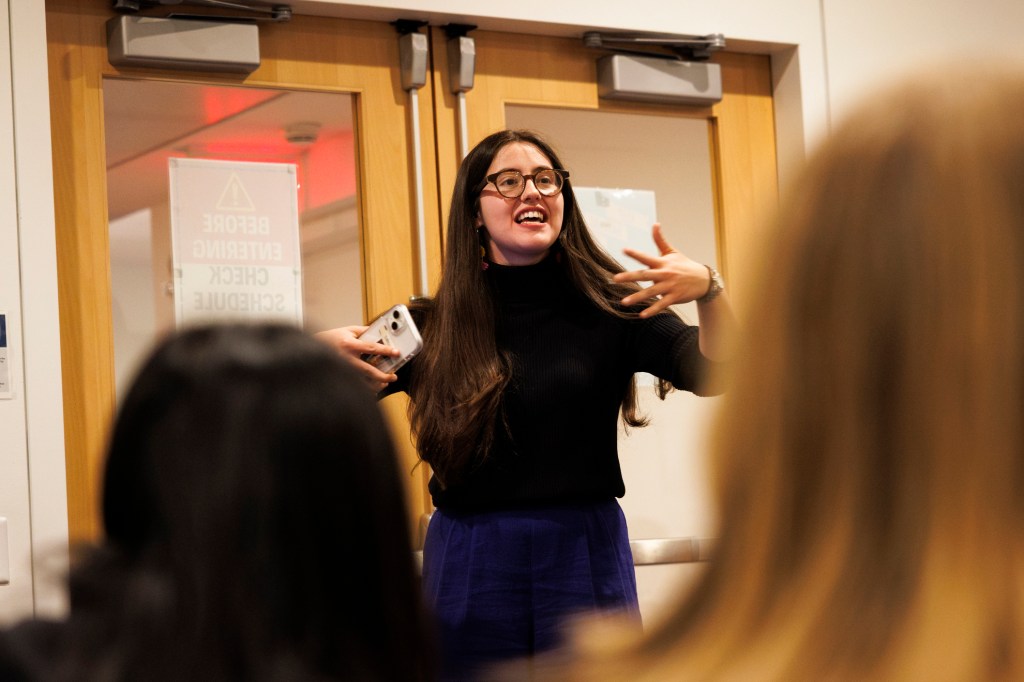
While the event ran successfully, with help from McElroy, Kachhia recalled struggling through logistical hurdles and worrying she wouldn’t be able to reserve an event space.
This semester, when Kachhia met with McElroy and Davis, who had recently been appointed director, they told her not to worry about all the logistics. That was their job, they said. She just had to bring them ideas.
“It was very heartwarming to realize, ‘Wow, there are so many people who are really behind this, and they want to make it happen in the same way that I do.’” Kachhia said. “I didn’t realize how much of a difference having this official support from the University made until it existed.”
This semester, Kacchia helped organize “To Be Continued” chats, small gatherings of students to continue the kind of vulnerable conversations that began at interfaith dinners and assisted with McElroy’s Frames of Connection project.
For Sahar Khan, a one-year L.L.M, student at the Law School who comes from an Islamic Sufistic heritage, the initiative has been an “important and meaningful way to remind ourselves of our common humanity.”
A self-described “third culture kid” who grew up in the Arab Gulf with exposure to multiple cultures, she enjoys that the program isn’t just about theistic faiths but also atheistic belief systems, like humanism.
Over her first semester, she met one of her best friends on campus through the program and had a host of other interesting conversations. She recalled speaking with humanist chaplain Greg Epstein about minority legal rights.
“It’s so beautiful to have these kinds of interactions,” she said. “Because I knew nothing about humanism before coming to Harvard. I started talking to him, and I saw so many similarities.”
“It’s so beautiful to have these kinds of interactions.”
Sahar Khan
David Arbeláez, a fifth-year Ph.D. student in sociology and social policy, also found unexpected common ground through Interfaith Engagement programming. Raised Catholic, Arbeláez entered Harvard agnostic and critical of organized religion.
When he went to the first interfaith dinner of the semester, he thought it might be a “trainwreck of a situation,” he said. His impressions quickly shifted.
“Twenty or 30 minutes into it, I realized that it wasn’t going to be what I expected it to be,” he said. The discussion of the night centered around people’s experiences abandoning religions or approaching it for the first time. He was surprised to hear that many religious students struggled with the same problems he had.
After arriving full of skepticism for the first interfaith dinner, he decided to come to the second one, too — and even volunteered to lead a small group discussion.
In a polarized time when some students are hesitant to publicly disagree with one another, he said the dinners allow students to share their thoughts in a nonjudgmental environment —without ironing over differences.
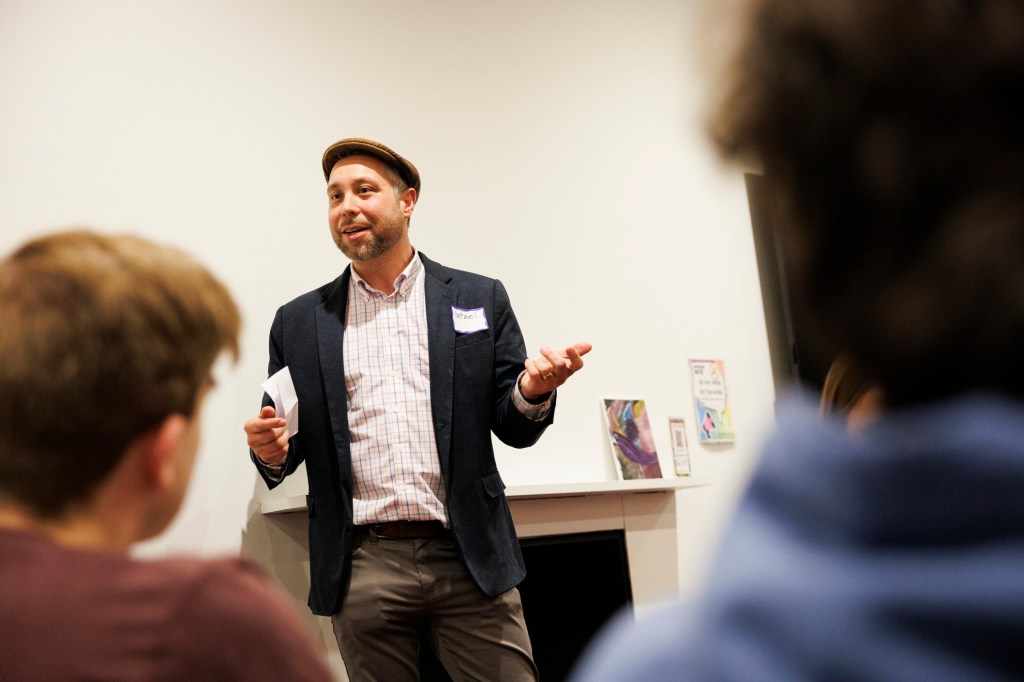
Davis is surprised and pleased at how students and communities across campus embraced Interfaith Engagement. He was expecting 12 or 15 students to sign up for the first-year fellowship, and they ended up enrolling 30.

He thought they’d get some push-back from student leaders about new religious accessibility training, but instead were met with warm thank-you’s. Due to interest, interfaith dinners went from once to twice a month.
He says that for the fall semester, the goal was for him and McElroy to run much of the programming before letting students take the lead in the spring.
“That’s really exciting for me,” Davis said. “I always believe that students know what students want best.” In some ways, he said, they were approaching the first semester as a lot of experiments, and they would see what stuck.
On a Wednesday night in the Smith Center, the experimentation continued. With students’ event ideas on big sheets of paper across the room, they received feedback on their ideas — and input on ways to fund them — from Nekesa Straker, senior assistant dean of residential life and first-year students; Alta Mauro, associate dean of culture & community; and Meagan von Rohr, Harvard Foundation director.
“Endeavoring to put on a program for your peers in your first year is a big deal,” said Mauro. “It’s a big lift. It takes a lot of vulnerability and effort.”
“Endeavoring to put on a program for your peers in your first year is a big deal. It’s a big lift. It takes a lot of vulnerability and effort.”
Alta Mauro
The students reflected on that vulnerability and effort at the end of the night, with each sharing a memory from the semester.
Azaria Sussman shared a story about how, growing up in an Orthodox Jewish community on Long Island, people told him that he might have to hide his religious identity on campus because it might be dangerous. He was surprised to hear that another student, a practicing Muslim, was told the same thing by her family.
Though he said that he felt safe on campus, having that shared experience was powerful.
“It’s a small example of how lots of faith communities on campus—especially on a campus that’s secular — have lots in common,” he said. “I think that is a big highlight of my experience.”
In the spring, he’ll be running an interfaith event with that student.