
 Featured series


Tag: Climate
-
Science & Tech
A trap for greenhouse gas
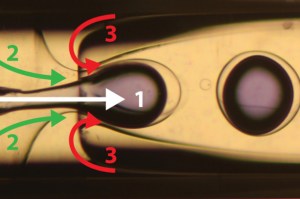
A team of researchers has developed a novel class of materials that enable a safer, cheaper, and more energy-efficient process for removing greenhouse gas from power-plant emissions.
-
Science & Tech
Boston’s leaky pipes add to greenhouse-gas buildup
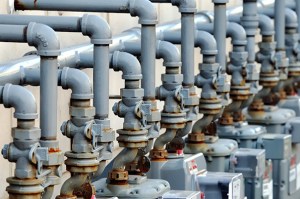
A Harvard-led study reveals that an aging natural-gas distribution system short-changes Boston-area customers and contributes to greenhouse-gas buildup. Depending on the season, natural gas leaking from the local distribution system accounts for 60 percent to 100 percent of the region’s emissions of methane.
-
Campus & Community
Fund to tackle climate change
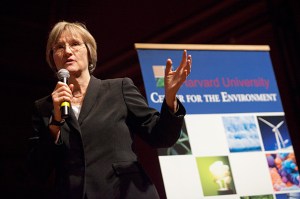
In an effort to catalyze research into sustainable energy sources, Harvard President Drew Faust has challenged University friends and alumni to raise a $20 million Climate Change Solutions Fund and seed new approaches to confronting the threat of climate change.
-
Science & Tech
Battery offers renewable energy breakthrough
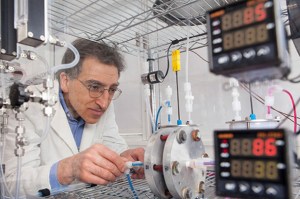
A team of Harvard scientists and engineers has demonstrated a new type of battery that could fundamentally transform the way electricity is stored on the grid, making power from renewable energy sources such as wind and sun far more economical and reliable.
-
Science & Tech
U.S. methane emissions exceed government estimates
Emissions of methane from fossil fuel extraction and refining activities in the United States are nearly five times higher than previous estimates, according to researchers at Harvard University and seven other institutions.

-
Science & Tech
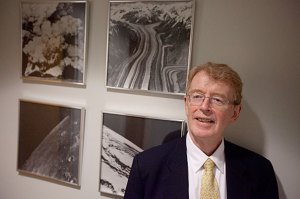
Weather warning
A report co-authored by Professor Michael McElroy and D. James Baker, a former administrator of the National Oceanic and Atmospheric Administration, connects global climate change, extreme weather, and national security.
-
Science & Tech
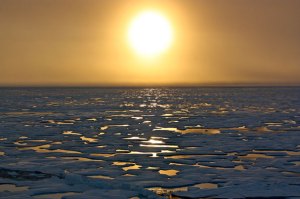
Cautious geohacking
By tailoring geoengineering efforts by region and by need, a new model promises to maximize the effectiveness of solar radiation management while mitigating its potential side effects and risks.
-
Science & Tech
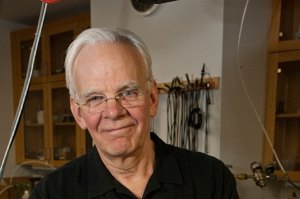
Concerns about climate change, health
A team of researchers led by James G. Anderson, the Philip S. Weld Professor of Atmospheric Chemistry, warns that a newly discovered connection between climate change and depletion of the ozone layer over the U.S. could allow more damaging ultraviolet (UV) radiation to reach the Earth’s surface, leading to increased incidence of skin cancer.
-
Science & Tech
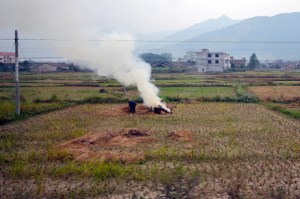
Carbon counter
Atmospheric scientists at the Harvard School of Engineering and Applied Sciences (SEAS) and Nanjing University have produced the first “bottom-up” estimates of China’s carbon dioxide (CO2) emissions, for 2005 to 2009, and the first statistically rigorous estimates of the uncertainties surrounding China’s CO2 emissions.
-
Science & Tech
‘Warming hole’ delayed climate change
Climate scientists at the Harvard School of Engineering and Applied Sciences (SEAS) have discovered that particulate pollution in the late 20th century created a “warming hole” over the eastern United States — that is, a cold patch where the effects of global warming were temporarily obscured.

-
Science & Tech
Ambitious undertaking
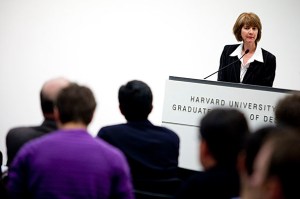
U.S. Undersecretary of Energy Kristina Johnson said the United States plans to have 80 percent of its energy come from alternative and unconventional fossil fuels by 2050. She spoke as part of the “Future of Energy” discussion series sponsored by the Harvard University Center for the Environment.
-
Nation & World
Prepping for Copenhagen
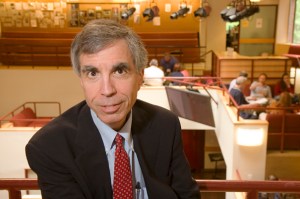
Harvard Kennedy School professor Robert Stavins will work behind the scenes at the 2009 U.N. summit on climate change with his Harvard-led initiative on global warming.
-
Campus & Community
Around the Schools: Faculty of Arts and Sciences
Green ’13 is a new initiative from the class of 2013 that aims to change the culture of personal behavior, starting with being more sustainable.
-
Campus & Community
HKS presents Roy Family Environmental Award
Harvard’s John F. Kennedy School of Government (HKS) will present the 2009 Roy Family Award for Environmental Partnership to the Mexico City Metrobus, a bus rapid transit system that reduces air pollution and greenhouse gas emissions while improving the quality of life and transportation options in one of the largest cities in the world.
-
Nation & World
Designs for enduring structures
As the hurricane bears down on the village, the people do what many all over the world do: head to the local school for shelter. A place of learning in normal times becomes a place of refuge during disasters.
-
Science & Tech
Green reunions: Groundwork set
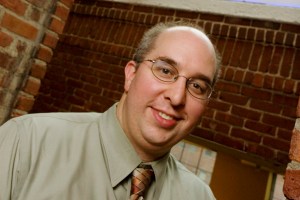
As of June 4, Harvard has celebrated 358 commencements. Add to that the simultaneous celebration of untold thousands of reunions.
-
Nation & World
Energy
ENERGY: Daniel P. Schrag, Sturgis Hooper Professor of Geology and Professor of Environmental Science and Engineering, Department of Earth and Planetary Sciences
-
Science & Tech
Mining exec: Coal vital to energy mix
The leader of one of the nation’s largest coal mining companies said Tuesday (Feb. 3) that coal is a vital part of the nation’s energy mix and that clean coal technology must be developed if the atmosphere is to stop warming.
-
Science & Tech
Global temp analysis clarifies warming details
An analysis of global temperatures between 1850 and 2007 has illuminated some climate change details, showing that winter temperatures have risen more rapidly than summer temperatures and that the seasons are coming nearly two days earlier than they were 50 years ago.
-
Science & Tech
Idle computing power may ID candidate molecules for efficient solar panels
The world today uses enough power to illuminate 150 billion light bulbs for a year. According to some estimates, by 2050, demand will double, creating irreversible climate change without reductions in humanity’s carbon output.
-
Science & Tech
Climate options must include ‘all of the above’
Climate change has so much momentum behind it that “either/or” discussions about options are meaningless because it’ll take all we can do just to arrest carbon dioxide at levels double those in preindustrial times, a top climate scientist said Dec. 11.
-
Science & Tech
Shai Agassi dreams of a gas-free future
Electric cars with zero emissions. Powered by renewable energy. All over the world. That is Shai Agassi’s dream. The 40-year-old Israeli entrepreneur left a lucrative corporate software track last year to found Better Place, a transportation company based on sustainability and independence from oil.
-
Science & Tech
Lovins: Protecting the environment is ‘a highly profitable enterprise’
As U.S. automakers plead for a government bailout, the next great automotive revolution is already under way, as Japanese automakers plan for a generation of lightweight cars that vastly increase mileage and whose advanced materials pay for themselves through dramatically streamlined assembly and smaller engines, an energy expert said Wednesday (Dec. 3).
-
Campus & Community
FAS plan will slash greenhouse gas emissions
Without action to slow the release of greenhouse gases, Harvard biologist and oceanographer James McCarthy said last week, current projections indicate that Massachusetts in 2080 could resemble South Carolina in 2008: The Bay State would experience an average of 24 days over 100 degrees each summer and two solid months of temperatures above 90.
-
Campus & Community
Harvard College Library is going green
The changes may not be immediately evident, but little by little, Harvard College Library (HCL) has been “going green” for years, even before the University’s newest commitment to sustainable practices.
-
Science & Tech
Humanity may hold key for next Earth evolution
Human degradation of the environment has the potential to stall an ongoing process of planetary evolution, and even rewind the evolutionary clock to leave the planet habitable only by the bacteria that dominated billions of years of Earth’s history, Harvard geochemist Charles Langmuir said Thursday (Nov. 13).
-
Science & Tech
Global warming predicted to hasten carbon release from peat bogs
Billions of tons of carbon sequestered in the world’s peat bogs could be released into the atmosphere in the coming decades as a result of global warming, according to a new analysis of the interplay between peat bogs, water tables, and climate change.
-
Campus & Community
Paul Zofnass ’69, M.B.A. ’73 establishes GSD sustainability initiative
Paul Zofnass ’69, M.B.A. ’73 has established a sustainability initiative at the Harvard University Graduate School of Design (GSD) with a $500,000 gift.
-
Campus & Community
Effects of climate change vary greatly across plant families
Drawing on records dating back to the journals of Henry David Thoreau, scientists at Harvard University have found that different plant families near Walden Pond in Concord, Mass., have borne the effects of climate change in strikingly different ways. Some of the plant families hit hardest by global warming have included beloved species like lilies,…
-
Science & Tech
10 ways to help
1. Drive less: Walk, bike, and take public transportation instead. Check out the Harvard Commuter Choice Program for information on ridesharing, discounts for MBTA passes, and more.