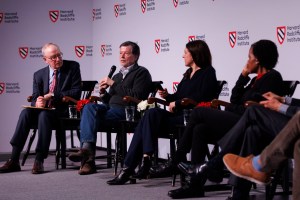
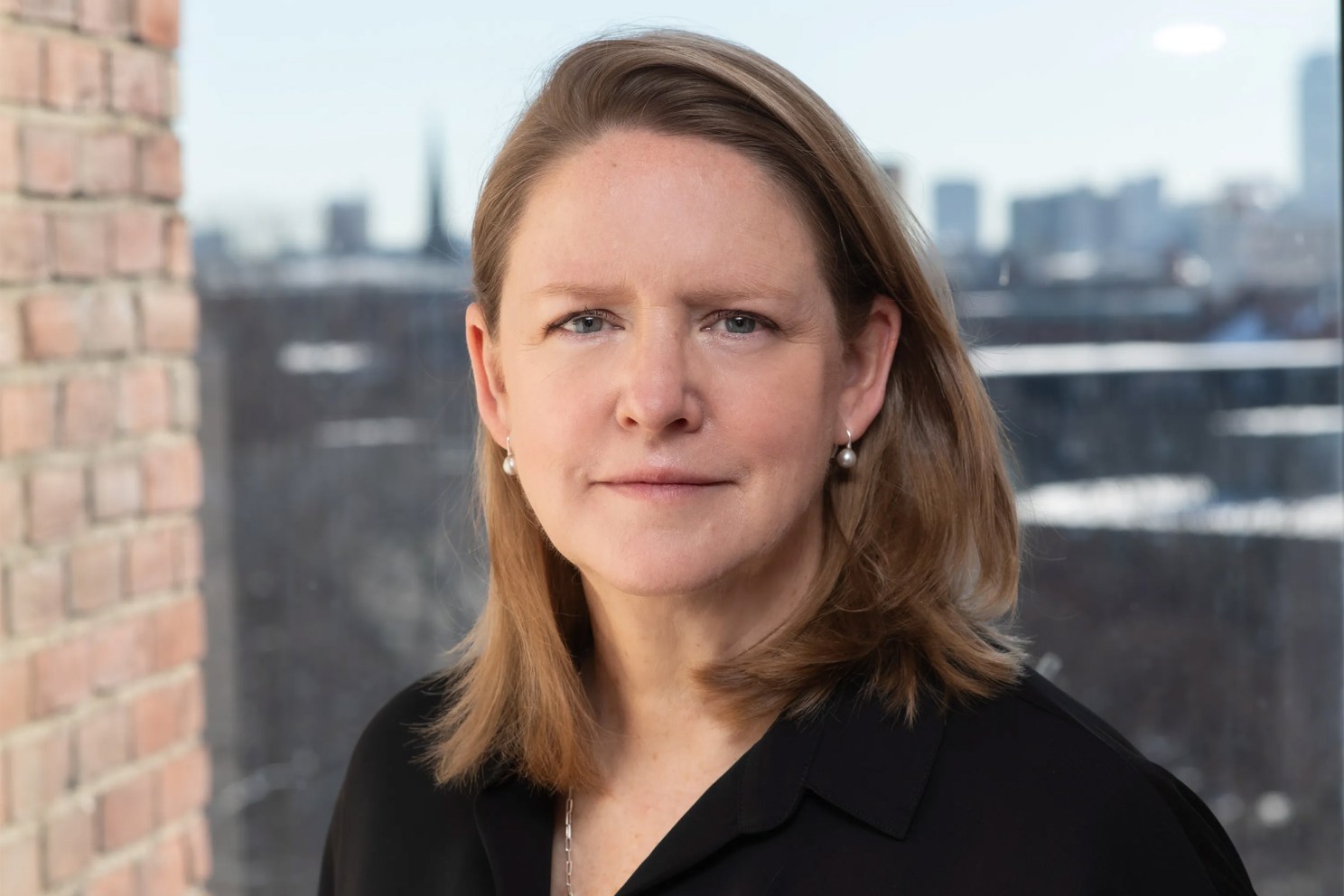
Stephanie M. Jones, professor at the Harvard Graduate School of Education and leading scholar on early childhood social-emotional development, has been named the next faculty director of the Harvard Center on the Developing Child.
“Stephanie embodies the Harvard Center on the Developing Child’s commitment to better understanding what children need to grow, learn, and thrive,” said Nonie K. Lesaux, dean of the faculty of education. “Her experience with translating that knowledge into real-world solutions and leading change across education, health, and social policy systems will also serve her well as she steps into this role.”
“I am delighted that Stephanie has agreed to serve as the next faculty director of the Center on the Developing Child,” said Senior Vice Provost for Research John H. Shaw. “She is an exemplary scholar and teacher whose pioneering research on the systems that support children’s early development and lifelong health and well-being will position her well to advance the center’s crucial work.”
Jones is a developmental psychologist trained in child development, prevention science, and social policy, and an accomplished early childhood researcher. Through rigorous studies of learning settings, family systems, and the practices and policies that shape wellbeing across childhood, she aims to build knowledge of human development in context, then translate and apply that knowledge to transform the settings where children learn and play.
Throughout her career, she has combined rigorous scientific research and program evaluation with a commitment to ensuring that her findings are accessible for early- and middle-childhood practitioners and policymakers. Her developmental and experimental studies have examined the causes and consequences of social-emotional challenges and competencies in children, strategies for supporting healthy development, and the programs, interventions, and pedagogy that build these competencies, while her policy-focused research has addressed the challenges of improving the quality of early childhood education at scale.
In addition to her scholarly work, Jones also serves as faculty co-chair of HGSE’s Early Childhood Concentration. Alongside Lesaux, she is faculty co-director of the Saul Zaentz Early Education Initiative, which promotes knowledge, professional learning, and collective action to support optimal early learning environments and experiences. She is also director of the Ecological Approaches to Social Emotional Learning (EASEL) Laboratory, which works within schools and communities to understand how social-emotional interventions shape the development and achievement of children, youth, and the families, teachers, and networks who support them. She serves on numerous advisory boards related to social-emotional development and child and family anti-poverty policies, including the National Boards of Parents as Teachers and Engaging Schools; consults with early childhood program developers, including Sesame Street; and has conducted numerous evaluations of programs and early education efforts. She holds a Ph.D. and an M.S. in Developmental Psychology from Yale University and a B.A. in Psychology from Barnard College.
“I’m thrilled to have this opportunity to further my work alongside my exceptional colleagues at the Harvard Center on the Developing Child,” said Jones. “I look forward to deepening and expanding our knowledge of what drives healthy development in early childhood and sharing those insights and solutions with policymakers, practitioners, and communities around the world.”
The mission of Harvard’s Center on the Developing Child is to leverage the power of science in pursuit of better, more equitable outcomes for young children facing adversity. Founded in 2006, the Center has a rich history of bridging the gap between science, policy, and practice in the early childhood field. Through their work, they aim to catalyze changes in policies, services, and funding to help ensure all children can thrive, along with their caregivers, in developmental environments that support their health and wellbeing. For more information about the center, visit their website.

 Featured series