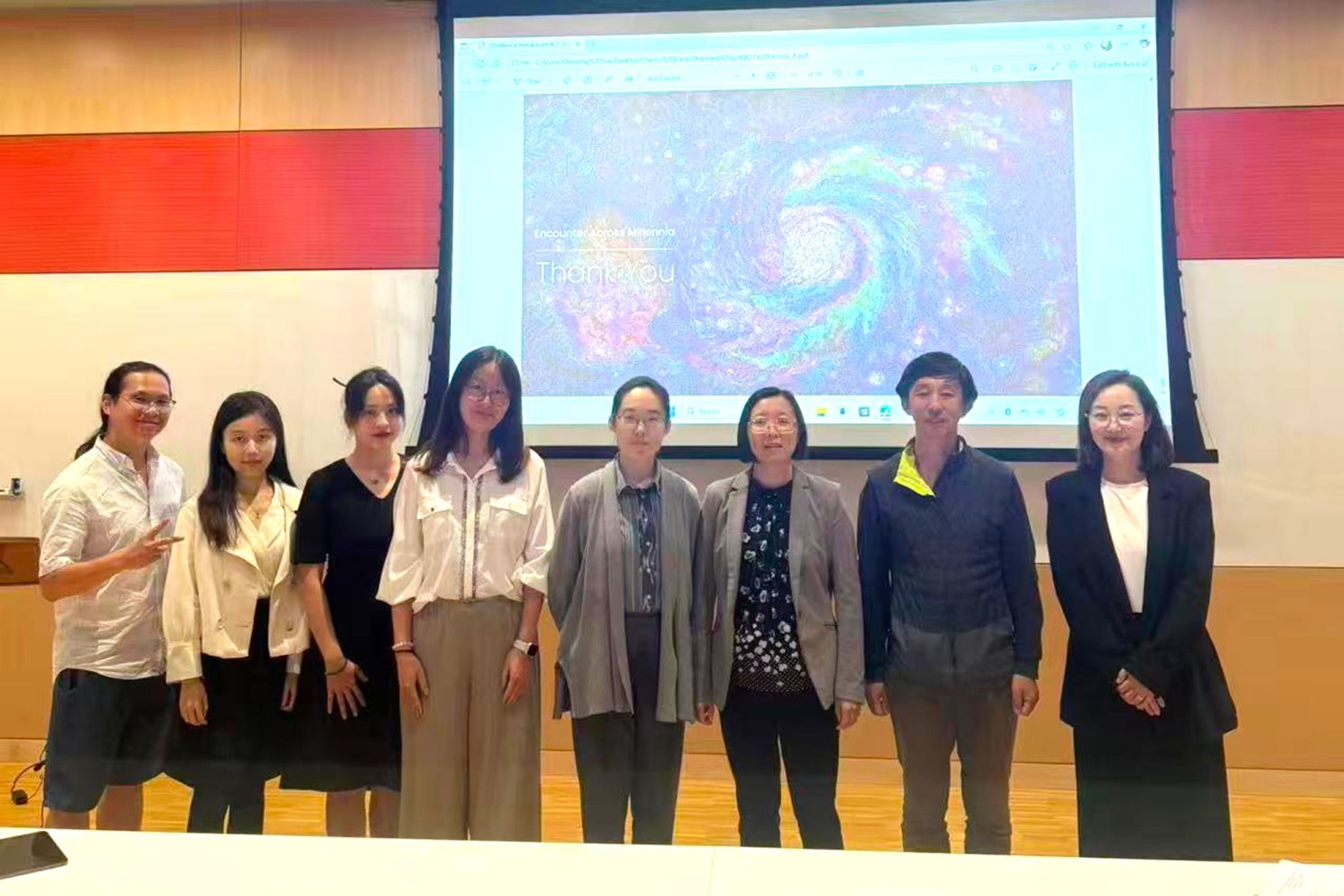
“Research Crossroads: Cutting-Edge and Traditional Approaches to China’s Development and Governance” was the theme of the 12th China Development and Governance Workshop held at Harvard on Aug. 21. The hybrid event brought together 27 scholars from the United States, Mainland China, Taiwan, and Europe.
The one-day program included three thematic panels, a roundtable discussion, and a feature lecture, all designed to facilitate dialogue on both longstanding and emerging issues in China’s development and governance.
The workshop was organized by Chunying Yue, associate at the Harvard University Asia Center, and Dapeng Wang, who served as a fellow at the Asia Center until July 2025. Co-organizers included Shuanglian Chen of Guangzhou University, Jun Wang of the Chinese Academy of Social Sciences, and Ruozhu Li of the City University of Hong Kong. As in previous sessions, the workshop incorporated peer-review elements to provide presenters with constructive scholarly feedback.
Panel I: From Government Responsiveness to Social Insurance
The first panel, chaired by Ruozhu Li, highlighted research on the social functions of public policy in China. Yao Liu and Wenting Yang examined interagency collaboration, broker organizations, and bureaucratic responsiveness on digital platforms. Chuanyong Zhang, Li Zhang, and Daxuan Zhao analyzed how multitasking local officials navigate environmental regulation and the trade-offs they face. Yu Luo and Baozhong Su presented findings on how social pension insurance affects the physical and mental health of flexible employment groups. Discussants Jun Wang, Jin Zhang, and Yuming Cui provided online feedback on the papers.
Roundtable: China Development and Governance —Past, Present, and Future Trends
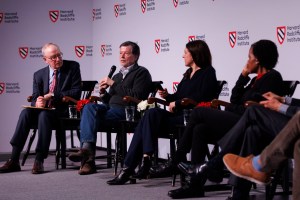
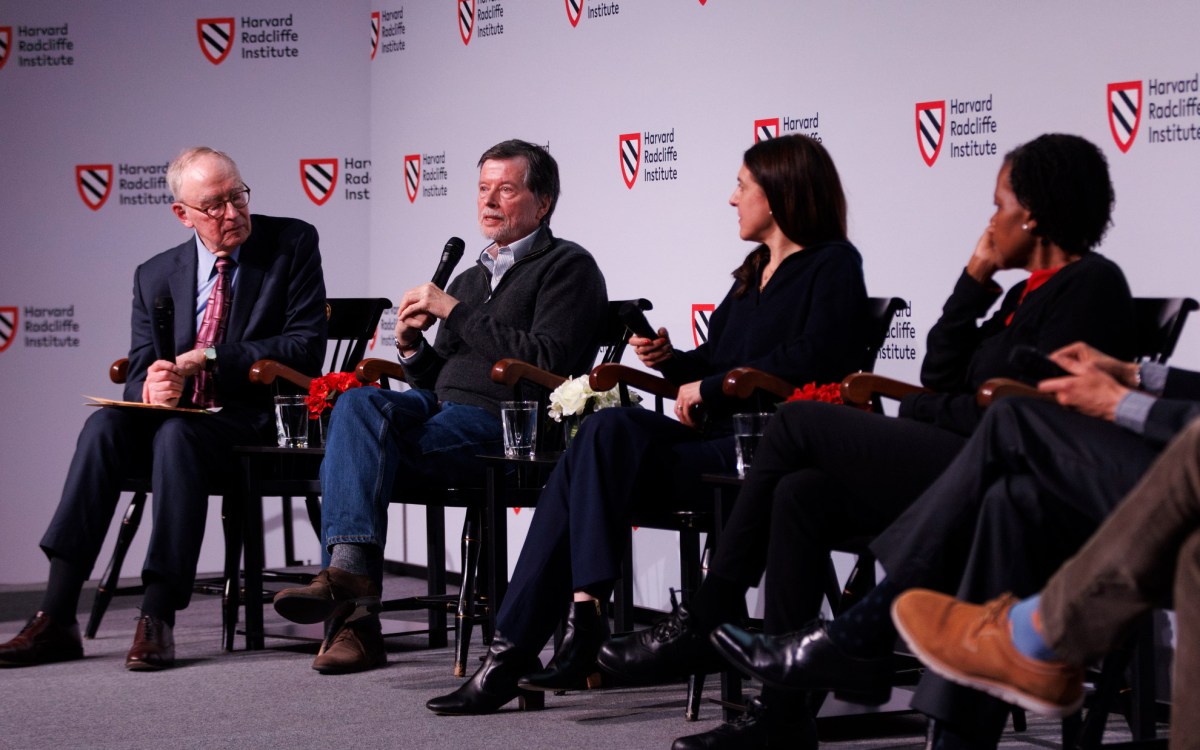
Moderated by Jing Ge of Florida International University, the roundtable brought together scholars and practitioners to reflect on the evolution of the field and future research directions. Panelists included Rey-Sheng Her (Harvard CAM Lab; Tzu Chi University), Zhanjie Si (Southern Connecticut State University), Wenjuan Zhang (Beijing Zhicheng Law Firm; O.P. Jindal Global University), and Chunying Yue. Their dialogue explored political philosophy, comparative China–India perspectives, public policy issues, and reflections on how the workshop series — now 12 sessions strong — has contributed to scholarly exchange. The session blended online and in-person participation.
Panel II: Public Opinion, Public Policy, and Political Thoughts in China
Chaired by Qi Jing, a Ph.D. candidate at UCLA, the second panel examined the interplay of public opinion, state policy, and political thought. Weimin Xie (Harvard University and Xizang University) presented survey-based analysis from Sichuan and the Xizang Autonomous Region, focusing on how infrastructure shapes national identity in frontier regions. Zhanjie Si investigated stigma and structural violence in law and language. Qi Jing discussed new dissertation findings on pathways toward building a cosmopolitan state. Online discussants Ruozhu Li, Kunling Zhang, and Rey-Sheng Her offered detailed commentary.
Panel III: International Relations, Education, and AI
The third panel, chaired by Xiaopeng Xue (University of Pennsylvania; Dalian University of Foreign Languages), explored China’s evolving global role and the challenges posed by technological change. Jing Ge analyzed China’s shifting position in global dynamics and issues of hegemony. Xiaopeng Xue traced China’s role transformation in international meteorological governance, highlighting its move from technology assistance to norm-setting. Yuanyuan Song (Harvard University; Tsinghua University) compared how Chinese and U.S. universities foster talent in the age of AI. Zhenling Liu presented research on AI literacy in academic libraries, while Xi Wang examined meaning-making and agency among Chinese adolescents in international education settings. Discussants included Tanja Schweinberger, Jing Ge, Zhenling Liu, Yuanyuan Song, and Chunying Yue.
Feature Lecture: Art in Action
The feature lecture, “Art in Action: Murals as Agents of Cultural Continuity in Asian Communities,” was delivered by Professor Chenlin Cai, an independent artist and adjunct professor at Delaware County Community College. Drawing on mural projects in Chinese communities across Philadelphia, New York, Washington, D.C., and Florida, Professor Cai illustrated how public art fosters cultural identity and strengthens community engagement. Chunying Yue offered reflections on the broader cultural and social significance of mural art within Asian American communities.
Conclusion
Founded in 2020 by Asia Fellows of the Rajawali Foundation Institute for Asia at the Harvard Kennedy School, the CDGW has grown into a significant platform for international scholars to discuss China’s development and governance. From 2021 to 2025, Chunying Yue and Dapeng Wang organized 10 sessions, supported by co-organizers and contributors including Qian Tang, Rongxiu Wu, and volunteer Ruiping. The 12th workshop received support from the Harvard Cultural Lab.

 Featured series