Dick Gross, number theorist and former College dean, dies at 75
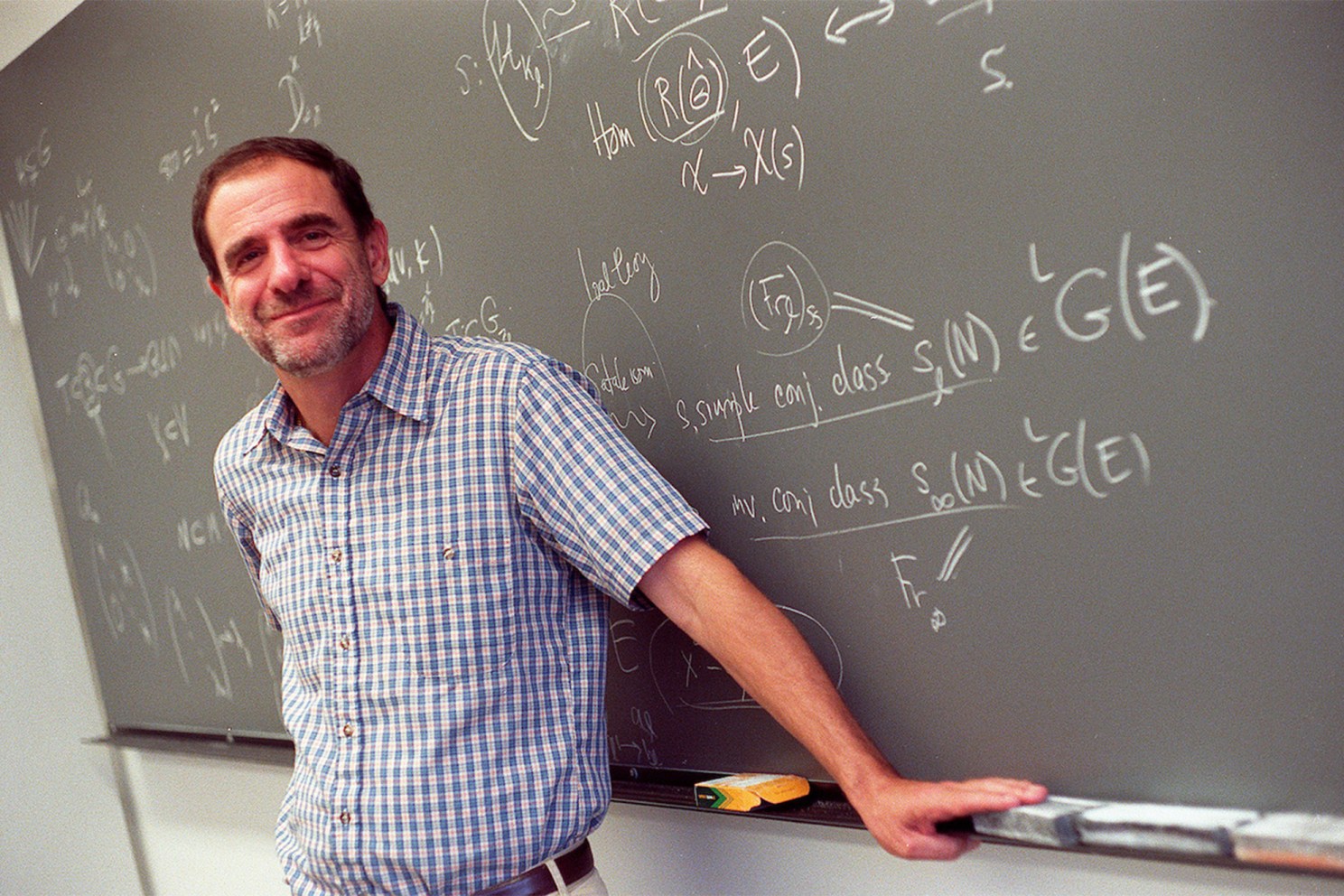
Dick Gross.
Harvard file photo
ContactKermit Pattison
4 min read
In the world of mathematics, Benedict “Dick” Gross made groundbreaking contributions in domains such as number theory. But within the small Faculty of Arts and Sciences community, the professor and onetime dean of Harvard College earned renown for something less abstract—the countless students he befriended and inspired.
“He was an absolutely brilliant mathematician,” said longtime friend Joe Harris, Higgins Professor of Mathematics and department chair. “But what was really striking was the way he could make a personal connection with people.”
Gross, who spent nearly five decades at Harvard as a student, math professor, and administrator, died last month at his home in California after a long illness. He was 75.
Born in South Orange, New Jersey, in 1950, Gross began his long career at Harvard when he arrived as a 17-year-old freshman in 1967. Initially, he was deterred from math because his classmates seemed better prepared so he decided to major in physics. In his sophomore year, however, he enrolled in the famous Math 55 and found himself enraptured by the teaching of Professor Andrew Gleason. Gross switched to math and graduated Phi Beta Kappa in 1971.
After graduation, Gross spent time in Africa and Asia studying music. Then he won a Marshall Scholarship and studied history, sociology, and math at Oxford University.
Eventually, he realized that his talents lay in math, but he had trouble persuading graduate schools that he was a serious candidate. Eventually, he wrote to his old mentor Gleason and convinced Harvard to accept him as a special student with the understanding he could enter the regular graduate program if he performed well in his first year. He did.
He earned his Ph.D. in 1978, and taught at Princeton and Brown before returning to Harvard in 1985. Gross also did pioneering work in areas such as number theory and representation theory.
In 1986, he won a “genius grant” from the MacArthur Foundation. The following year, he won the Cole Prize from the American Mathematical Society.
“Obviously, doing mathematics brought him great joy, but also teaching,” said his wife, Jill Mesirov. “He was a fabulous teacher. His loved his students, both undergraduate and graduate.”
Gross brought an infectious enthusiasm to his classes. Jordan Ellenberg ’93, Ph.D. ’98, now a professor of mathematics at the University of Wisconsin at Madison, recalled being inspired by the passion Gross brought to a class in Representation Theory of Finite Groups and “experiencing his visible joy as we built everything up from scratch.”
“From Dick I learned that mathematics was something you did because it’s the most fun thing in the entire world,” Ellenberg recalled in a blog post, “and all achievement you might attain is downstream from the fun.”
His devotion to students primed him for administrative roles. He served as dean of undergraduate education from 2002 to 2003 and dean of Harvard College from 2003 to 2007. He oversaw a comprehensive review of the undergraduate curriculum.
Harris recalled walking alongside his friend across Harvard Yard and being amazed by the number of students who exchanged greetings with Gross.
“It just seemed like everybody we ran into knew him and had some sense of a personal connection with him,” Harris said. “It was a remarkable gift.”
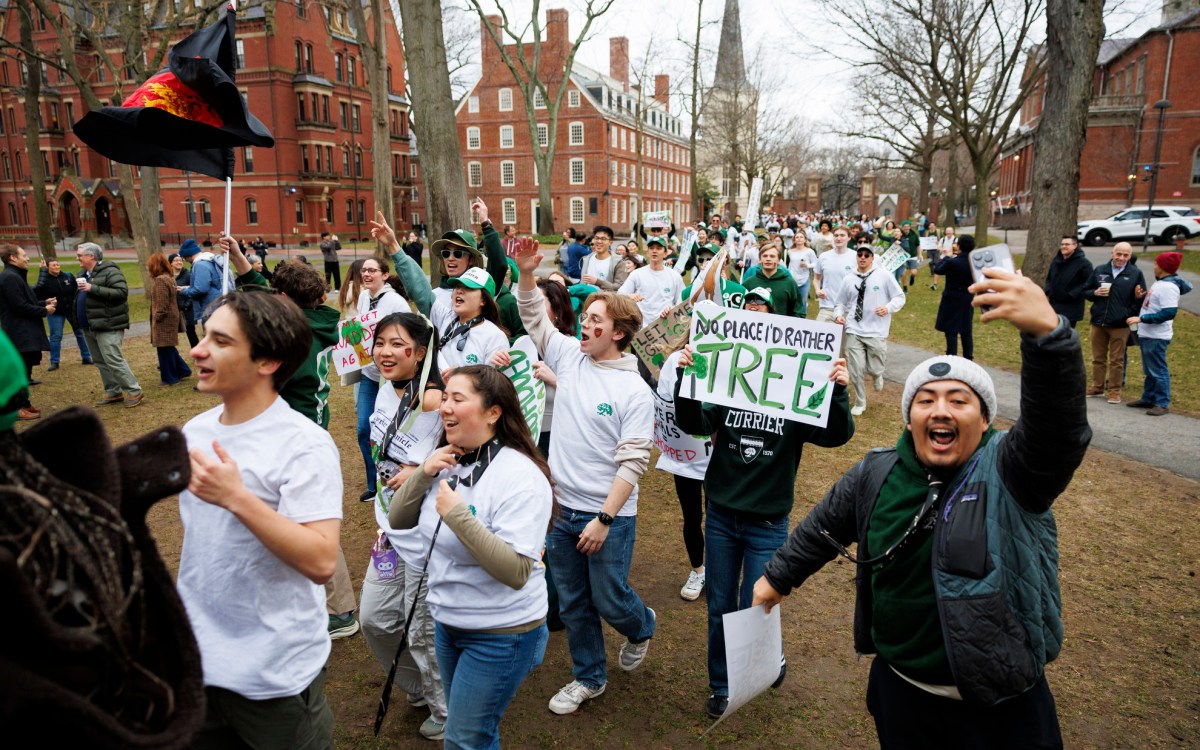
As dean, Gross sometimes likened himself to the Lorax, the Dr. Seuss character who spoke for the trees. “He felt that was his role — to speak for the students,” recalled Mesirov.
“He was very comfortable in their midst,” recalled Tom Dingman ’67, the former dean of freshmen who worked closely with Gross. “He found that a highlight of the job was the opportunity to meet more undergraduates. He derived a lot of enjoyment from that, but he also was good at asking questions and representing their opinions. He had their trust.”
Gross held the George Vasmer Leverett Professorship for nearly 20 years. In 2011, he was named a Harvard College Professor. (The department has compiled a page of tributes from former students and colleagues.)
In addition to Mesirov, Gross is survived by two sons, Isaac Mesirov Gross (Melanie Barrett) and Samuel Davis Mesirov (Chandler Davis Mesirov), and three grandchildren.
Last year, the department established a visiting professorship in his honor. It was a fitting tribute to the man who never tired of walking into the classroom.
“It is also fun that you try to communicate your enthusiasm to younger people,” he once said. “They give you a lot of energy in return.”

 Featured series