Center for the Study of World Religions brings psychedelic chaplaincy to forefront
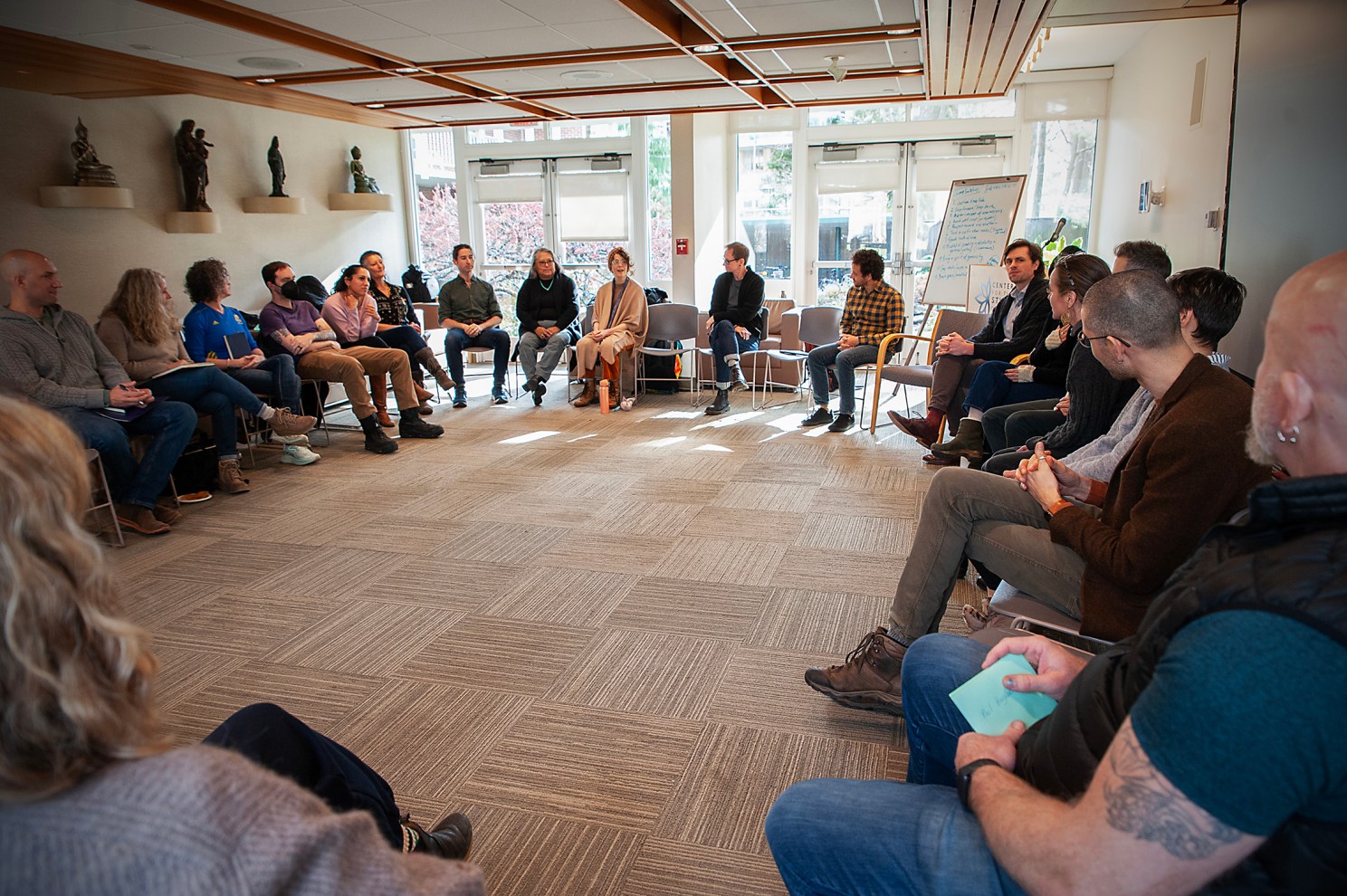
In December, more than 20 therapists, chaplains, and other professionals gathered for a three-day workshop focused on providing spiritual care in religious and recreational psychedelic settings.
A global resurgence of scientific, medical, and public interest in the therapeutic and transformational potential of psychedelic drugs, plants, and fungi is raising questions about the availability of spiritually responsive care, including the emerging field of psychedelic chaplaincy, in clinical and community settings where psychedelics are used.
Psychedelic journeys, in both clinical and non-clinical settings, often lead participants to profound spiritual, religious, and existential experiences. This raises a crucial question: what kinds of responsive care and support are needed to protect patients and enhance these experiences?
In the United States and around the world, a growing number of researchers are investigating the therapeutic potential of psychedelic substances to treat post-traumatic stress disorder, depression, addiction, and other mental health conditions. This “psychedelic renaissance” is also marked by a surge in psychedelic-based communities, churches, and underground practitioners who use these substances in religious ceremonies and for personal healing and growth.
Jeffrey Breau, program lead of Psychedelics and Spirituality at the Center for the Study of World Religions (CSWR) said psychedelic chaplaincy is a necessary and developing field that holds promise for addressing the need for spiritually attuned care.
“Patients are having these experiences, and if there is no awareness and specific training on the part of the clinicians or others who are supporting them, then patient outcomes can be harmed,” he said.
In 2024, the CSWR developed a multi-year plan to establish the intellectual and pedagogical foundations of psychedelic chaplaincy after a visit to the Interventional Psychiatry Clinic at Brigham and Women’s Faulkner Hospital in Boston, where Harvard Divinity School (HDS) students interested in psychedelic chaplaincy served internships. Only about half of the patients receiving ketamine treatment connected with the HDS chaplaincy interns before or after treatment, leaving others to process their experiences on their own.
The resulting program at the CSWR focused on examining current practices, training programs, and support mechanisms across clinical and community settings, including a comprehensive nationwide review of training programs to identify gaps and opportunities.
The study — conducted by leading experts Roman Palitsky, M.Div., Ph.D., of Emory Spiritual Health, Woodruff Health Sciences Center, and the Department of Psychiatry and Behavioral Sciences, Emory University School of Medicine, and Caroline Peacock, LCSW, D.Min., of Emory Spiritual Health and Winship Cancer Center Institute — was based on interviews with representatives from 13 established and emerging psychedelic facilitation training programs. The results were published in a white paper titled “Psychedelic-Assisted Therapy Training in the US: A Landscape Analysis” in June.
“Training competent psychedelic facilitators will be absolutely essential to any rollout of psychedelic care in the U.S.,” said Palitsky.
In response to the study, Breau and Paul Gillis-Smith, co-leads of the Psychedelics and Spirituality program at the CSWR, organized two spiritual care intensive workshops. The first, held in September, focused on therapists and medical professionals involved in psychedelic research and clinical treatments in medical settings. The second, held in December, centered on therapists, chaplains, and others interested in providing spiritual care in both religious and recreational contexts. Participants — from across the United States and as far away as the Netherlands — attended the workshops to explore spiritually responsive care in community-based settings, including psychedelic churches and groups. Topics included the role of spiritual care in communal and plant medicine healing environments, new religious movements forming around psychedelic sacraments, navigating law and practice in psychedelic spiritual communities, and navigating spiritual differences in psychedelic experiences.
“We were essentially trying to understand the perspectives of the leaders of these programs. We were particularly interested in how they address the spiritual, existential, religious, and theological concerns of participants in training,” said Gillis-Smith. “Many participants in these programs are interested in spirituality, but the programs themselves do not have enough time to fully develop spiritually attuned care or spiritual facilitation.”
Laura Tuach, assistant dean for Ministry Studies and Field Education at HDS, said that the field of psychedelic chaplaincy remains in its infancy, and HDS and the CSWR are at the forefront of its development. Requests for field internships from HDS students began to trickle in before the COVID-19 pandemic, but have grown significantly since the University reopened in 2020. “I feel the field will continue to grow because chaplains know the language of support, and can help patients with their spiritual and existential experiences,” said Tuach. “I feel that we are at the leading edge of this developing field.”

 Featured series