Featured series

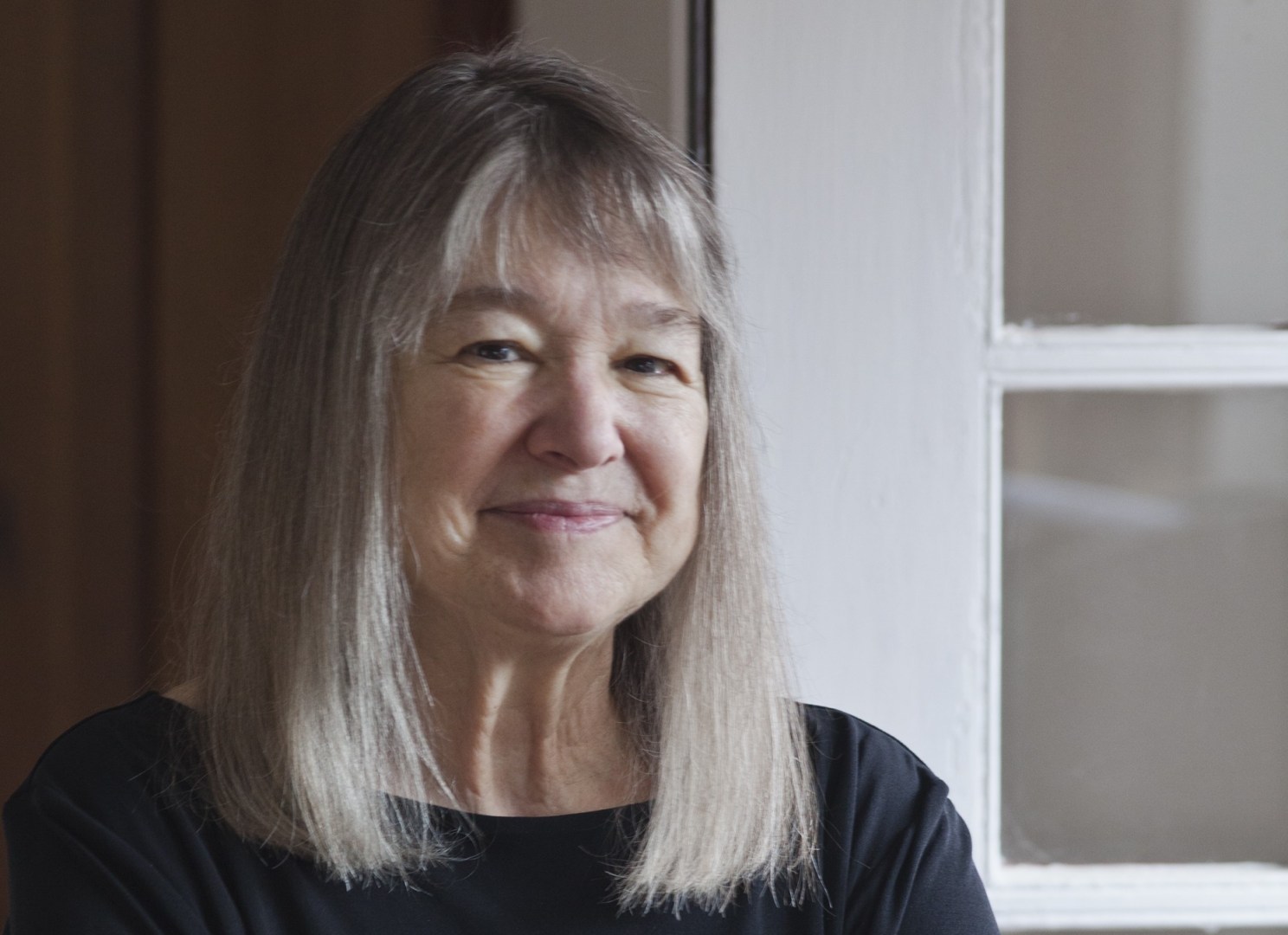
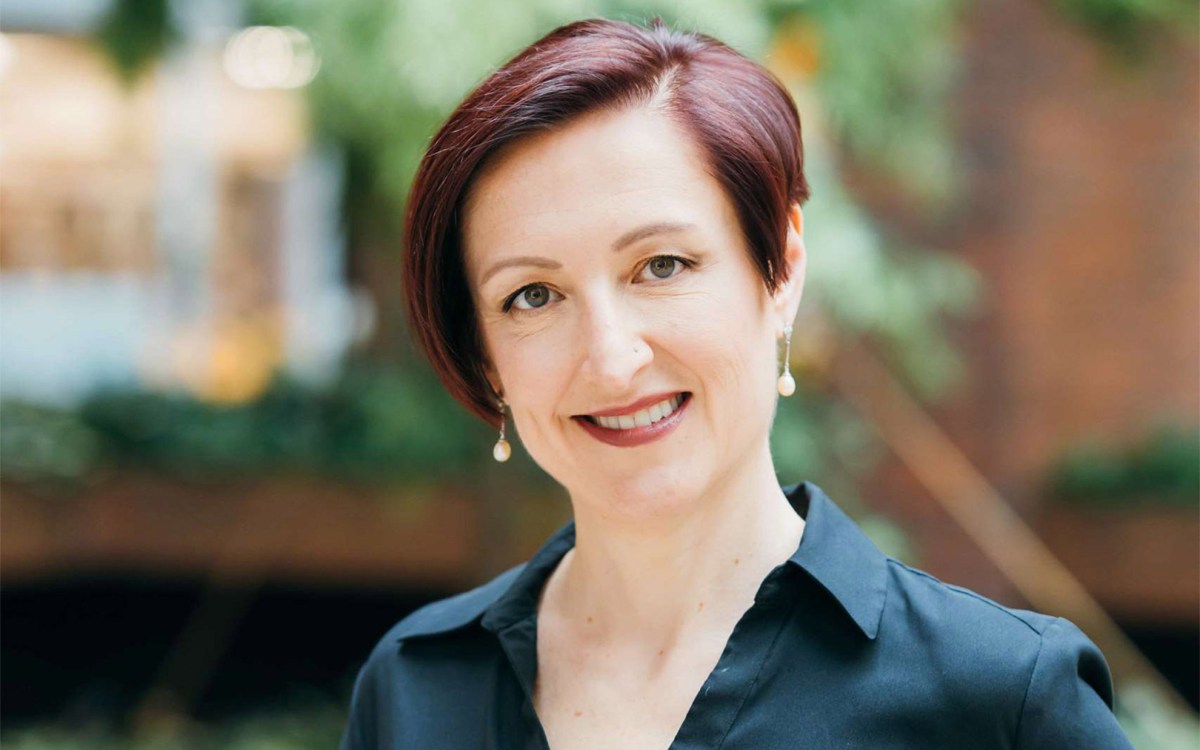
Anne Fadiman.
Photo by Gabriel Amadeus Cooney
Arts & Culture
Writing about a pet frog is trivial? Anne Fadiman disagrees.
‘We need beauty, wit, and attention to small things even more when we have to face large, painful things,’ essayist says about new book
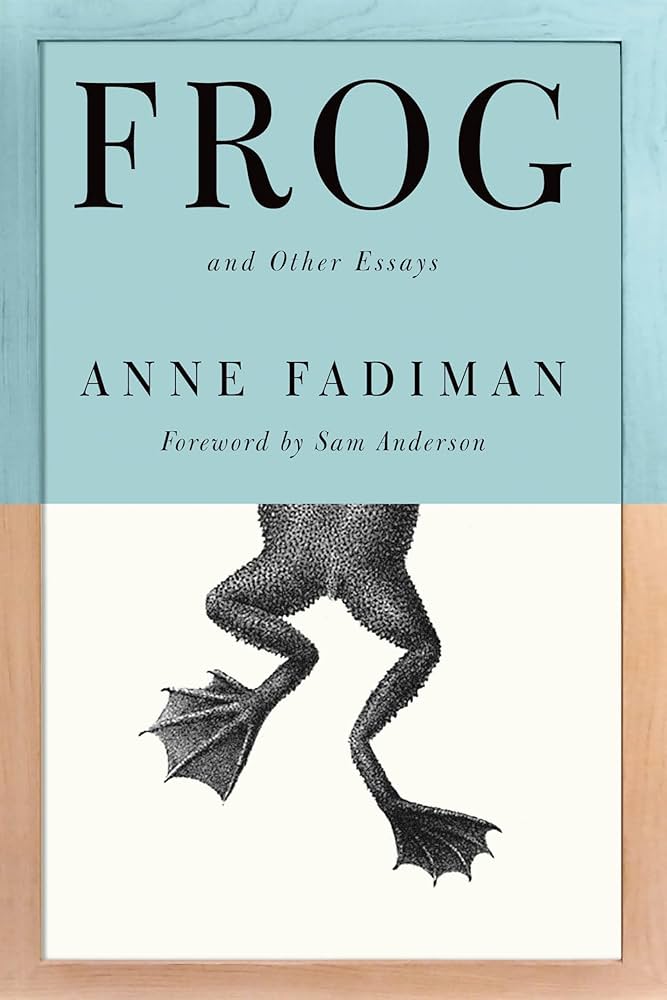
In her latest book, “Frog and Other Essays,” Anne Fadiman ’75 writes about topics ranging from a dead pet frog to her attachment to an old printer. The literary essayist, journalist, and editor, who is also a professor and writer in residence at Yale, recently spoke to the Gazette about themes in her new collection, a summer stint at Harvard Magazine that helped her hone her craft, how students can become better writers in a month, and AI’s impact on education and literature. The following interview has been edited for clarity and length.
Your parents were both writers. Could you talk about your family’s influence on your love for books and words?
My parents had about 7,000 books between them, but they rarely pressed books on us. They simply told us that we had free range. So, my brother and I were always taking down books that were over our heads and trying them out. My father later wrote about how much he hated children’s books that had short words and talked down to their readers. He said the only way to enlarge a rubber band is to stretch it, and he believed the same goes for children — that they should always be reading things that are a little too hard. As for words, I’ve always loved them. Other families play games with balls; the Fadimans played games with words.
How did Harvard help you become a writer?
Harvard had no creative nonfiction classes when I was there in the early ’70s. I took a couple of fiction classes, and the main thing they taught me was that I shouldn’t be a fiction writer. But I had two mentors at Harvard Magazine (called the Harvard Alumni Bulletin until 1973): editor John Bethell, who is now in his 90s and to whom I’m still very close, and managing editor Kit Reed, who died in 2017. I did an independent study with them. If it hadn’t been for those two, particularly John Bethell, who’s the best editor and best writing teacher I’ve ever had, I doubt my career would have unfolded in the same way.
When I worked at Harvard Magazine the summer after my junior year, John had me write for every department, including sports and obituaries. During the day I’d write what I thought was a work of genius, and then, after hours, John and I would sit together and go over it line by line. And I would realize, “Oh, well, it’s possible that this is not a work of genius.” But it can get better. Today I use that same form of teaching with my own students, sitting with them and going over their work line by line. John’s teaching made me a better writer on the sentence level. That’s something most young journalists never get from their editors.
Early in your career, you wrote reported magazine articles, and now you write mostly essays. What drew you to essays?
Until I was middle-aged, everything that I published was reportorial nonfiction, and everything since then has been essays or memoir, which isn’t to say that I won’t ever return to reportorial nonfiction. I had never published an essay in my life until age 41, when I was stuck in bed during a problem pregnancy and couldn’t do any reporting. I discovered that the essay was a form to which I was well suited — one I love to read, and one I still love to write.
Essays were more or less invented in the 16th century by Michel de Montaigne, who was also the mayor of Bordeaux. He called them “essays,” from the French “essayer” — to try, to attempt. They were about very personal subjects like kidney stones, drunkenness, and fear. Nobody had read anything like them before. In my case, I had never thought I was sufficiently interesting to write about, but I found that the essay form, particularly a subset of the personal essay called the familiar essay, is ideal for me because I love research. The familiar essay is framed by the author’s experience, but it’s also about a topic.
Your latest book includes essays about a dead pet frog, your struggles with Zoom, an old printer, and the periodical The South Polar Times, among others. What do you hope readers take away from these essays?
After I read from “Frog and Other Essays” at a bookstore recently, an audience member asked why I wrote about apparently trivial topics when there were so many difficult things happening in the world. Here is one answer. The South Polar Times was a magazine that circulated among the men on two early Antarctic expeditions led by the British explorer Robert Falcon Scott at the very beginning of the 20th century. These men were facing terrible risks, and Scott decided a periodical published during the months without sunlight might prevent them from getting cabin fever and remind them of the aspects of the world and their lives back home that were funny or beautiful or tender. It was hand-typed by one of the explorers once a month and circulated like a sacred text among men of all different ranks. That’s what kept their spirits going; that’s what they needed when they were facing death. We need beauty, wit, and attention to small things even more when we have to face large, painful things.
“I often start an essay in a place as small as possible and then let it open up.”
I often start an essay in a place as small as possible and then let it open up. My essay about my stubborn refusal to get rid of my obsolete old printer eventually leads into a discussion of growing old and how people my age are worried about becoming obsolete ourselves. I hope readers will take from these essays the notion that large things can come from small things, and that they should never feel their own lives are trivial.
You’ve been teaching nonfiction writing at Yale for 21 years. What advice can you offer to aspiring writers?
Ask yourself, “What am I trying to say?” and make sure that everything in the piece you’re writing answers that question. Then cut out everything that doesn’t.
If you want to become a better writer in a month, I suggest you spend that time not writing but reading the complete works of E.B. White. If you read those works all day every day, that would take you about two weeks, and then you could read them all over again. Simply by osmosis, the beauty and clarity of White’s sentence structure would penetrate your brain. I feel sure you’d be a better writer at the end of the experiment.
Finally, are you concerned that AI might pose a threat to writers?
I think AI is a terrible threat, not only to creativity but to ethics. It turns honest students into cheaters simply because they see everybody else cheating, and because it makes cheating so easy. It’s a well-greased slide. You ask ChatGPT to suggest a synonym for a word or phrase, using it in a perfectly honest way as an online thesaurus. But then it will say, “May I draft a sentence for you? May I draft a paragraph? Why don’t you tell me your main points so that I can draft the whole essay?” And down the slope you go. AI is going to change both education and literature. I think it’s going to be like B.C. and A.D. B.C. is about to end: the period during which all books were actually written by humans.
I can’t say that AI has affected my own writing classes at Yale. Like most of my colleagues, I get to choose my students from a large pool of applicants. They’re the students whose voices interest me, but they’re also the ones who are most motivated to learn how to write better. They don’t want to do less work; they want to do extra work. So far, I haven’t been able to sniff out even one AI-written sentence. The day that starts to happen will be the day I quit my job and the day my heart gets broken.