Featured series
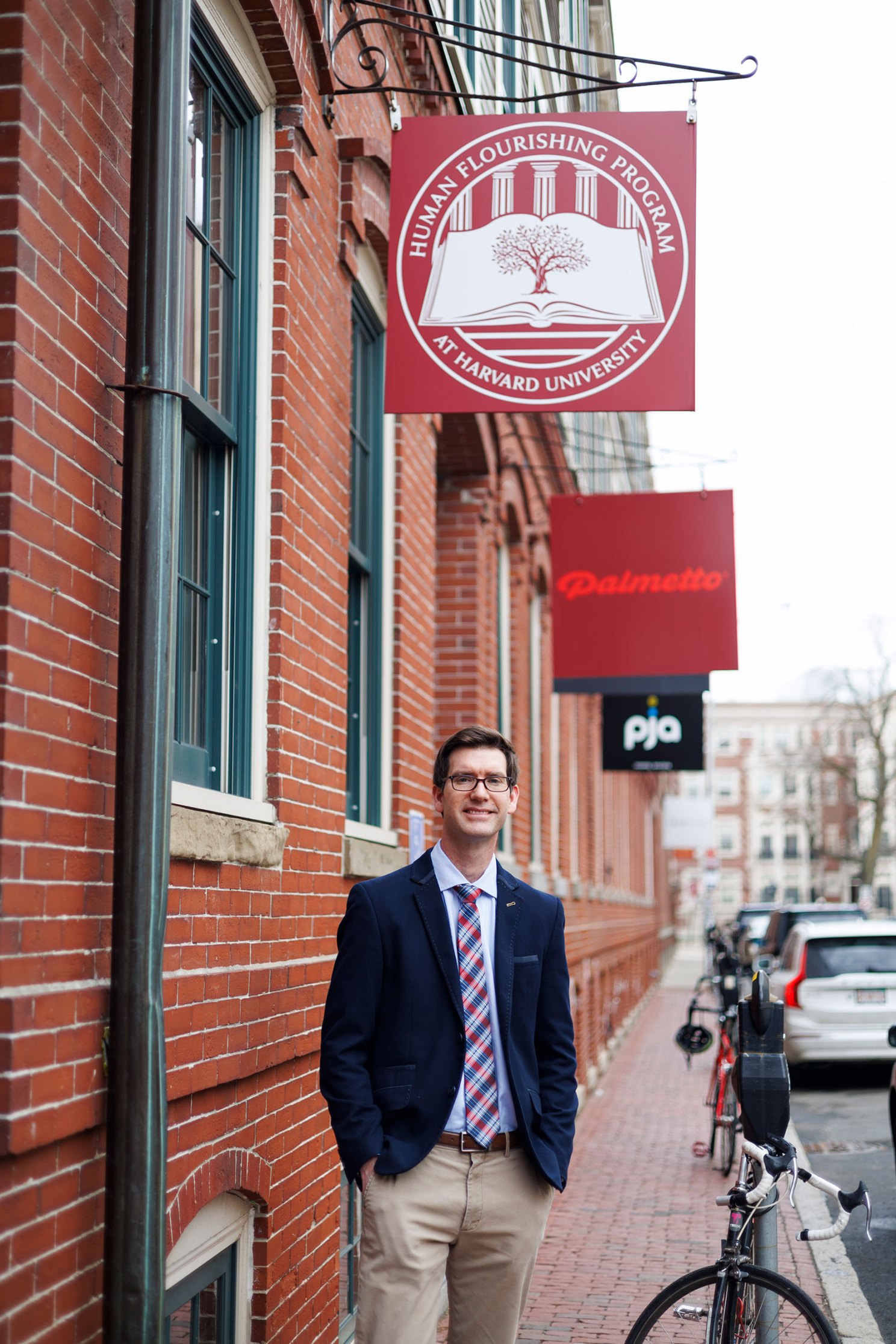
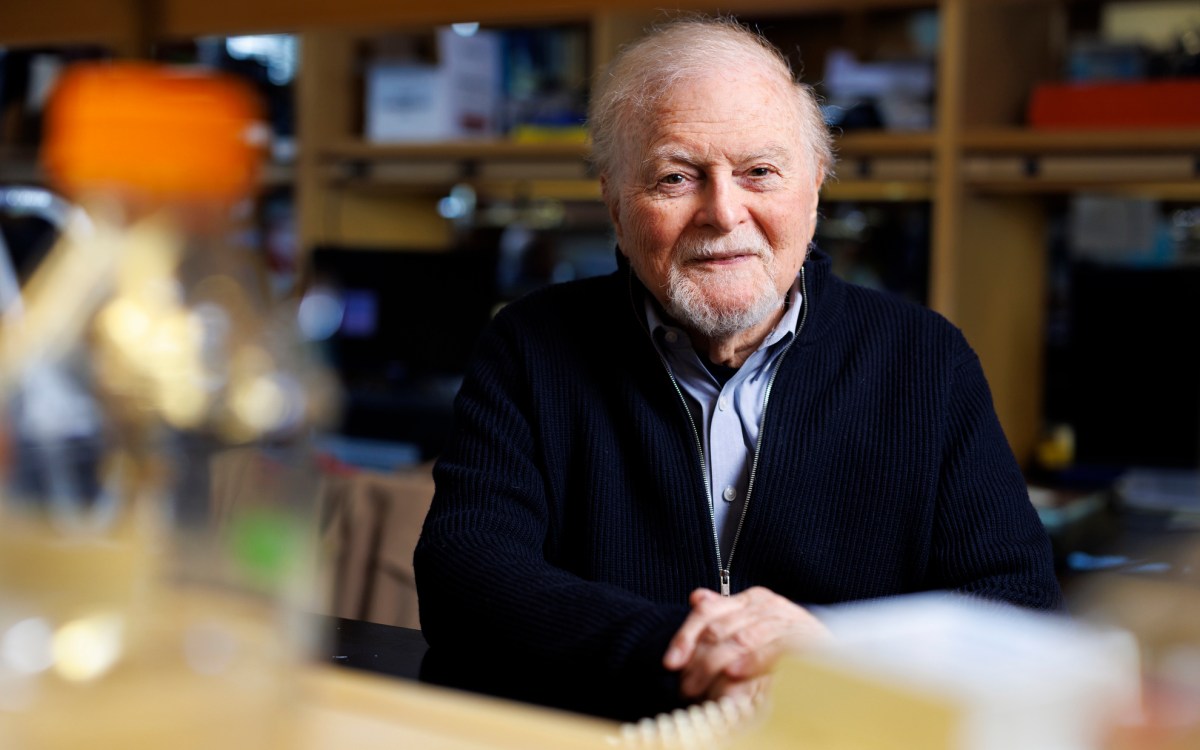
Richard Cowden.
Photo by Grace DuVal
Health
How forgiving can improve well-being
New study of residents of 22 nations finds psychological, pro-social, character changes
Can forgiving someone today leave you with an improved sense of well-being a year from now? A new study of residents of 22 countries says yes.
The caveat, though, is that the size of the impact varies by nation, as does its nature.
Researchers with the Human Flourishing Program at Harvard’s Institute for Quantitative Social Science enrolled more than 200,000 participants to complete annual surveys about forgiveness practices and 56 measures of well-being one year later.
They found a connection between regular acts of forgiveness and a rise in the sense of psychological, more than physical, well-being and pro-social and character changes.
“We did find evidence of psychological effects, like happiness, and mental-health-related things like depression,” said Richard Cowden, an IQSS research scientist and lead author of the study. “But we also found, in some cases, stronger associations for character and pro-social behavior outcomes like gratitude and an orientation to promote good. I thought that was interesting: Forgiveness is a pathway to building character and other aspects of one’s volitional life.”
The work was published in January in the journal npj | Mental Health Research and builds on results from the program’s initial survey, released in 2024, which examined the distribution of forgiveness in those nations, which represent between 50 percent and 60 percent of the global population.
The first survey established baseline values for the survey nations and included questions about childhood to illuminate predictors of forgiveness. The second wave, conducted a year later, allows researchers to examine potential effects over time, Cowden said.
The survey was designed to evaluate levels of forgiveness as a practice and personal characteristic rather than a single discrete act, asking, “How often have you forgiven those who have hurt you?”
“I would characterize this as a measure of dispositional forgivingness, which is the tendency to forgive others across time and situations, the habitual practice of forgiveness,” Cowden said. “It’s capturing more of a disposition than a state-like quality.”
Data from the third yearly survey have already come in and await analysis. In addition, researchers are gathering data for the fourth wave, Cowden said. Five annual surveys are planned.
Cowden said the results so far are multilayered and complex.
High levels of forgiveness appear to be a national or cultural attribute of some nations, like South Africa. Other countries, like Japan and Turkey, displayed lower levels.
While the research generally indicated an association between higher forgiveness and greater well-being a year later, the strength of the association varied country to country and in some cases was counterintuitive, requiring a closer look at local circumstances.
For example, South Africa, Cowden said, had high national forgiveness but somewhat weaker associations with well-being about a year later. With high rates of poverty and crime, that could be a case of local circumstances overriding a broader trend.
Similarly, nations with high rates of forgiveness may also have cultures that encourage the behavior, so its benefits potentially could be tamped down because it is widely expected.
“You find more consistent evidence of associations in some countries across the outcomes than others,” Cowden said. “Part of the beauty of the study is that it is trying to consider culture and context.”
Cowden said the overall association, drawn from the results of different nations for 56 well-being variables, was not strong but not trivial either, particularly when considering its impacts at a population level.
The study seeks a deeper understanding of something that cultures and religious traditions have valued as a moral virtue for thousands of years, Cowden said.
Though forgiveness is commonly practiced, we don’t fully understand either its personal impacts or its global contours, he said.
“We’re social beings, and we don’t exist well without social relationships, and if relationships are part of what it means to be human, we’re inevitably going to experience hurts along the way because nobody is perfect.”
Cowden described forgiveness as a “muscle we can build” through practice, and that would be relatively simple to deploy as an intervention under appropriate conditions.
He cited a study published in 2024 that tested the effectiveness of a self-directed forgiveness workbook, based on the widely studied REACH forgiveness model. The three-hour resource was given to people in South Africa, Hong Kong, Colombia, Indonesia, and Ukraine. Respondents reported improved forgiveness, anxiety, depression, and overall well-being.
“If everybody who had unresolved hurts were to experience more forgiveness, the population-level benefits to health and well-being could be quite substantial,” Cowden said.