Featured series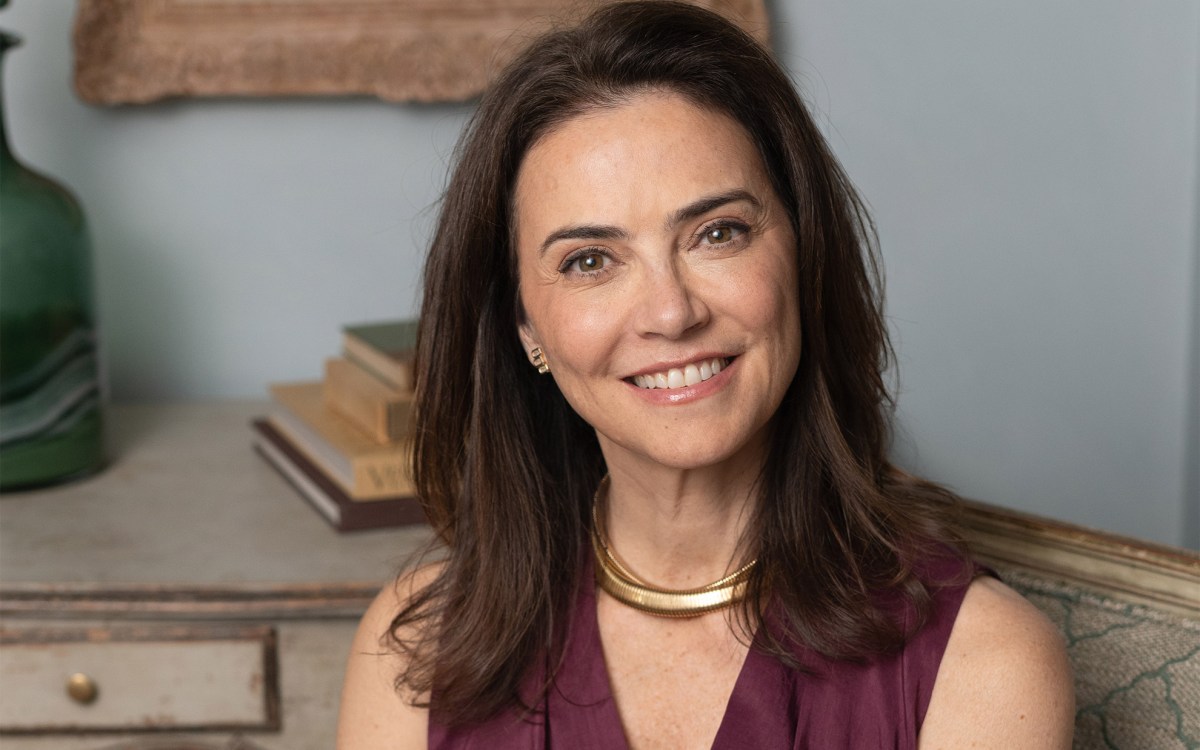

Health
You don’t fight Parkinson’s without ‘raw moments.’ She shared them.
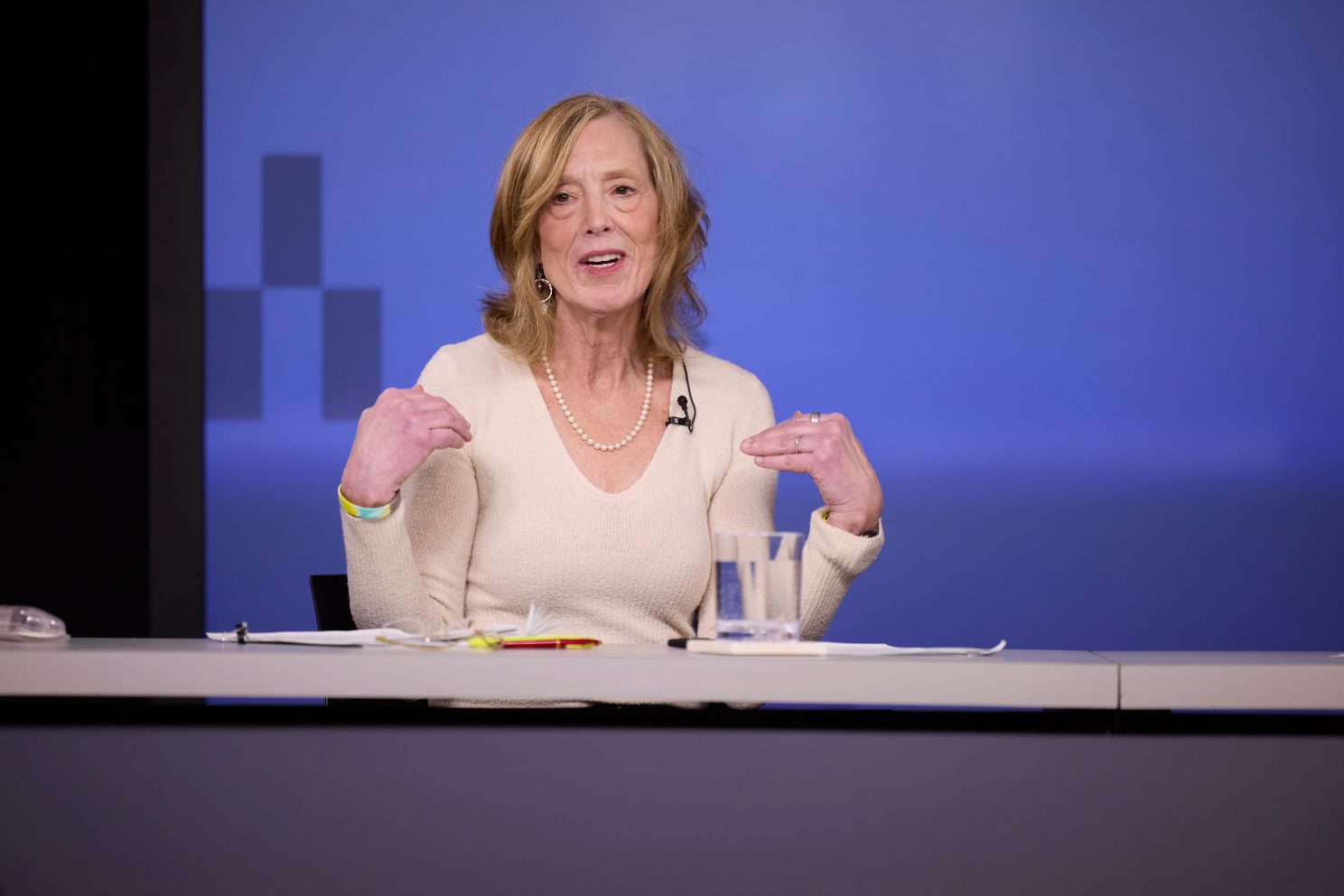
Sue Goldie.
By Kent Dayton
Chan School’s Sue Goldie felt ‘sheer responsibility’ to let Times journalist tell her story
Adjusting to the reality of an incurable disease is hard, never mind talking about it. Even so, Sue Goldie, the Roger Irving Lee Professor of Public Health at Harvard’s T.H. Chan School of Public Health, decided to share her journey with a stranger.
In October, Goldie, who was diagnosed with Parkinson’s disease in 2021, was the subject of a New York Times feature by John Branch, whom she allowed to follow her life for more than two years. This month, she spoke at the Chan School about fighting the disease and her decision to make that fight public.
“It was not uncomplicated,” Goldie said. “I think it requires a lot of mutual trust to let someone in your life to see you at those raw moments and you really don’t know what they are going to write … I just felt this sheer responsibility to try to speak out loud and to try to give voice to what is so difficult.”
Parkinson’s disease stems from a depletion of dopamine in the brain. Motor issues include tremors, rigidity, and slowness of movement. As the disease worsens, it can cause problems with balance and gait. But the condition runs much deeper than visible symptoms and is really a multi-system disorder, Goldie noted.
“The one thing about Parkinson’s that is absolutely true is it plays out differently in everyone,” she said, pointing to wide variability in onset of symptoms and timeline.
For her, some initial symptoms appeared while she was training for her first Ironman triathlon — a challenge her son had introduced her to.
“I couldn’t put my finger on it, but I just wasn’t feeling well,” she said.
Working with a coach, she continued to bike, run, and swim — all while serving as the faculty director of two centers and teaching three large courses. Her coach started to notice some asymmetry on her left side, particularly with swimming.
She then began to notice a left-sided tremor.
“That was what brought me finally to a neurologist,” she said.
After her diagnosis, Goldie kept training. She and her coach agreed: As the disease presented new challenges, they would figure out case-by-case solutions.
They added a long straw on her bike to save herself having to lean over to reach her water bottle. As fine motor control worsened, they switched to electronic shifting, and changed her cleats to make it easier to clip out.
“There’s something about problem-solving that feels like you’re moving forward,” she said. “And it leaked over into my work world as well.”
The diagnosis had brought deep anxiety over the potential impact on her academic endeavors.
“It’s really frightening to me to have cognitive effects from Parkinson’s,” she said. “I think when you’re at an academic institution, where the currency of your value is your thinking, the fear I had was about: What does this mean for my identity? What will people think?”
The antidote to her anxiety has been discovering new ways to do what she loves. One example: her innovative approach to designing educational multimedia. Goldie is well known for her ability to distill complex concepts using sketches, diagrams, and iconography visuals — a feature of her work at the Global Health Education and Learning Incubator (GHELI) and her online courses at the Chan School — but her tremor made it harder to do so in the same way.
“So I got an iPad, and I would draw ahead of time, and then I would cut pieces out,” she said. “I would move the pieces around instead of drawing.”
When a large group of high school teachers attending a workshop at GHELI noticed collections of visual drawings next to each lesson plan, they quickly began exploring how they could use the “visual language” in their own lessons.
“And it was just this example where something that was a workaround actually became this sort of pedagogical innovation,” Goldie said.
After the Times story was published, Goldie received hundreds of letters from patients who said they felt seen, and from people who told her that she had helped them see loved ones better. Their words left a mark.
“The best way I can respect the fact that these individuals took time to write to me is to read every one and to try to listen and learn in terms of what I want to do next,” she said.