Featured series
Nation & World
Writing us back from the brink
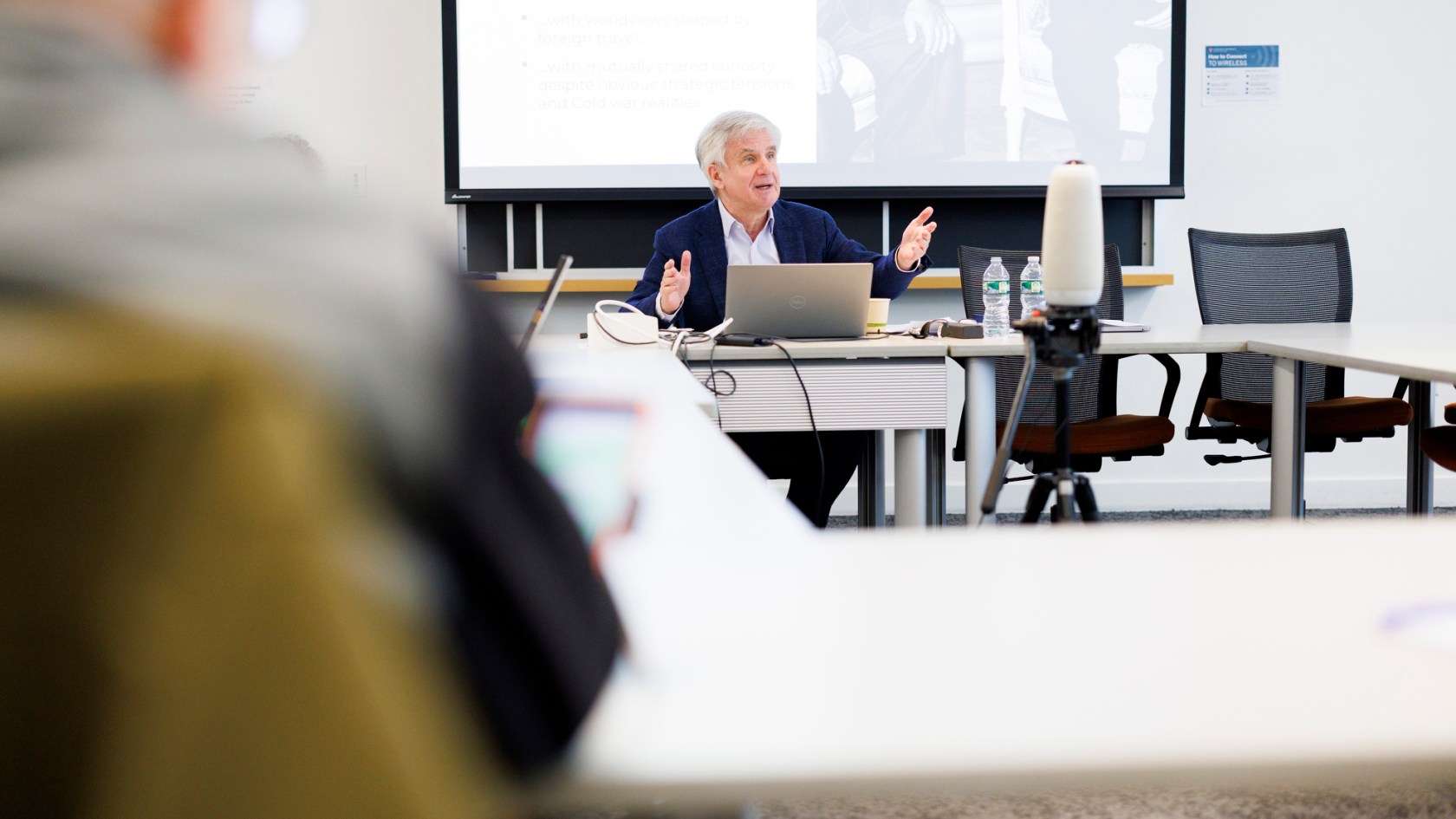
Dmitry Yakushkin.
Veasey Conway/Harvard Staff Photographer
Journalist shares insights from study of Cuban Missile letters exchanged by Kennedy and Khrushchev
For Russian journalist Dmitry Yakushkin, the Cuban Missile Crisis of 1962, a confrontation that brought the U.S. and the Soviet Union to the brink of nuclear war, remains an ideal case study of conflict resolution.
Yakushkin, who worked as press secretary for Russian President Boris Yeltsin from 1998 to 2000, spoke Wednesday at the Davis Center about the lessons of the crisis, sharing highlights from his upcoming book based on negotiations between President John F. Kennedy and Soviet leader Nikita Khrushchev.
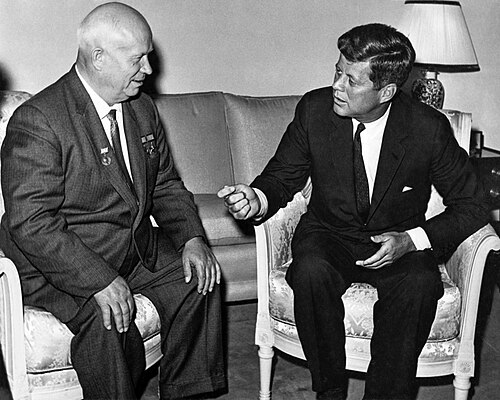
The two leaders exchanged 10 letters during the 13-day confrontation, from Oct. 16 to 28, including a six-page dispatch from Khrushchev to Kennedy. The crisis ended when the Soviets agreed to remove missiles from Cuba in exchange for a U.S. promise not to invade the island and a secret pledge from Washington to remove U.S. missiles from Turkey.
“We’re talking about political leaders who were moved by an enormous sense of responsibility and fear for the world,” said Yakushkin, whose book was born out of a course on conflict resolution that he now teaches at the University of Tel Aviv. “Their interaction proves that you can talk yourself out of everything if you put in the effort … It’s better to start talking than firing because after firing, it will be much more difficult, in some cases, maybe even impossible, to talk.”
“We’re talking about political leaders who were moved by an enormous sense of responsibility and fear for the world.”
In the moment, Khrushchev sought to maintain the image of a strongman, said Yakushkin, but the Soviet leader would later share his worries for the fate of humanity in books written by his son Sergei. For his part, Kennedy had been vocal about his hope to prevent a nuclear war.
“Mankind must put an end to war — or war will put an end to mankind,” he said in a 1961 speech before the United Nations.
It would be months before the U.S. and the Soviets would sign a hotline agreement, in June 1963; as the crisis unfolded, no direct line of communication existed between the two countries.
“It sounds crazy for a modern audience, right?” Yakushkin said. “Time was precious, and yet they couldn’t call each other.”
To further complicate matters, Kennedy and Khrushchev had to deal with the seven-hour time difference between Moscow and Washington, as well as the delay created by the need to translate their correspondence. Yakushkin noted a possible silver lining: The circumstances of the negotiations may have prevented a quick reaction from either superpower, which could have escalated the crisis to a point of no return.
In studying the letters between Kennedy and Khrushchev, Yakushkin found parallels between the two leaders despite their different backgrounds and ideologies. Both had war experience — Khrushchev served as a political commissar during World War II, while Kennedy fought in it — and both lost loved ones to the conflict. And both leaders were curious about the world beyond the demands of their offices, Yakushkin said. The letters contain comments about family and vacations and are marked by a common humanity, which might have played a role in the resolution of the crisis.
“Both Kennedy and Khrushchev were the products of different societies, and yet they shared a lot of things in common,” said Yakushkin. “In their letters, they revealed themselves as human beings.”
He added: “Everything pushed them … not to resolve the crisis and somehow, they managed to do it … In terms of world politics, that may seem simplistic, naïve, or sentimental, but in today’s atmosphere, for me, the human factor is important. Even in decisions like starting a war or sending troops, the human factor in each person is very important, and that’s what, for me, was precious in this story.”