Featured series



Sonja Lyubomirsky ’89 and Harry Reis.
Photo (left) by Taea Thale; photo courtesy of Harry Reis
Health
Want to feel more loved? Forget changing yourself. Change conversation.
Two psychologists offer science-backed framework on how to improve relationships
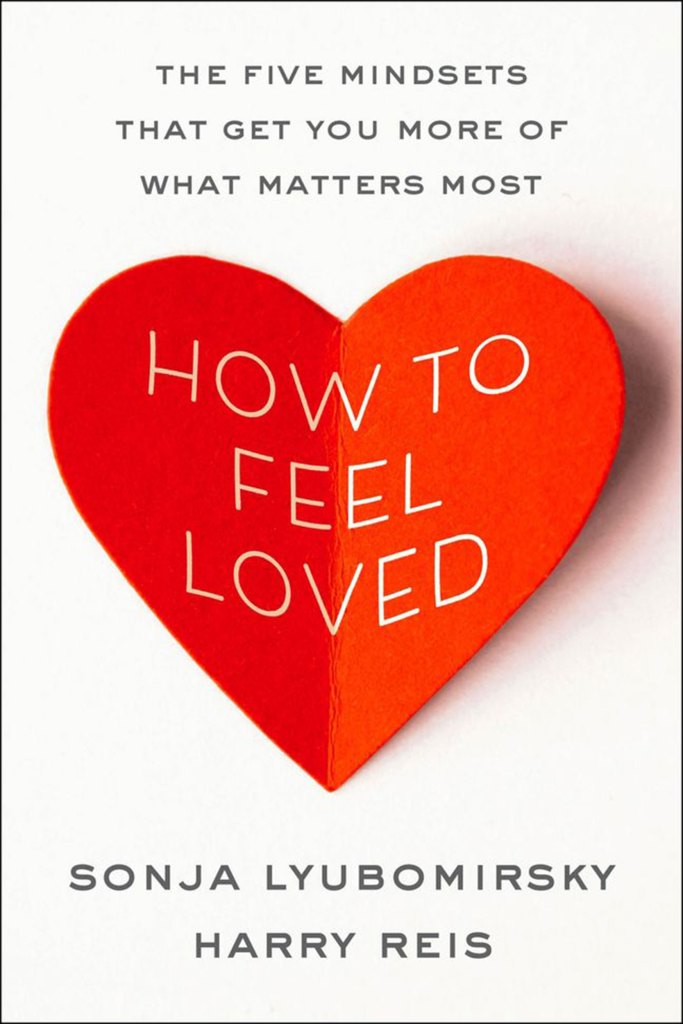
Excerpted from “How to Feel Loved: The Five Mindsets That Get You More of What Matters Most” by Sonja Lyubomirsky ’89 and Harry Reis.
“Just be yourself.” It’s a cliché we’ve all heard before, maybe even rolled our eyes at. But when you’re in a relationship or friendship where you’re not feeling as loved as you’d like to feel, what does that expression actually mean? We’ve suggested that many people aren’t being themselves: Instead of showing themselves, they show off themselves. Yet herein lies both a paradox and a blessing. The paradox is that feeling loved is earned not through achieving perfection but through presenting more of your full self — your values, experiences, quirks, and dreams, even the small, unpolished details of your daily life. Sharing your struggles and imperfections can build connection, too, but feeling loved isn’t just about revealing your flawed, imperfect self — it’s about revealing what truly matters to you.
To be clear, feeling loved doesn’t hinge on oversharing or baring your soul to just anyone. It doesn’t mean unloading your trials and tribulations in the first five minutes after meeting. It means selectively and progressively revealing parts of yourself in a way that fosters genuine connection.
The blessing is that showing your full self is fully within your control. In fact, it’s a lot easier than contorting yourself into someone else’s ideal image. Many people believe that in order to feel more loved, they must persuade others to love them more — as if they were trying to sell someone a new car. Years of empirical studies and observation suggest that this approach is ineffective. That’s why our message is different: Feeling loved is more — much more — about you (and your mindset) than about trying to persuade the other person that you are worthy.
Yet people often behave in ways that work against feeling loved: They hide their deepest thoughts, emotions, flaws, and past misbehaviors because they are afraid of what others might think, or they fear being embarrassed or exploited. Paradoxically, the more you hide your innermost self and the less of yourself you reveal to others, the harder it is to feel truly loved and valued by the significant people in your life. This is a principle strongly supported not only by anecdotal evidence but also by relationship science.
Moreover, when you focus on how you are coming across to others, your attention is drawn to what you are doing — for instance, trying to say just the right thing, while doing your best to make sure your shortcomings are hidden, so that you are seen as witty or attractive or brilliant. Ironically, this approach to relationships puts your attention in exactly the wrong place. You’ll find that you actually make the best impression when you focus your attention on the other person.
It’s worth noting that unveiling the complexity of your multifaceted “true” self will almost always leave you feeling vulnerable because you are exhibiting your true colors and risking losing the other person’s regard. However, vulnerability is not the goal; it is simply a necessary preliminary step. Ironically, showing weakness will make room for you to feel genuinely loved because you’ll finally be confident that the other person is appreciating and loving the real you. (Otherwise, whatever love or admiration they express will ring hollow.) To paraphrase Nobel Prize winner André Gide: It is better to be known for what you are than to be loved for what you are not. Humility and authenticity and a caring interest in others create the conditions for you to feel fully known.
In summary, then, three things have to happen for you to feel loved:
1. You have to share the complexity of your full, multifaceted self — both your strengths and your contradictions — with the other person. (No, this isn’t as simple as saying, “Let me tell you everything.”)
2. The other person has to notice what you’ve shared.
3. The other person has to care about what you’ve shared.
How do you increase the chances that the other person will notice and care? The answer is simple — you go first! That means you first need to notice and care — to show curiosity — about their multifaceted self. It may seem counterintuitive initially, but in order to create a context for sharing more of yourself, you need to focus not on yourself but on your conversation partner. You encourage them to notice and care about your full self by first noticing and caring about their full self. To feel loved by them, you begin by making them feel loved by you.
This step begins a back-and-forth process that we call the Relationship Sea-Saw. Imagine yourself and the person you wish to feel more loved by sitting on a seesaw submerged under water (hence, the deliberate spelling of Sea-Saw). Only parts of your multilayered selves are visible above the surface — these are the aspects you feel safe to share, the parts that the other person sees and loves when they tell you that they love you.
However, consider what happens when you give the other person your undivided attention — when you approach them with curiosity, listen deeply to their response, and bring to the interaction genuine warmth and an appreciation for their multidimensional self. By doing so, you help lift their self a bit higher out of the water, making more of their true self visible. When they feel truly seen, valued, and accepted — not just for their best qualities but for their whole richly textured self — they will also feel more loved by you than ever before.
Continuing with this metaphor, by pressing down, you are placing the full weight of your attention on the other person, lifting them up. As the focus shifts to them, your own self becomes temporarily more submerged. Essentially, you’re holding them up and providing them support, you’re creating the conditions that make it possible for them to open up, to be fully known, and to feel safe in revealing more of who they truly are.
Importantly, this step of lifting the other person higher isn’t a sacrifice — it’s simply a stage in a cycle. When the other person experiences the security of being deeply understood and accepted, they’re likely to reciprocate. They, too, may express curiosity in you and listen to you more attentively and warmly, embracing your full complexity with an open heart. In doing so, they help lift more of your full self above the surface, enabling more of you to be seen, understood, and valued. In this way, the act of truly knowing and loving someone else becomes the very thing that opens the door for you to feel truly known and loved in return. It’s a virtuous cycle of connection: The more connection is experienced, the more love, as well as the greater curiosity about and care for each other, is felt.
If you don’t feel loved enough, we have a profound and empowering message for you: Feeling loved is not out of your control. For some, it will require a radical shift in how you orient toward conversations with loved ones. For others, it will simply call for more practice of that muscle that enables you to deeply know another person and become deeply known by them.
Because the secret to feeling more loved is not about changing yourself or about changing the other person — it’s about changing the conversation.
© 2026 by Sonja Lyubomirsky and Harry Reis. Reprinted courtesy of Harper Books, an imprint of HarperCollins. Available wherever books are sold.