Featured series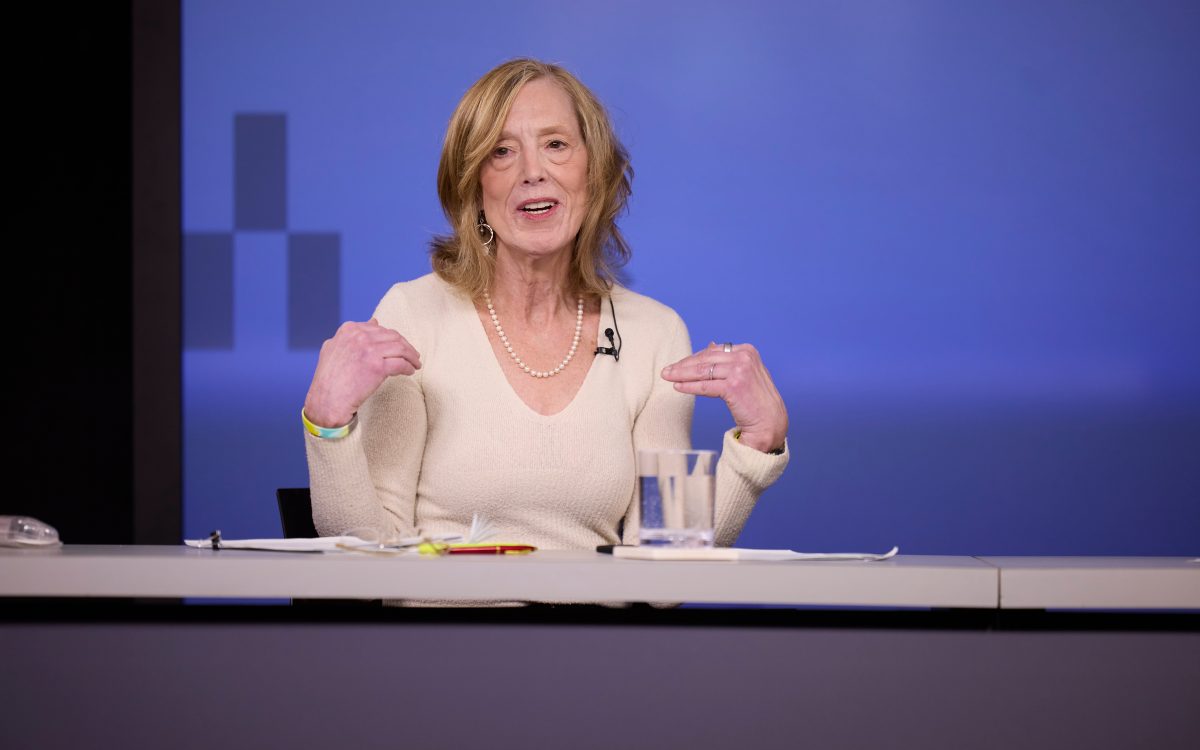

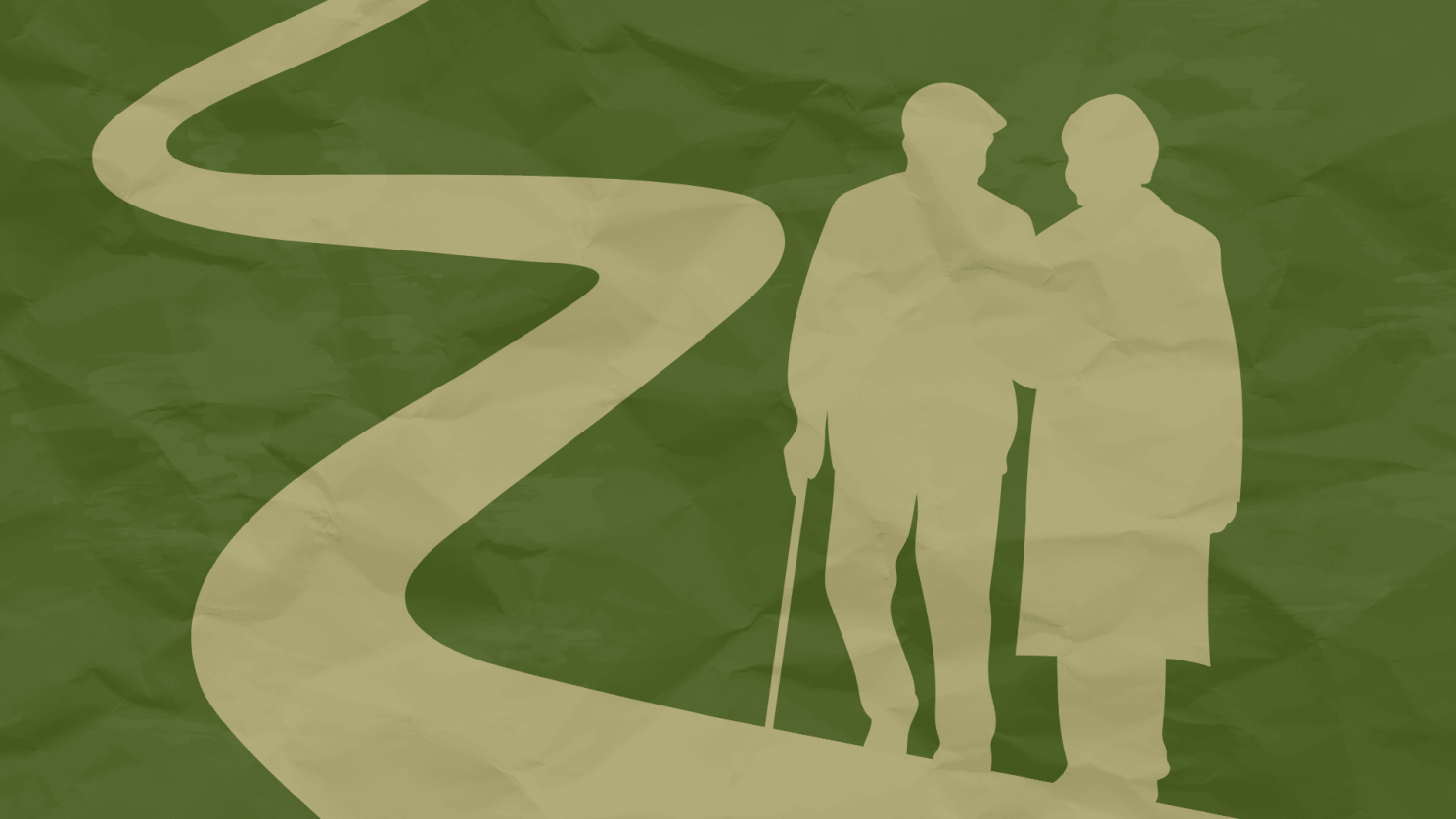
Illustration by Liz Zonarich/Harvard Staff

A series about meanings
An American born in 2024 can expect to live to 79. That’s up 0.6 years from 2023 and the longest life expectancy in U.S. history.
But living longer and living well are not the same thing. About 93 percent of the nation’s 58 million adults over 65 live with at least one chronic health condition, such as hypertension, high cholesterol, arthritis, or diabetes. After age 55, about 42 percent of Americans go on to develop dementia.
Despite that, an increasingly visible cohort of older Americans aren’t just living longer. They’re also extending their healthspans, the years of life free from age-related illness or cognitive decline. In doing so, they’re creating new models for what it means to age well and challenging some of the oldest cultural assumptions about the last third of life.
In the latest installment of “One Word Answer,” in which specialists probe the depths of a single term, the Gazette asked three scholars to dive into “old.”
A historical view of frailty
When Maud Jansen was completing clinical rotations, she found herself troubled by the way some physicians spoke about older patients, as though certain outcomes were forgone conclusions before treatment had even begun.
She recalled a team of doctors discussing an elderly woman with a hip fracture and a stroke. One doctor remarked, “Well, she’ll go to rehab and wither away.”
“It’s thorny, because in a way we have to accept that people get older and might have bad outcomes,” Jansen said. “But then again, are we sure?”
“It’s thorny, because in a way we have to accept that people get older and might have bad outcomes. But then again, are we sure?”
Maud Jansen
Now an M.D.-Ph.D. candidate in Harvard’s Department of the History of Science, Jansen studies frailty — an umbrella term that emerged in the 1980s to describe a set of symptoms, such as hip fractures, incontinence, and delirium, that are common among older adults, and to which older adults are uniquely susceptible because of the cumulative effects of aging. Jansen examines the longer history of medical care for these conditions to understand how assumptions about old age shaped care and medical responsibility for bad outcomes.
Before the 19th century, the dominant view of aging was one of inexorable decay, she explained. Older patients, considered incurable and therefore unworthy of treatments, might be sent to almshouses. A hip fracture was frequently fatal, less from the injury itself than from what followed: prolonged immobility, infection, or neglect.
“What I’m finding as I’m researching these conditions of frailty is that the cultural understanding of people as frail can, and did, naturalize bad outcomes as inevitable. In this way, beliefs about frailty foreclosed the possibility of effective intervention or improvements to care.”
The 20th century brought new frameworks. The Great Depression and the passage of Social Security in the 1930s gave rise to concepts like retirement and the “golden years” — the idea that old age might be a distinct and important phase of life. In 1969, the word “ageism” entered the lexicon to describe discrimination against older adults. A year later, a Philadelphia woman named Maggie Kuhn founded the advocacy group that became known as the Gray Panthers to challenge the idea that it was normal for older adults to simply withdraw from society.
Today, Jansen is delighted by depictions of seniors living active and engaged lives, like older adult influencers sharing their passions for fashion or fitness, or TV shows like Netflix’s “Grace and Frankie.”
“It’s a great thing that older adults are more robust into later life. But then the question becomes, what do you do with it? Has society really carved out good roles for them? I think that’s an ongoing question.”
Luck, lifestyle, and privilege
Jeanne Louise Calment, who died in 1997 at age 122, is the oldest person in history whose age has been verified. Scientists generally accept her age range, 120 to 125, as a hard upper limit — at least for now.
“The median is getting higher and higher while the maximum does not shift,” said William Mair, professor of molecular metabolism at the Harvard T.H. Chan School of Public Health.
Humans could expect to live for 35 years for most of our evolutionary history. It wasn’t until interventions like clean drinking water and antibiotics that we lived long enough to develop chronic age-related health conditions. Now, Mair said, researchers are focused on helping more people get closer to Calment’s age and get there with their health intact.
“Some people have incredible health — centenarians, or people who are super active into their late 90s. That’s not just luck,” said Mair. “Whether it’s optimism or social engagement or nutrition, we can begin to bring these things together and see how they do it.”
The biology of exceptional aging is increasingly legible. Researchers can now measure what they call biological age, which is distinct from chronological age, using markers of DNA damage, metabolic function, and cellular health. Older adults who age well often show the biological profile of someone significantly younger: say, a 95-year-old with the cellular profile of a 75-year-old.
Diet, exercise, sleep, and social connections all appear to influence the rate at which the body ages. So do income, education, and even ZIP code.
In Boston, Mair pointed out, a recent report found a 23-year difference in life expectancy between the neighborhoods of Back Bay and Roxbury, which are barely two miles apart. It’s a stunning gulf, but it’s also an improvement: In 2007, the discrepancy was 33 years.
“Aging is something that you can speed up and slow down through policy, through drugs and genetics, through things like exercise and healthy food,” Mair said. “It doesn’t mean we can all live to 150, but it does mean that there are things we can do.”
Fighting the urge to retreat
Long before patients with Alzheimer’s disease show signs of cognitive decline, they often display behavioral changes, says Nancy Donovan, a Harvard Medical School associate professor of psychiatry at Brigham and Women’s Hospital and the director of the Neuropsychiatry of Aging Research Group. Those symptoms can include irritability, anxiety, sleep disturbances, and a loss of motivation.
This can create a cycle, she said, both for people with Alzheimer’s and for adults with the usual slumps in stamina and strength that accompany even robust older age. Older adults who begin to feel the early effects of cognitive and physical decline often respond by pulling back from the work and social engagements that structured their days.
“People start to decline, and then they withdraw,” Donovan said. “But those things we do in our everyday life actually support our ongoing cognition and healthy aging. Disengagement may precipitate further decline.”
“Disengagement may precipitate further decline.”
Nancy Donovan
The psychological challenges of later life are daunting. Older adults face the loss of friends and loved ones. They must learn to rely on others for care. And they must reconstruct a sense of purpose uncoupled from their professional identities.
“One does have to respond to these various threats to well-being, with the help of your social network and your resources,” she said. “We’re getting inundated with advice for healthy physical aging and healthy cognitive aging, but not healthy psychological aging. What supports a positive psychological transition towards the end of life?”
Donovan’s prescription is an echo of groups like the Gray Panthers. She encourages older adults to fight the urge to retreat. “Amp up your exercise. Pay more attention to your health behaviors. Stay curious and engaged in the world.”
But at age 69, Donovan knows from personal experience that there is something uniquely positive about aging, too. She and her peers are traveling the world, trying new things, and investing in their hobbies. “You can appreciate your life better from the perspective of values and meaning, and this can guide you into late life.
“We’re relishing this period of freedom,” she added. “Many of us have parents who have passed away, so our major caretaking responsibilities have ended. If you still have your health, it’s a peak phase. The years before 75 or 80 can be the best time of life.”