Featured series
Health
‘No way to go but up’
From the ER to the highest mountains, sometimes riskier route is right, says wilderness doctor

A series exploring how risk shapes our decisions.
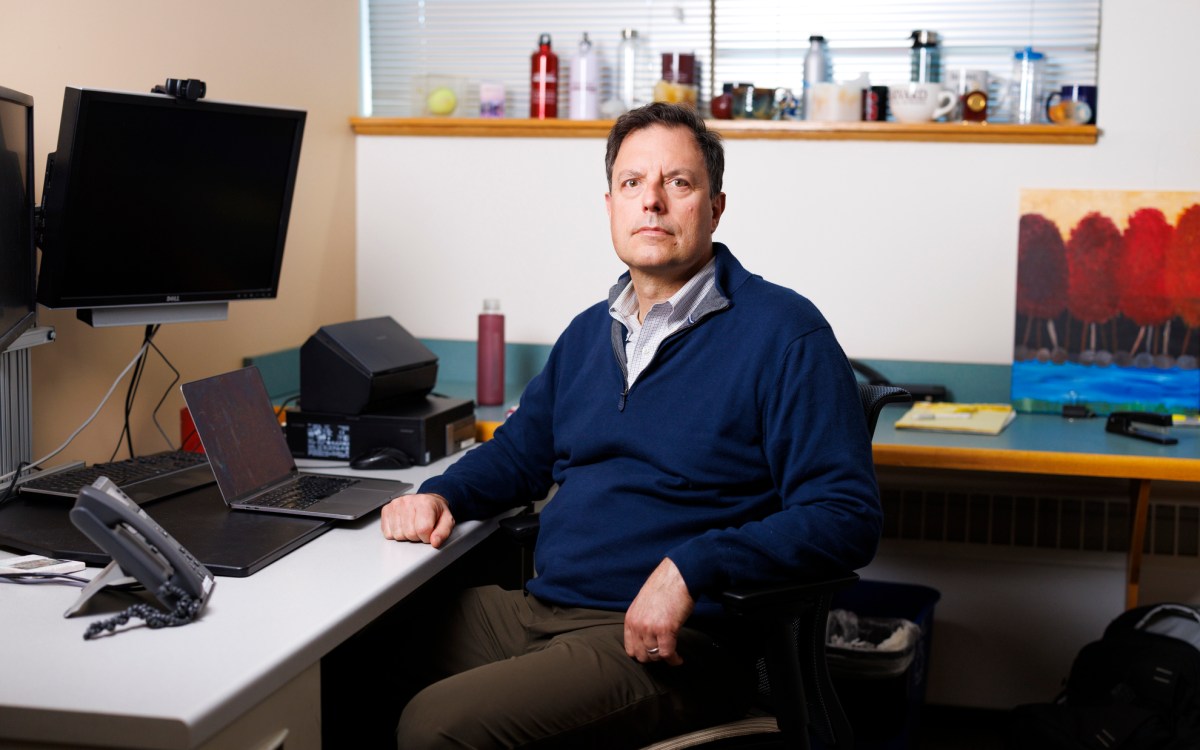
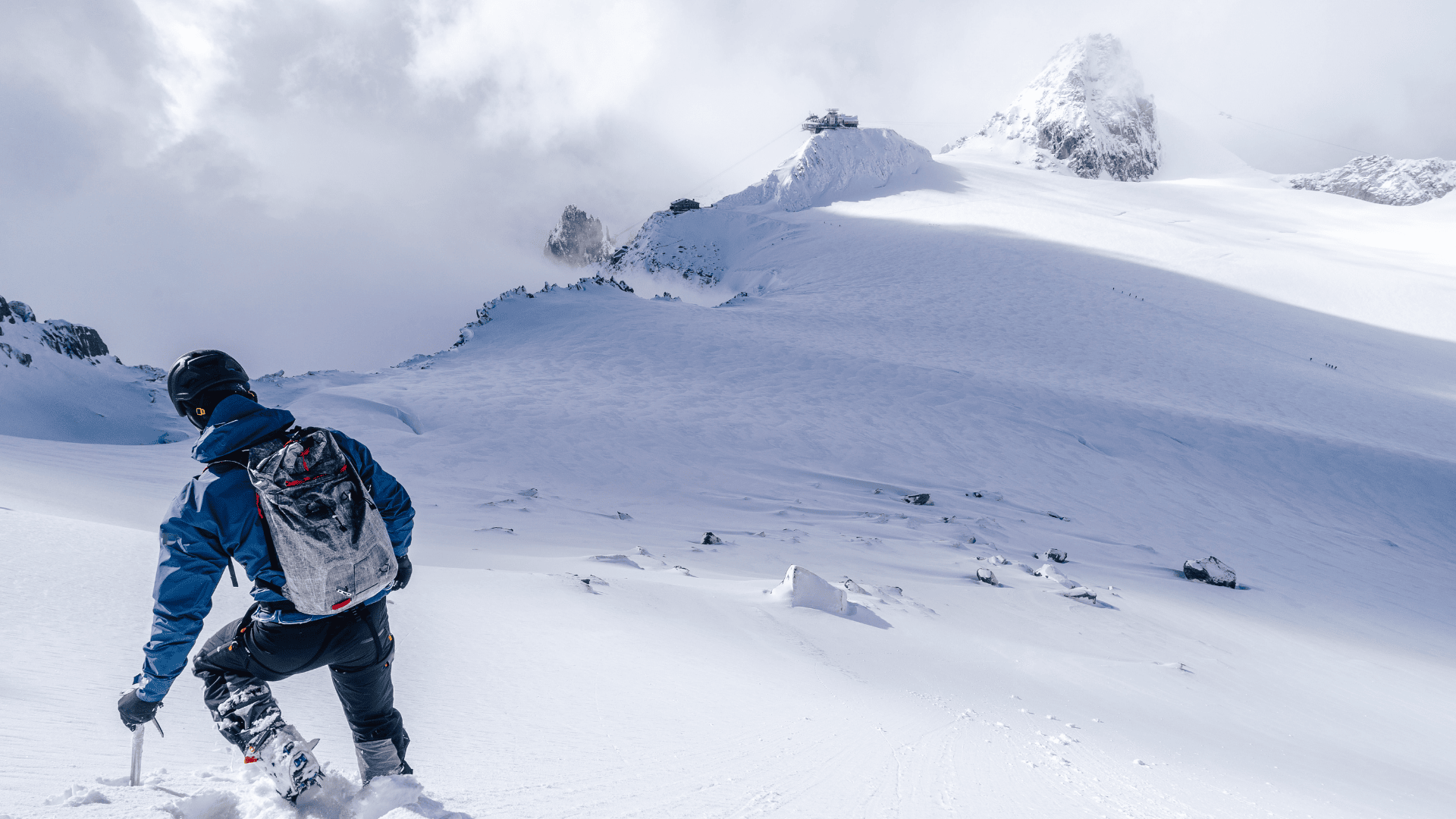
N. Stuart Harris was 14,000 feet up Mount McKinley, and the conditions weren’t looking good. His patient, a veteran who was hiking as part of a Wounded Warriors program, had entered his medical tent complaining of chest pains and shortness of breath. Was it an altitude-related illness? A pulmonary edema? Maybe a heart attack?
“There was a limited amount of material — oxygen and diagnostic EKG and other things,” said Harris, who at the time in 2011 was working for the National Park Service in Alaska. “We had just a little nylon cot that he was on, resting in a tent, with 8,000 feet of ice underneath us up on the glacier.”
The weather was too bad for a helicopter, so with evacuation off the table, Harris — who is now the founder and chief of the Division of Wilderness Medicine at Massachusetts General Hospital and associate professor of emergency medicine at Harvard Medical School — did what he always strives to do: He told the truth.
“I told him, ‘These are the things I’m concerned about; these are the risks if we run out of medications, or if we run out of oxygen, or if we’re not able to get you off the mountain in two or three days.’ I would like to think that we, whether it’s as physicians or patients, should be able to talk about risk in a little bit more of a realistic, humane way.”
“I would like to think that we, whether it’s as physicians or patients, should be able to talk about risk in a little bit more of a realistic, humane way.”
The veteran eventually made it down to Anchorage and recovered, Harris said. It was likely high-altitude pulmonary edema, a life-threatening form of altitude sickness. But Harris doesn’t know for sure. In his line of work, he has to be OK with not knowing sometimes.
Risky decisions are a daily reality in the emergency room. A common example: whether to intubate. Putting a tube into someone’s trachea is not risk-free, especially if there’s been trauma to the area and blood and teeth are in the way. But if you wait too long, you lose your chance. Patients might be intoxicated or unresponsive; the details of their condition are unknown. Those urgent decisions are drilled into medical students’ brains: Act fast, with whatever information you have.
“It isn’t like if something bad happened, it was inevitably a bad decision — no. Given the confines, maybe you did what needed to be done. Sometimes what might seem a little bit more risky is exactly the right choice because it overall reduces risk,” Harris said.
‘My fear level has really plummeted’
Harris isn’t one to shy away from risk in his personal or professional life. He remembers rock-climbing as a teen near where he grew up in the mountains of southern Virginia. “I was well on my way up when I recognized, ‘Yowza.’ There was a sense, even in that adolescent male brain, which is pretty devoid of accurate risk assessment, that there was no way to go but up.”
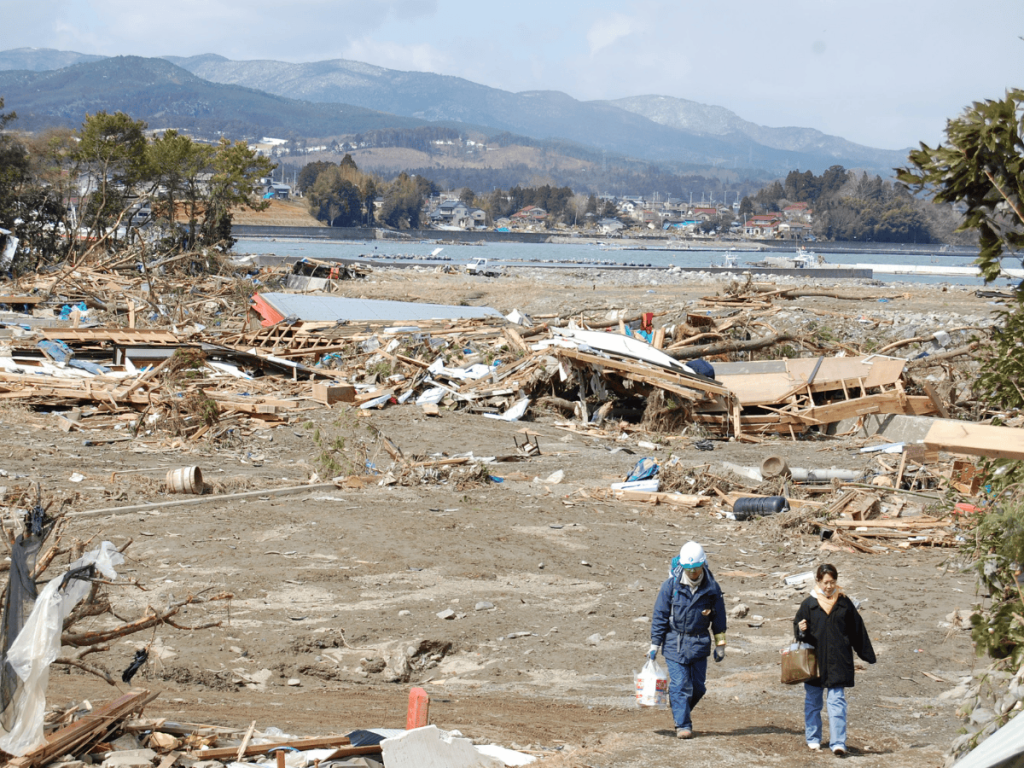
He continued to embrace risky situations. He became a whitewater rafter. In college, he worked as a firefighter. He practiced emergency and wilderness medicine in the Himalayas, in Japan after the 2011 tsunami, and at the remote base camp on Mount McKinley. He has also served as board chair of the National Outdoor Leadership School and is the co-creator of the monthlong senior medical student course, Medicine in the Wild, with NOLS Wilderness Medicine. He founded the MGH SPEAR (SPace, Ecological, Arctic, and Resource-limited) MED Division, which provides expert medical care in extreme environments.
Those experiences made him an evangelist for the idea that a little bit of risk can be good for you. It helps build resilience and comfort with failure, he said. Plus, it makes life more interesting.
“We’ve become so risk-averse in some aspects of our civilization and culture, and with our children, that I think we’re creating tremendously larger risks and we’re just not recognizing them,” he said.
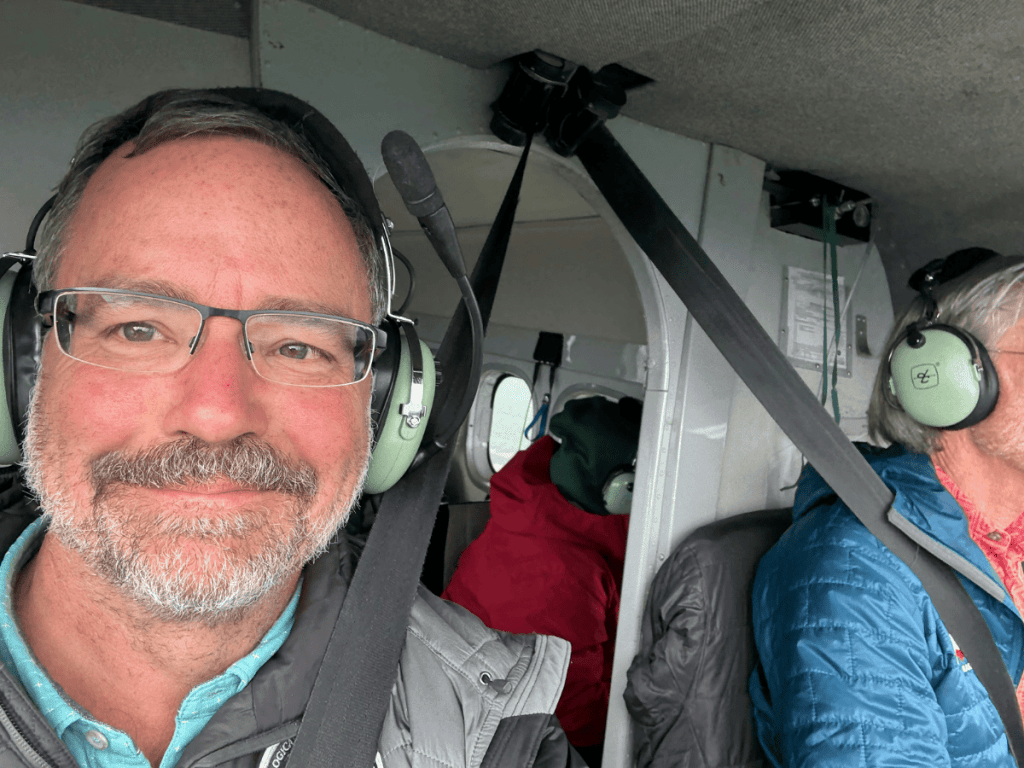
Harris flying to Denali in 2025.
Photos courtesy of N. Stuart Harris
It’s not an argument for recklessness. Proper risk assessment, Harris said, is about balancing likelihood with downside. His metaphor, naturally, is of rock-climbing: An amateur climber bouldering indoors, 6 feet off the ground, with a mat underneath and a friend spotting, might have a high likelihood of falling but the downside risk is pretty low. On the other hand, a highly skilled athlete lead climbing in Yosemite might have a low risk of falling, but the downside could be permanent and fatal.
What’s the secret sauce, the personality trait that comes out when decisions need to be made? Acceptance.
“My fear level has really plummeted,” he said. “Part of it is that I’m just old enough. I’ve seen enough patient presentations and human nature and other things. I have an idea of what I can control in those things I work very hard to alter for the better. But I also have seen enough to know that I’m a wee little person, and even as good as I am, or not, I’m not going to change some outcomes.”
It might sound like fatalism, but Harris situates his philosophy squarely in the camp of Stoicism: Focus on what can be controlled and be humble in the face of what can’t. His favorite people are the ones who have gotten “kicked in the teeth” a few times. Asked if he ever feels frustrated with people who come into the ER because they’ve done something risky and gotten hurt, he doesn’t hesitate: Never.
“I’ve done so many dumb things in my life, I just happened to get lucky,” he said. “You can’t be in this job and not realize that.” He added, “It’s not very interesting to hang out with people who haven’t seen the ugly downsides and experienced them personally. It makes us who we are.”