Featured series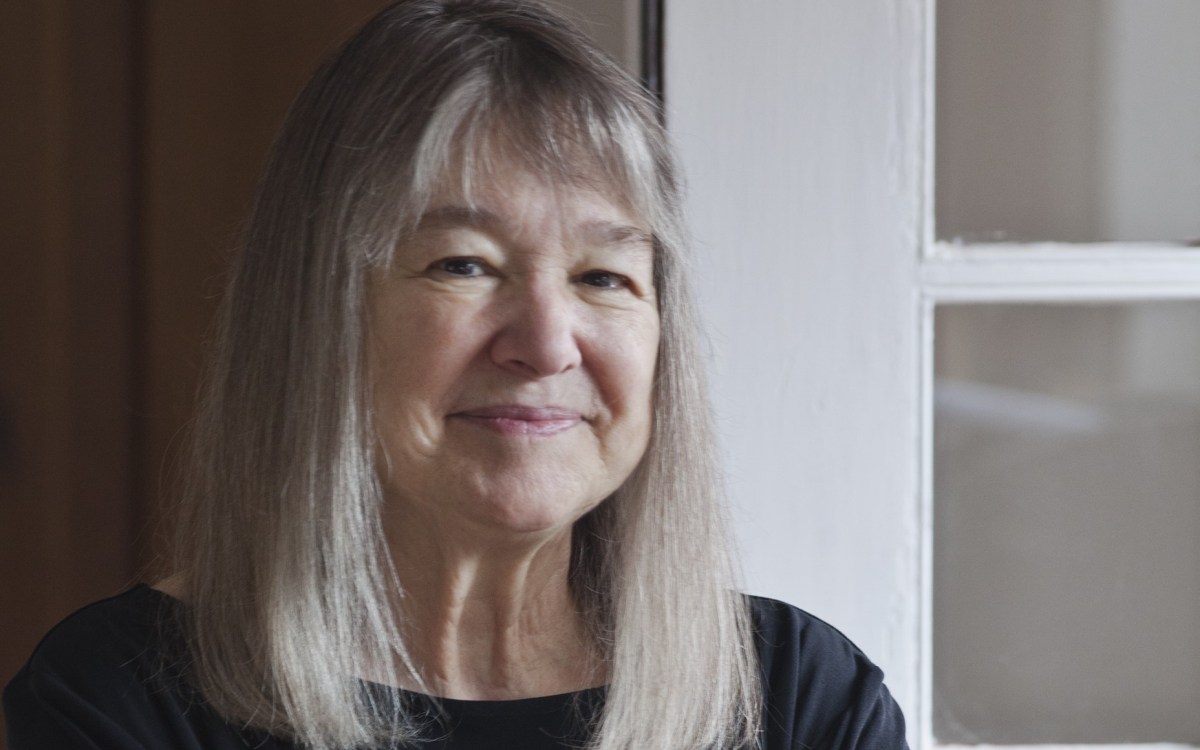


Namwali Serpell.
Photo by Jordan Kines
Arts & Culture
Immersed in Toni Morrison’s multitudes
Namwali Serpell’s book is an appreciation of ‘difficult’ oeuvre — and a defense
The true genius of Toni Morrison, says Namwali Serpell, isn’t found in the first read, but in the second, third, or fourth. This was how Serpell fell in love with Morrison’s prose, which she argues is designed to be a simultaneously cerebral and beautiful experience for readers.
“If you have to read and reread in order to put together what’s happening, then you are a co-creator of that literary experience,” said Serpell, a prize-winning novelist and a professor of English. “She saw this as specifically important for Black literature. Her highest aspiration, as she put it, was to create something at the level of jazz, which she saw as the highest form of Black art.”
Serpell’s new book, “On Morrison,” is a chronological walk through the Nobel laureate’s novels, from “The Bluest Eye” (1970) to “God Help the Child” (2015). It also explores the short story “Recitatif” (1983) and the play “Desdemona” (2011).
The ideas that animate the book took shape in the classroom, in a Morrison course Serpell first taught in the English Department in 2021. “The book is like the experience of taking a class with me,” she said. “My aim is to give you an appreciation for how carefully constructed Morrison’s works are, and how successful they are in using form to make you feel things you’ve never felt before.”
In this edited conversation, Serpell discusses Morrison’s approach to form, her talent for self-reading, and the value of being “difficult.”
What was it like to spend so much time with Morrison’s work for this project?
“The book is like the experience of taking a class with me.”
Namwali Serpell
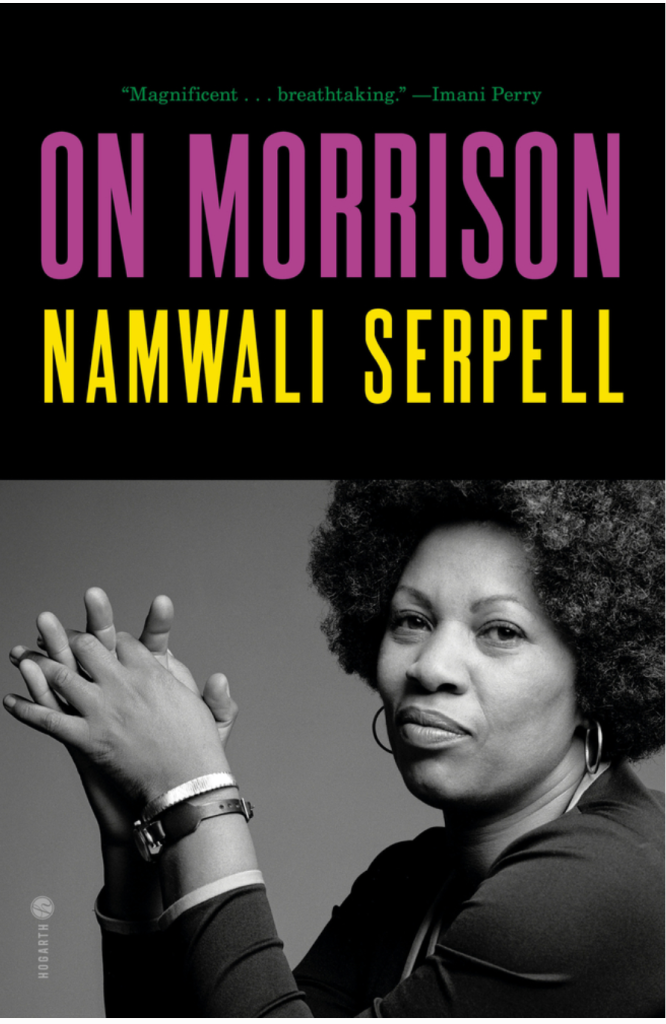
A lot of my thinking about Morrison is influenced by Morrison herself, who was an incredible reader of her own work. She was a critic herself, but she also had what I like to think of as the beautiful audacity to write about her own work. She was very good at close-reading even the meter, the rhythm of her own sentences, or explaining why she included certain colors at the beginning of a novel. She also spoke a lot in interviews about what she was and wasn’t trying to do. Her own practice of self-reading is so inspiring.
You’ve said that Morrison’s skill as a writer is too often overshadowed by her public persona. Could you explain what you mean by this?
Turning her into a kind of institution, or monument to Black excellence, I think, does a disservice to her legacy. She was deeply interested in form, but her novels often get read only in terms of their political content or their political aim or their representational goals. While we have a wonderful icon and a model of success, what we don’t have is a deeper understanding of how she changed the novel: the experiments she did, the ways she broke open the form, and infused other forms into it. The ambition that she had as an artist has been so influential on other writers that some of her techniques we now take for granted. She’s much more interesting on the page than we take her to be.
Did you learn anything new about Morrison?
I never met Morrison and I didn’t really want to. As they say, never meet your heroes. I have also loved having a purely literary relationship with someone who had purely literary relationships with a lot of other writers herself. But whenever I told someone that I was writing the book, I immediately got anecdotes about the time that they met Toni Morrison. Some of the things that I learned from them were that she had a wonderful sense of humor, bordering on the raunchy sometimes. Her sensibility was oriented toward class politics, but Morrison also delighted and luxuriated in beautiful, well-made things. Fashion was important to her. And when she got the phone call about winning her Nobel, apparently she closed the door to her office and danced.
You have written about Morrison’s “difficulty,” both in her texts and in her personality. Can you share more?
I felt that she was in need of a defense. It felt to me like she had not been taken seriously for the difficulty of her work, but rather rejected for what was perceived as the difficulty of her personality. She had a very contrarian sensibility when it came to politics. She also suffered no fools. She came to believe that it was a good thing for Black women to be seen as “difficult,” because that meant that they had insisted on being taken seriously. I thought that was a very interesting way of thinking about the attribution of difficulty to Black femalehood: If you lean into it, it is a way of asserting the importance of what you’re doing.
Morrison articulated, over the years, many different reasons why difficulty in a text was not simply a sign of showing off your intelligence, but was, for her, about engaging the reader and drawing them into participating in the making of the book.
Where should a first-time Morrison reader begin?
People often want to start with “The Bluest Eye” but it’s actually one of her most difficult books. I think it’s better to ease in with “Sula” (1973) or “Home” (2012). She described “Sula” as “hermetic,” by which I think she meant it’s tight — well-crafted and well-shaped, like a poem. It’s not very long, but it’s very, very moving and very beautiful. If you want to start with later Morrison, “Home” is pretty straightforward. One of the characters will, in certain chapters, talk back to the narrator. It’s a little experimental, but actually pretty easy to figure out. It’s delightful.