Featured series


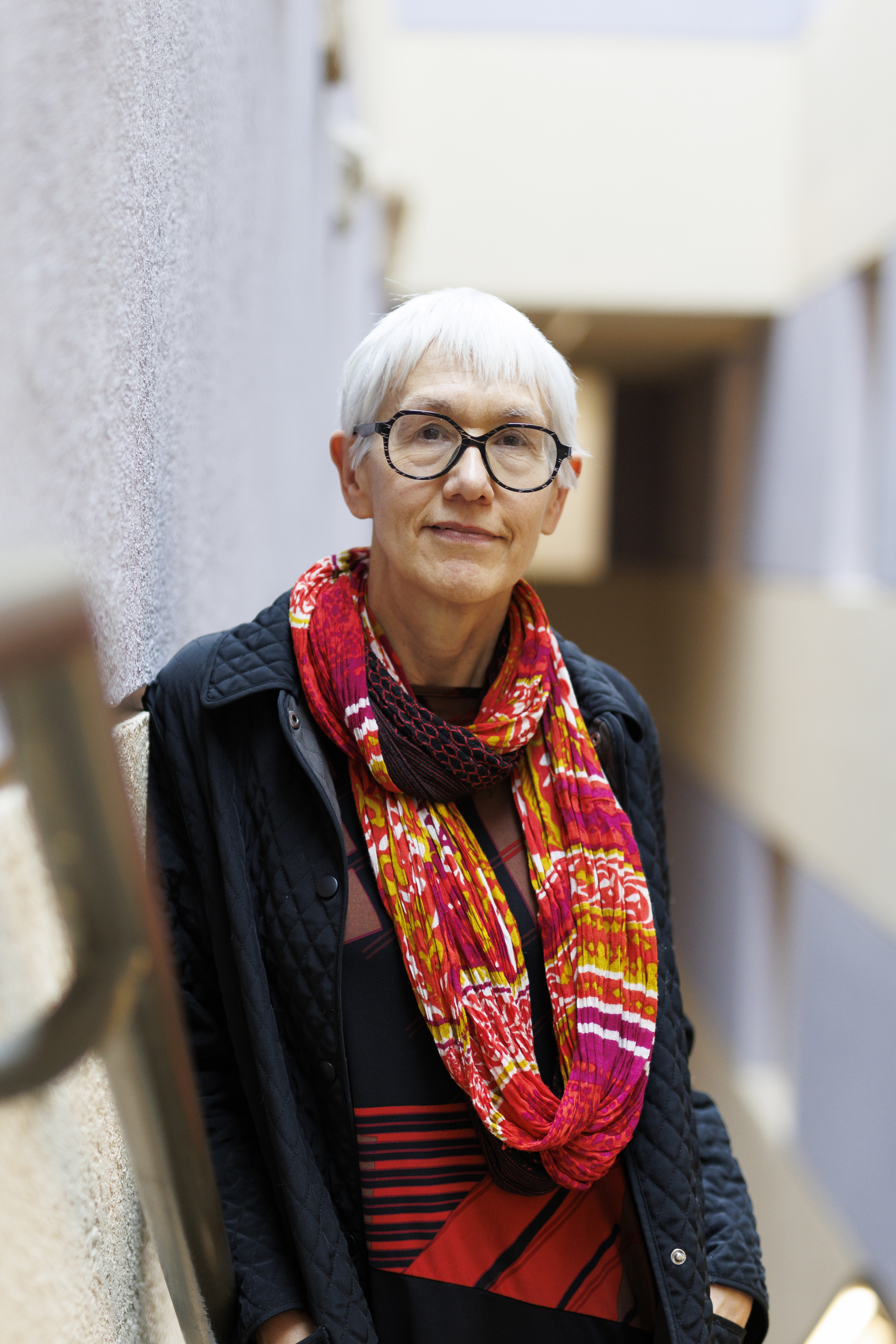
Ann Forsyth.
Niles Singer/Harvard Staff Photographer
Nation & World
Aging independently, by design
Most older adults say they want to spend their golden years in their own homes. The reality is more complicated, says urban planning expert.
With the rapid graying of the United States, due to extended lifespans and declining birth rates, concerns among older adults are also on the rise. Their worries range from financial concerns to physical and mental health issues to healthcare and housing. Most older adults would prefer to stay in their own homes throughout their golden years, according to a recent Pew Research Center poll. But aging in place is not that simple.
In this interview, which has been edited for clarity and length, Ann Forsyth, Ruth and Frank Stanton Professor of Urban Planning at the Graduate School of Design, talks about what aging in place entails, how technology helps older adults, and what communities can do to assist those who want to avoid the nursing home.
In surveys, most older adults say that they would prefer to live in their own home rather than a nursing home. How would you define aging in place?
At its simplest, it is aging in your own home. But that leaves a lot of questions, such as which home is home? Is it the home you lived in in your 40s and 50s? Is it one that you moved into in your 60s and 70s in order to age in place? And then the issue is, for how long? Is it one that you would leave only when you die? Or do you stay in that home as long as you can look after yourself and then move somewhere else in your community, maybe a senior housing development? For many people, aging in place is really about staying outside a nursing home.
What challenges do people face when trying to live independently as they age?
The main issue is uncertainty. There are many positives about staying in your own home. It provides shelter, meaning, and continuity. You may want to stay in your own home, but you’ve got uncertainty about whether you’ll be physically able and mentally able to manage your household. There’s also uncertainty about how long your household will stay intact. If you’re married or have a partner, and something happens to them, then you’ll have to make different kinds of decisions. For older people, there is more potential for surprises that could undermine their ability to stay at home. Some people might worry about mental problems that could affect their ability to manage their home finances and so on. There’s a lot of worry and concern.
Most homes are not equipped for aging in place. Can design help?
It is tricky. What you have to do is balance two factors, one of which is compensation for losses or problems that might come along. For example, being able to get around without having to go upstairs, or when using a walker, or being able to use assistive devices that may need wider, bigger spaces and so on. But you also need to have an environment that provides some challenge and meaning because you need to physically and mentally challenge yourself to maintain your capacities. The stairs dilemma is quite interesting: Do you have a house without stairs so that it’s easier to get around when you are no longer as mobile? Or do you have stairs because they help you maintain capacity through incidental exercise? If you’re wealthy enough, you can have a bit of both because you can have a bedroom and bathroom on the main floor. That’s very complicated; it’s hard to find those houses, and they’re quite expensive. One way to think about it is when your home gets too challenging, you move, but at that moment, you’re facing a lot of challenges, and the thought of actually having to move and deal with all your stuff and emotions may be very difficult.
How can urban planning support aging populations?
This is an area where cities need to bite the bullet. In the U.S., the Americans with Disabilities Act has been terrific for helping make public buildings physically accessible and offering protection for a variety of disabilities. But there is a need to think comprehensively about not only the physical environment, but programming, and other aspects of the social environment, which is key to prevent loneliness and social isolation among older people. That is something that more cities will need to do more of.
In terms of housing, there are two philosophies; one is clustering older people together so it’s easier to provide services like classes or meals, versus integrating them with the wider community. Both of them have benefits, and can be done at different scales, so you don’t have to have a massive retirement community like Sun City with tens of thousands of older people all in one place. You could have an apartment block filled with older people in a part of the city. That configuration allows them to be together, to meet and support each other, and to keep reforming their social networks as people depart.
There’s also age-specific housing for older people, or co-housing programs that try to mix older and younger groups of people, and both can work with or without external support. The debate always centers about how much clustering there is of older people to make services and socializing easier versus how much they’re just scattered throughout the environment, which makes it more complicated for services. But one successful example of the scattered housing is the Village model in Boston and elsewhere now, where people that are scattered throughout the city find each other through this villages group that provides services, social connection, and a sense of community.
What role can technology play in helping older adults age at home?
There are many kinds of technologies that can make aging in place much easier. We’re not only talking about walkers and wheelchairs, but also digital technologies and even ordinary appliances. In a study I did with Yingying Lyu, a Harvard graduate who now works at West Chester University of Pennsylvania, we found that older folks in rural China prefer to use a rice cooker or a slow cooker because it makes them feel much safer than using gas-stoves or wood. Robotic vacuums are also helpful, but there are other kinds of technology that are changing old age. For example, going up and down stairs can be complicated, but with the help of robotic shorts, we might be fine with stairs. Technologies can also help caregivers. A lot of robots can help people lift things, and they could help caregivers transfer someone from a bed to a wheelchair or help get them out of the bathtub. Technology already helps older folks maintain family ties and social relationships through video conferencing on computers and phones.
People are living longer and having fewer children. How might these demographic changes affect the care of older Americans?
There are big challenges these days with smaller families, more mobile populations, and older people living so much longer. As families reduce in size and disperse more, there will be less labor to do that informal, unpaid care that families do for their older relatives. There will be more need for paid care. That’s going to be a huge challenge in most parts of the world.
There are a number of strategies for minimizing the amount of care older people need, and that includes improving people’s health, so that they would need less care. It also includes finding new sources of caregiver labor force, such as attracting people from different industries into caregiving or relying on immigration, which is often used to increase the caregiving workforce. And then promoting cooperation among older people to care for each other, using technologies, both for caregivers and older people, and improving the environment. Of course, all of these strategies need resources, and communities and governments need to be better prepared to deal with the impact of demographic changes on aging populations.