Featured series


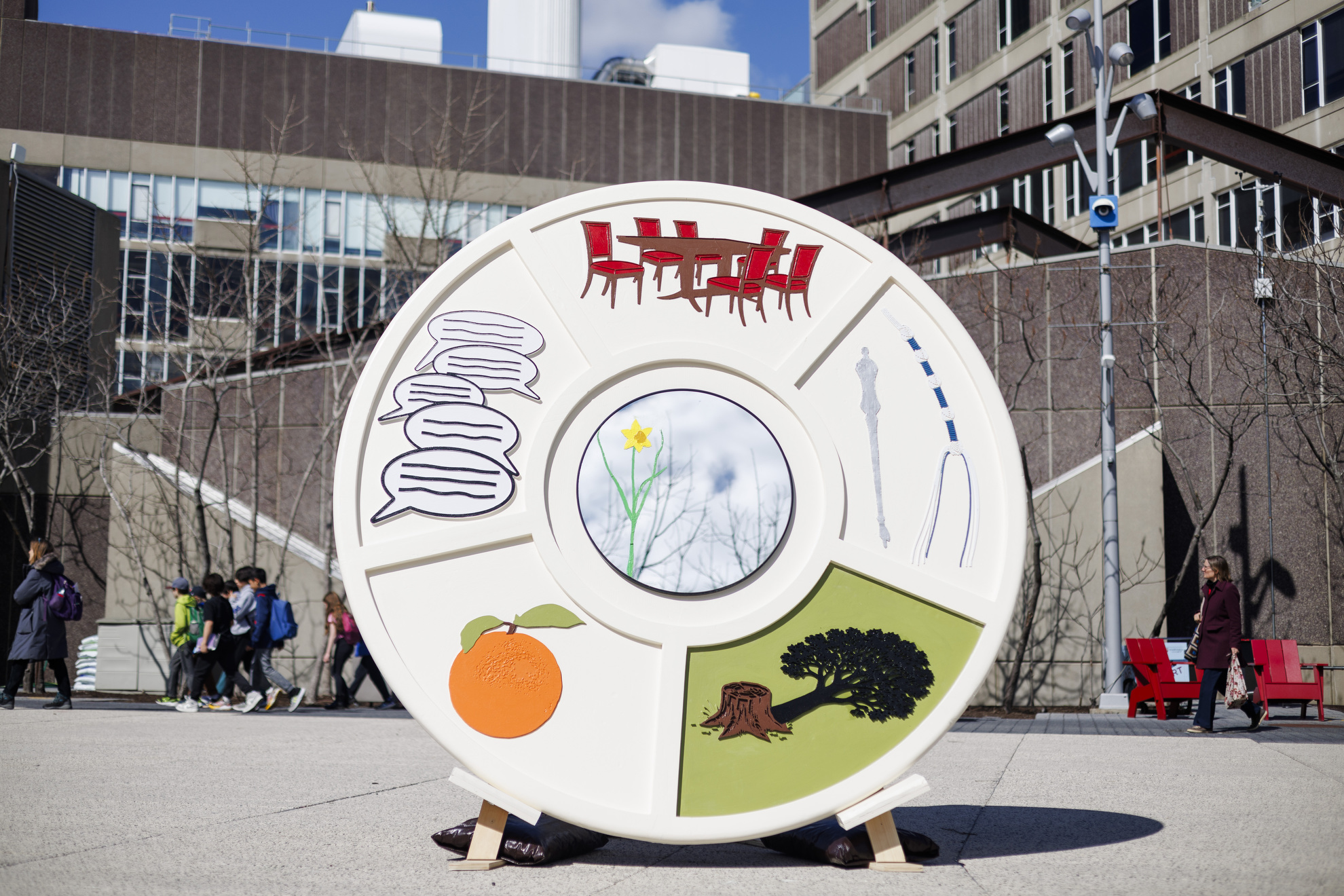
Photo by Grace DuVal
Campus & Community
A community-sized Seder plate
Through sculpture’s 6 stories, Hillel seeks to portray ‘a bigger picture of what it means to be Jewish’
Harvard Hillel is celebrating Passover this spring in a big way, with a 9-foot Seder Plate standing in Science Center Plaza.
The sculpture, created by local artist Michael Mittelman, features unique iconography in the slots traditionally occupied by six symbolic foods that tell the story of the Hebrew exodus from Egypt. The images are inspired by stories from Harvard students, faculty, and alumni celebrating Jewish identity and traditions. “The People’s Plate” will be on display through Thursday as part of a week of events hosted by Hillel to celebrate Passover and Jewish life on campus.
The project was led in part by Rabbi Elisha Gechter, senior director of community engagement at Hillel.
“Michael and I spent time interviewing six different people and asking them a series of questions about where they feel belonging in the Jewish community, where they feel sometimes they have to keep parts of their identity hidden, different childhood memories, different ideas about legacy,” Gechter said. “Michael, in listening to those answers, came up with these beautiful visual representations of their stories.”
It’s Mittelman’s first piece of public art. Previously, he said, his work has been focused on the intersection of art and technology.
“The goal was to make it something of joy and positivity,” Mittelman said.
The final product shows imagery of gathering, conversation, and a chopped-down tree that still reflects its past standing tall.
“That came out of a conversation that was really about seeing all sides of a situation, seeing that even in the losing side of the argument, the language of the argument is still treasured,” Mittelman said.
Anonymous written versions of the six stories will appear alongside the plate. Mittelman described them as thought-provoking stories from people of different backgrounds and levels of religiosity.
“Any good artwork makes people ask questions, and I would hope that it shows a level of complexity that requires some more investigation,” Mittelman said. “My hope is that people go, ‘Oh, there is not one point of view. There’s not one approach.’ And maybe it’s worth looking into what these differences are.”
Azaria Sussman, a first-year at Harvard College and the social co-chair for Harvard Hillel, said the project was important to him precisely because of the diversity observed by Mittelman.
“It doesn’t just represent one sort of Judaism, but lots of different experiences,” Sussman said.
Gechter said she hopes that the artwork resonates with passersby regardless of their backgrounds.
“We hope they’ll be curious, and they’ll read more, and have a bigger picture of what it means to be Jewish,” she said. “We also want it to be that for Jewish constituents on campus or in town; they walk by and feel proud about what’s there, and they feel like it’s relatable, even if some parts might be challenging in some ways.”