Featured series


Work & Economy
Muriel Siebert kicked down the door so others could follow
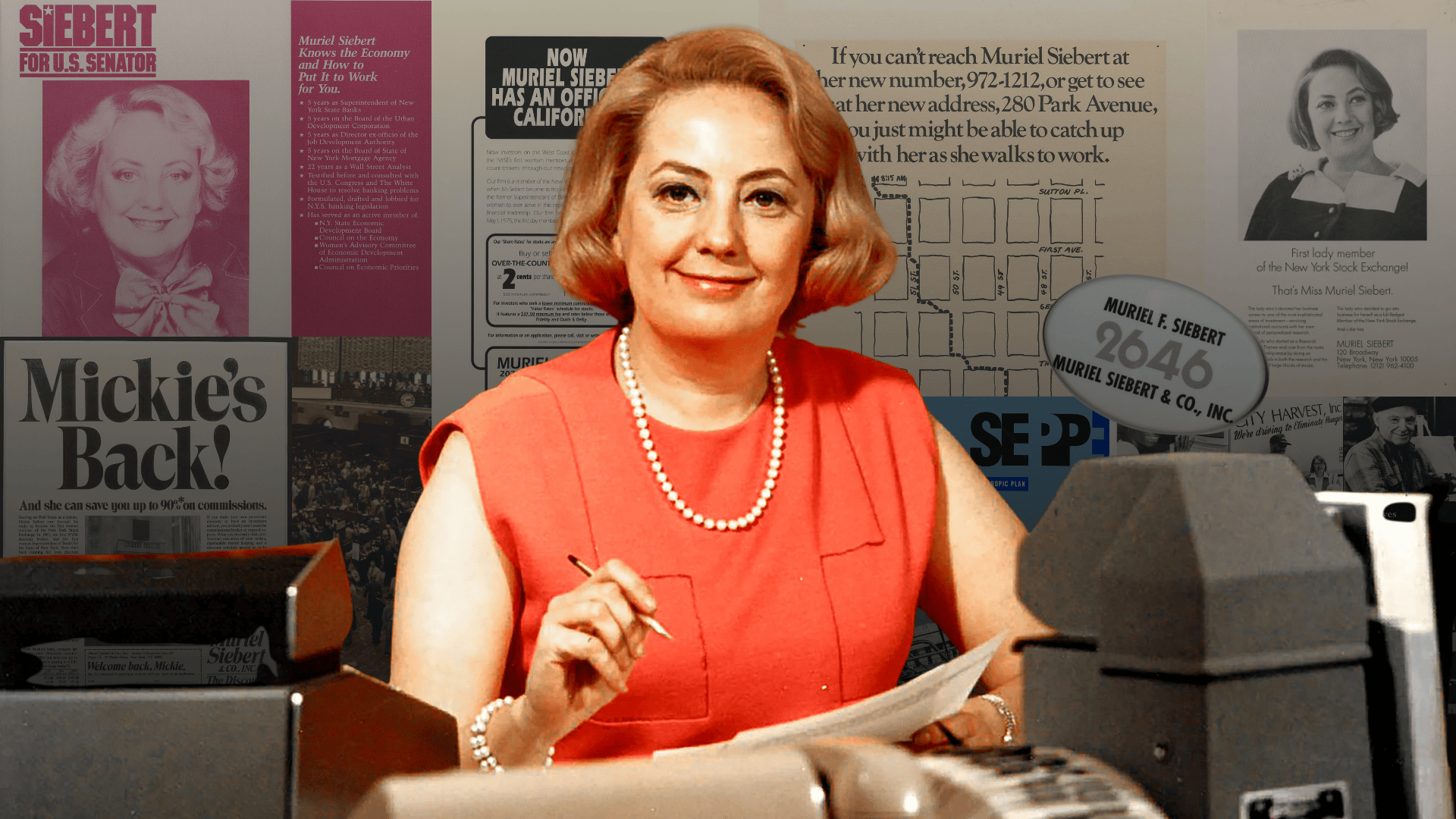
Images courtesy of Baker Library Special Collections; photo illustration by Liz Zonarich/Harvard Staff
Baker Library exhibit showcases life of analyst who opened doors for women on Wall Street
Muriel Siebert arrived in New York City in 1954 with $500 and a dream. But from her first job as a “glorified gofer” at a small financial analysis firm, she would go on to become the first woman to buy a seat on the New York Stock Exchange, the first woman to own and operate a brokerage firm on the NYSE, and the first woman to serve as Superintendent of Banks for the State of New York.
A new exhibit, “Muriel Siebert: Redefining Power and Possibility on Wall Street,” on display now at the Harvard Business School’s Baker Library, highlights Siebert’s remarkable career, which opened doors for women in finance. This exhibit introduces the extensive holdings of the Muriel Siebert Collection at Baker Library, which the Muriel Siebert Foundation donated to the library in 2019. The Siebert archive comprises a wide range of materials, including correspondence, research reports, speeches, articles, press releases, photographs, and audiovisual materials.
“Now, this is exciting.”
Muriel Siebert was born in Cleveland, Ohio, in 1928, the daughter of a homemaker and a dentist. She attended Flora Stone Mather College intending to become an accountant, but before she could graduate, her father was diagnosed with cancer. She dropped out to care for him in her junior year.
In 1953, Siebert visited New York City with some friends and toured the New York Stock Exchange.
“What I saw as I looked down from the visitors’ gallery was a sea of men in dark suits,” she wrote in her autobiography. “But after absorbing all that fierce energy, I turned to my friends and said, ‘Now, this is exciting.’”
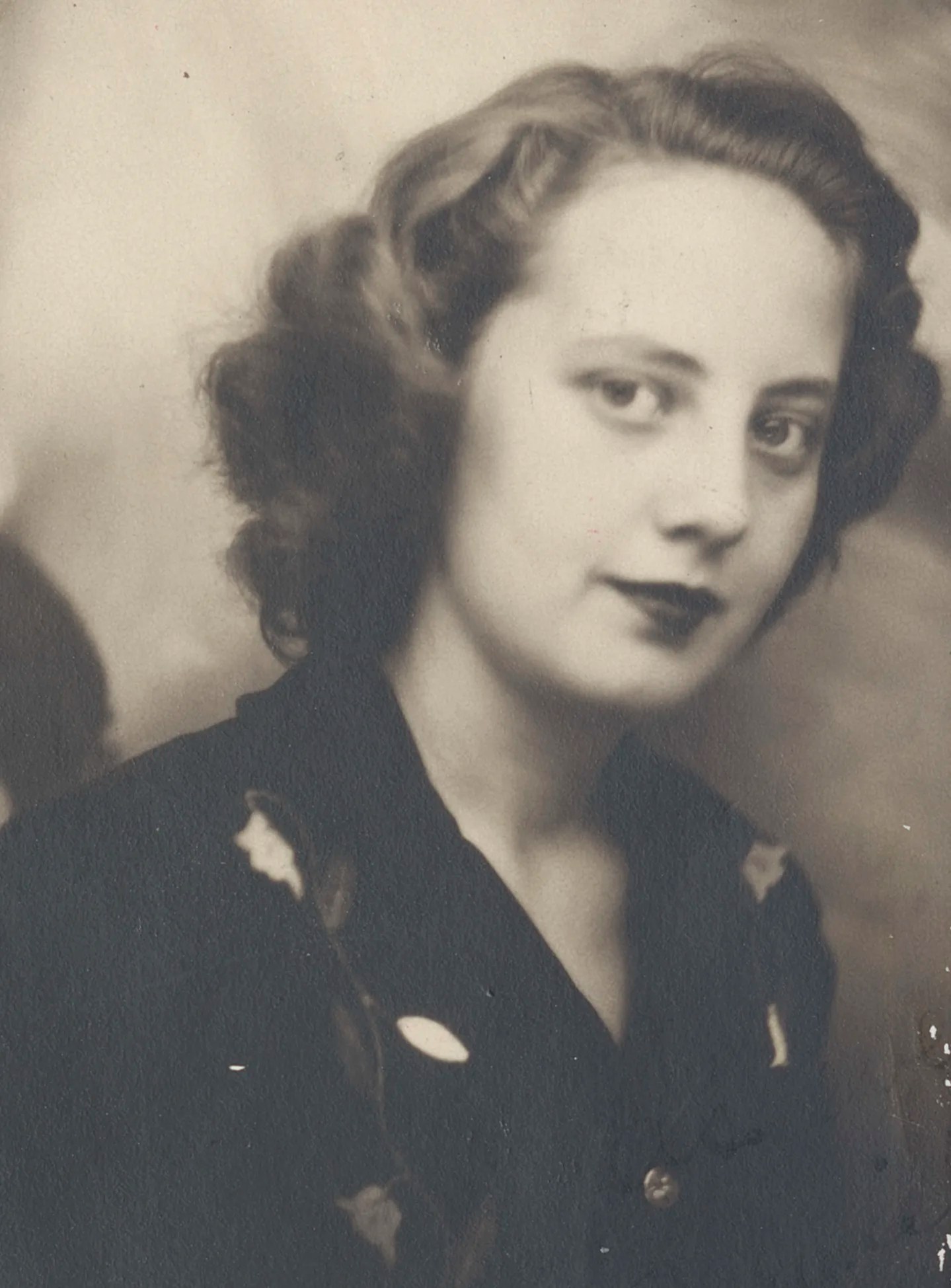
Young Muriel Siebert in 1943.
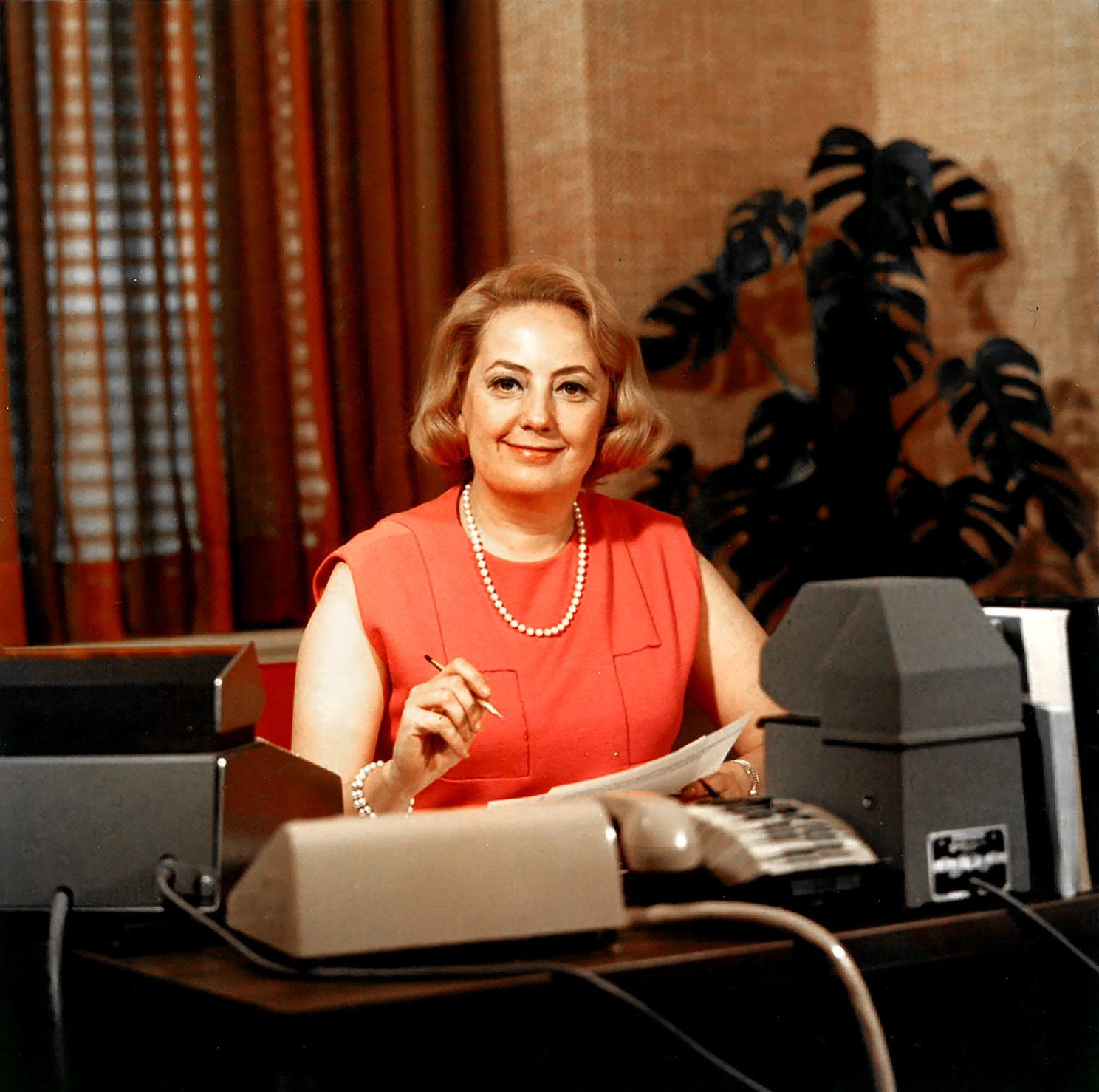
Siebert ca. 1960s.
New York Stock Exchange Archives, NYSE Group, Inc.
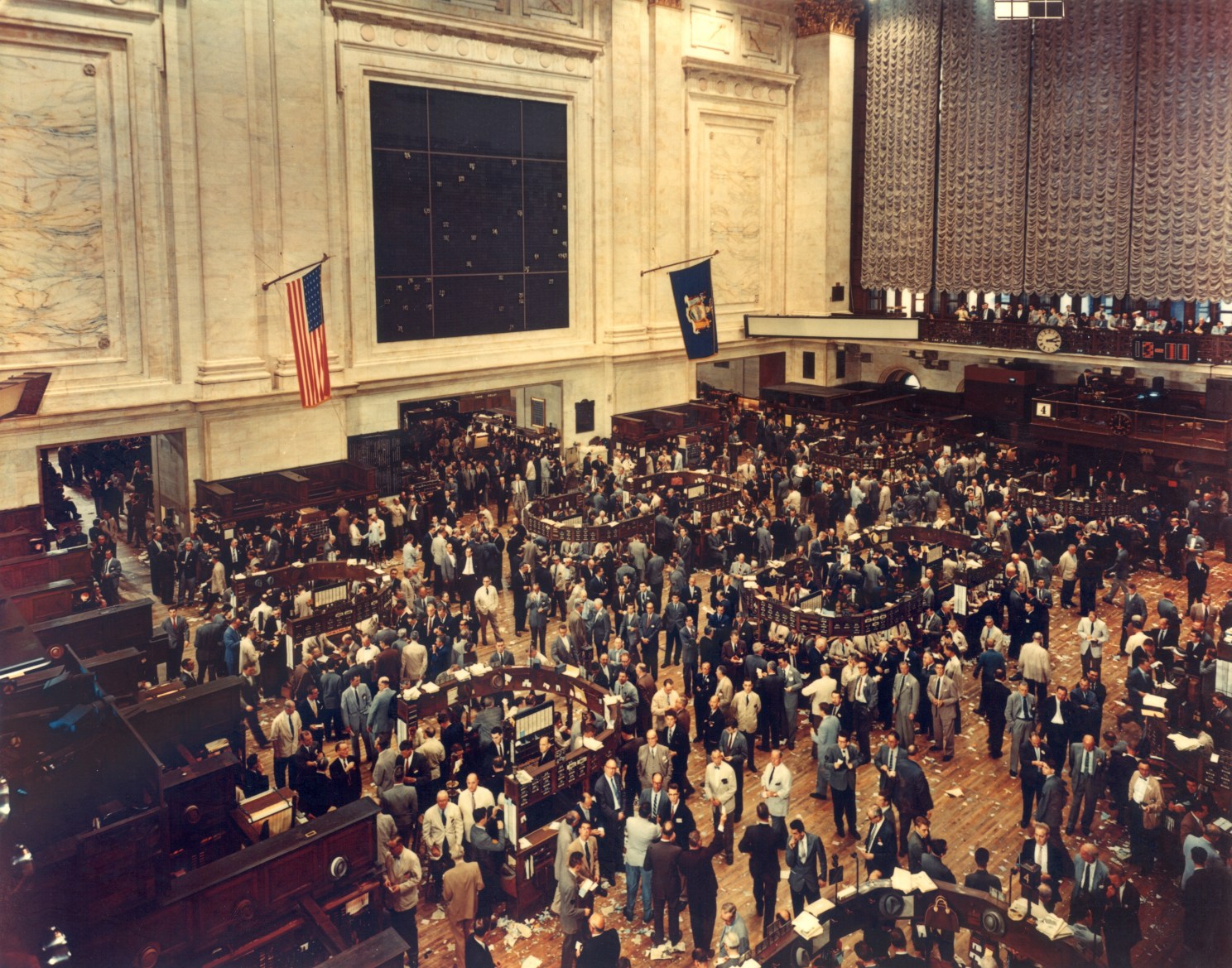
Floor of the New York Stock Exchange, ca. 1950s.
Photograph by Sylvania Electric Products, Inc. New York Exchange Archives, NYSE Group, Inc.

Siebert became a well-regarded specialist in the airline industry, and she often met with aviation executives and engineers.
Robert S. Lerner Photography, LLC
The following year, Siebert returned to New York to look for work.
After being turned down for several jobs, Siebert found work as a research trainee at Bache & Co. for $65 per week. She considered herself a “glorified gofer,” but she learned about the art and science of market analysis.
“I can look at a page of numbers and they light up and tell me a story,” she said.
A seat at the table
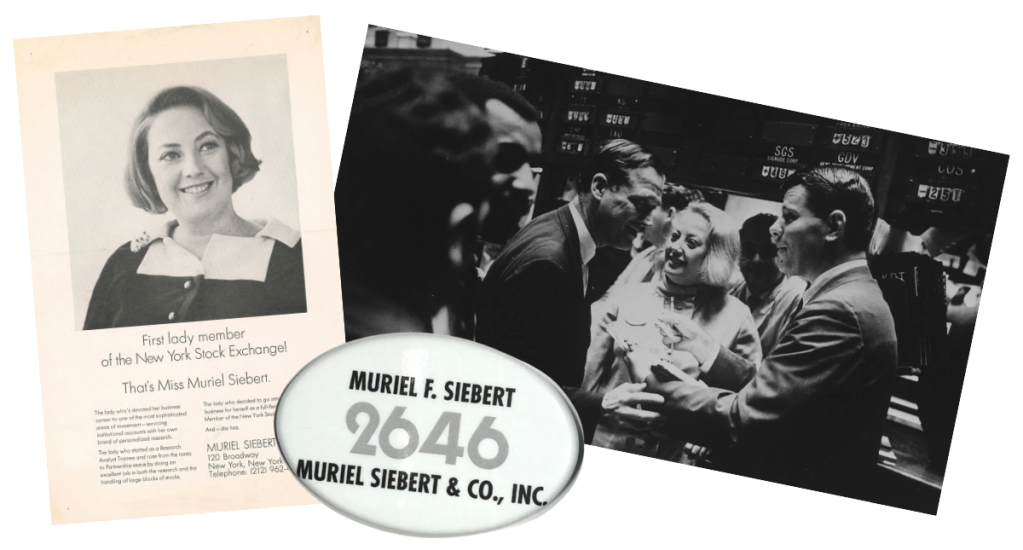
Siebert rose through the ranks of the research analysts at smaller brokerage firms.
She encountered gender discrimination on many fronts.
“Mentors for women didn’t exist when I started on Wall Street,” she wrote. “It makes you a feminist when you’re making $150 a week and the man sitting next to you is making $300.”
“When I applied for a seat on the exchange, there was an uproar. Some people who felt that women should not be admitted to the stock exchange came to me and said so. But for every one person who resented my action, I found there were others who were happy for me. . . . I did a lot of soul-searching and talked to some of my other clients and I worked up enough strength to approach the exchange.”
Muriel Siebert, 1971
In 1967, a client suggested she buy a seat on the New York Stock Exchange and start her own firm. Siebert read the NYSE constitution and found no rules against women buying a seat. She bought her membership for $445,000, the equivalent of more than $4 million today. She called her membership badge “the most expensive piece of jewelry going.”
Going into business
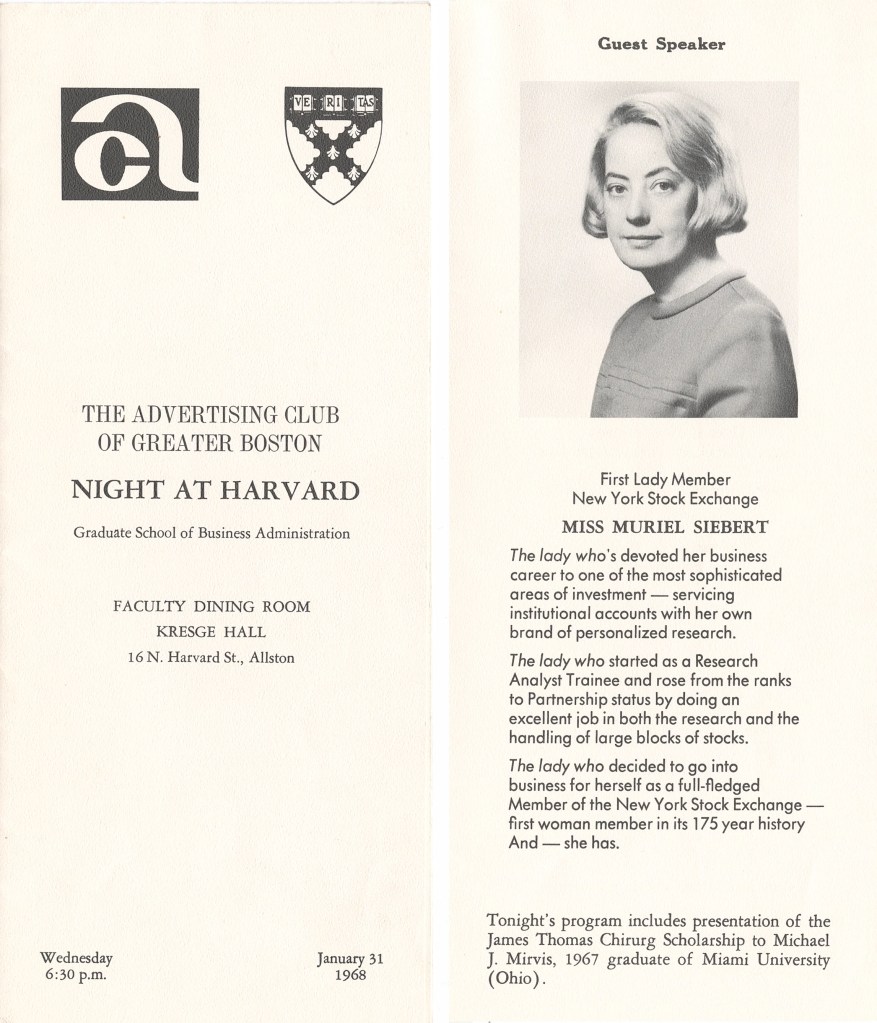
“The Advertising Club of Greater Boston, Night at Harvard, January 31, 1968.”
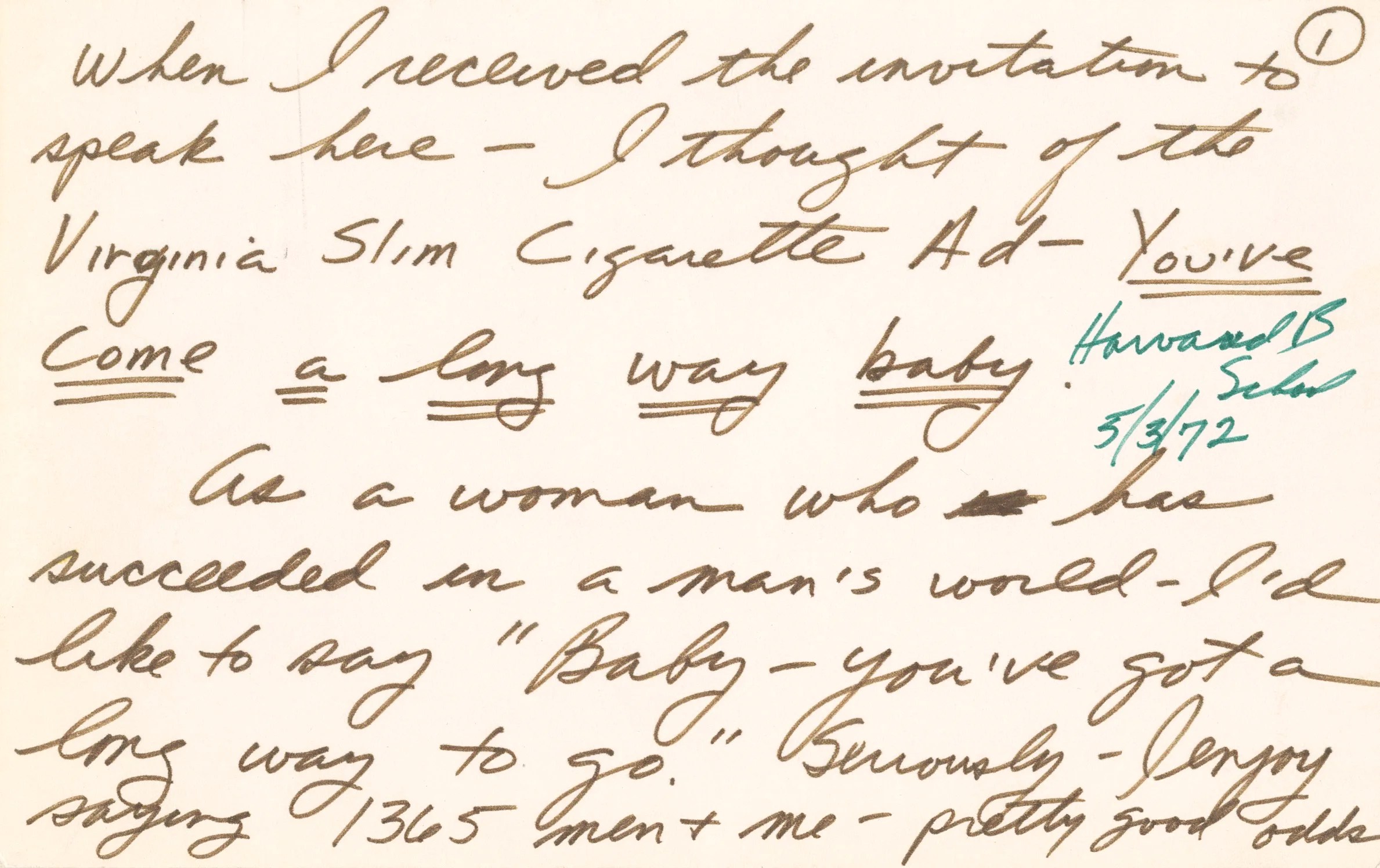
Notes for keynote speech by Siebert for “Women in Management Day Program,” HBS, May 3, 1972.
Siebert quickly earned a reputation as a trailblazer. She was invited to speak at Harvard Business School in 1968, shortly after she bought her seat on the exchange (HBS had first admitted women into its full MBA program five years earlier).
In 1972, she was invited back to be the keynote speaker at a program called “The Impact of Women on Today’s Business Environment.” She began her address, “When I received the invitation to speak here — I thought of the Virginia Slim Cigarette Ad — You’ve come a long way baby. As a woman who has succeeded in a man’s world — I’d like to say ‘Baby — you’ve got a long way to go.’”
Aiming for bigger reforms
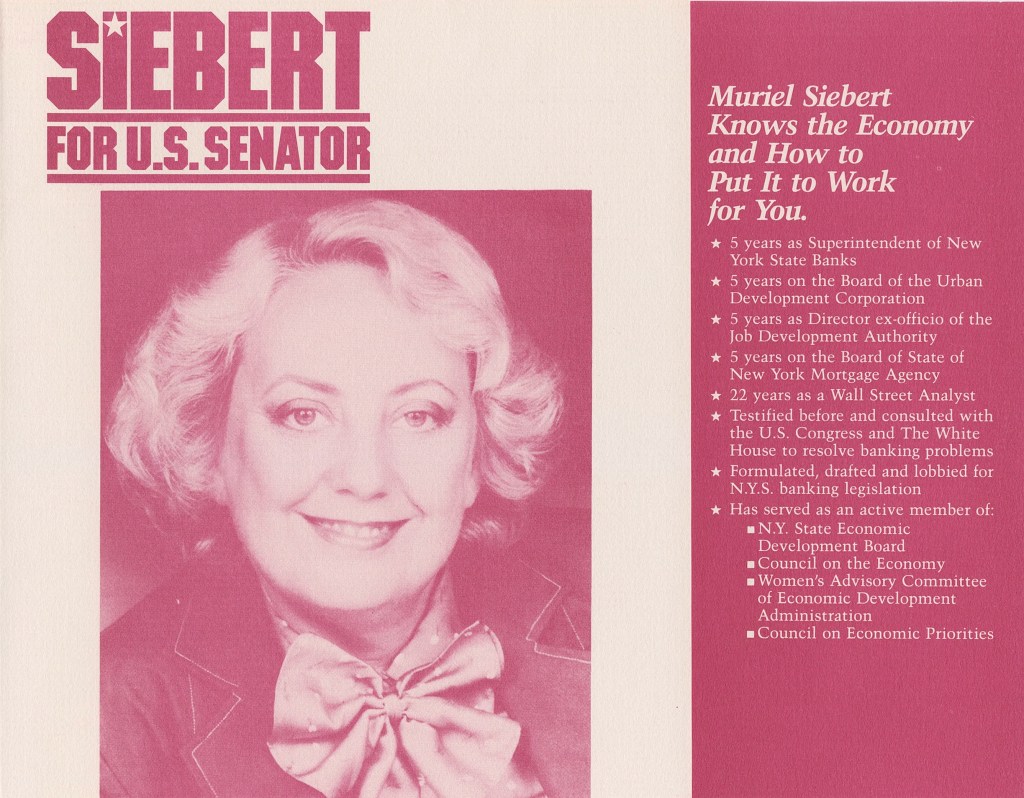
In 1977, Siebert was appointed New York State’s Superintendent of Banks, making her the first woman to hold the position. She oversaw about 500 banking institutions, $400 billion in assets, and $100 billion in trust accounts.
The role made her acutely aware of the need for financial reform. In 1982, she ran for the U.S. Senate seat held by Democrat Daniel Patrick Moynihan, losing in the Republican primary to Assemblywoman Florence M. Sullivan.
“Pride, principal, and profit”
While she was Superintendent of Banks and running for Senate, Siebert relinquished control of her firm into a blind trust. But after her primary loss, she returned to her company.
She grew the firm significantly, opening new offices, expanding into new services, and adopting new technologies, including an early computerized trading site.
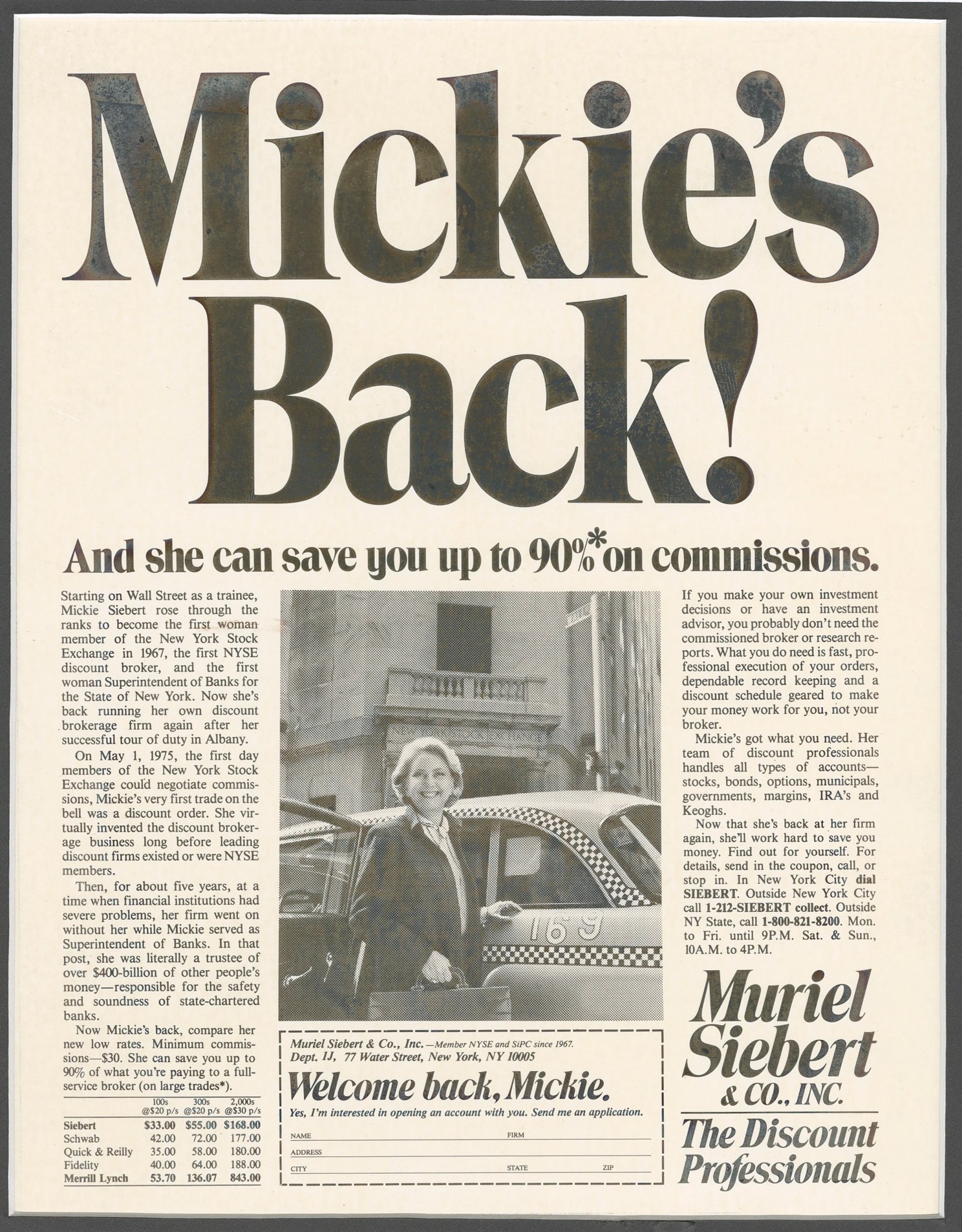
“Mickie’s Back!” Advertisement, 1983, Muriel Siebert & Co.
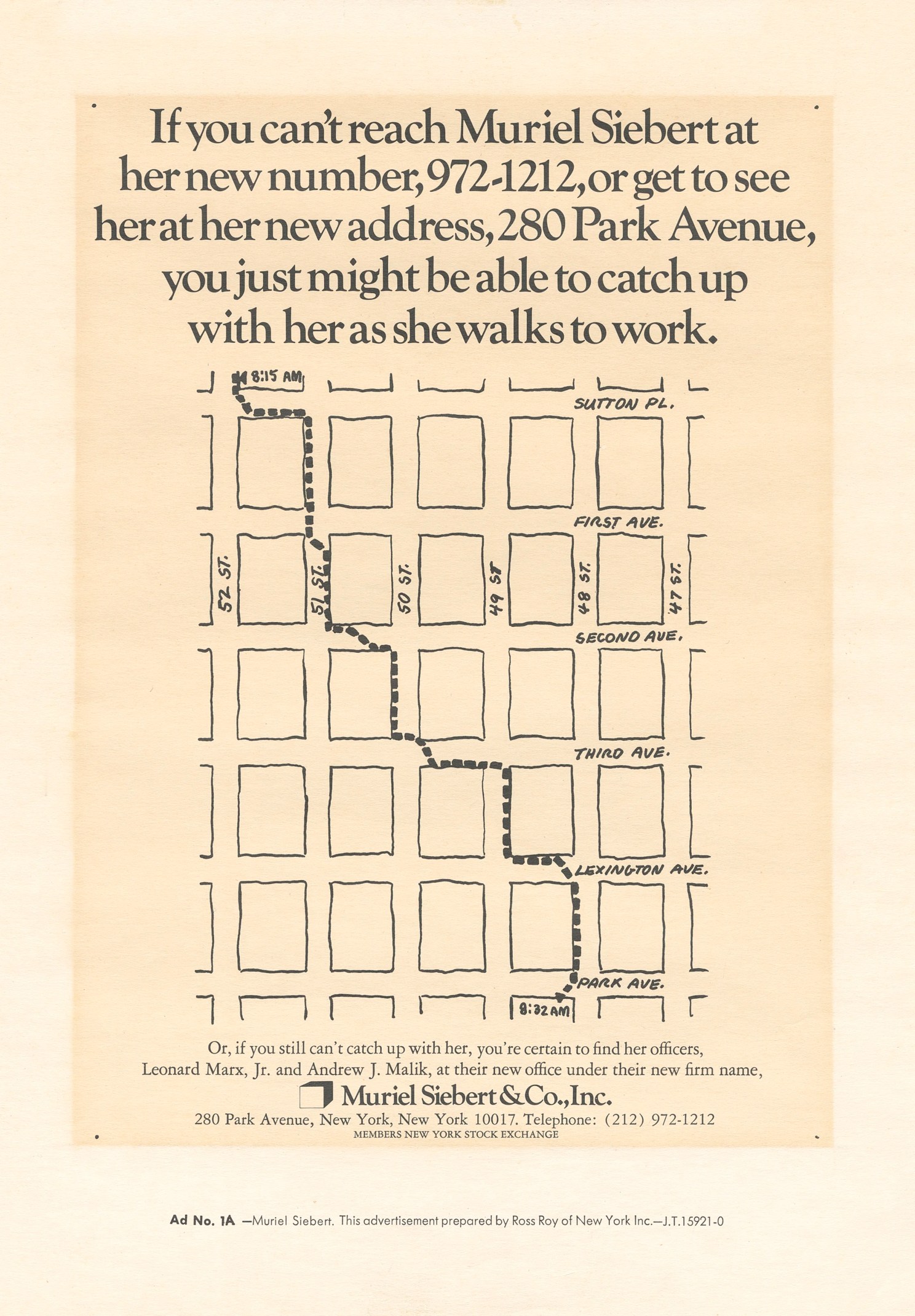
“If you can’t reach Muriel Siebert.” Advertisement, 1983.
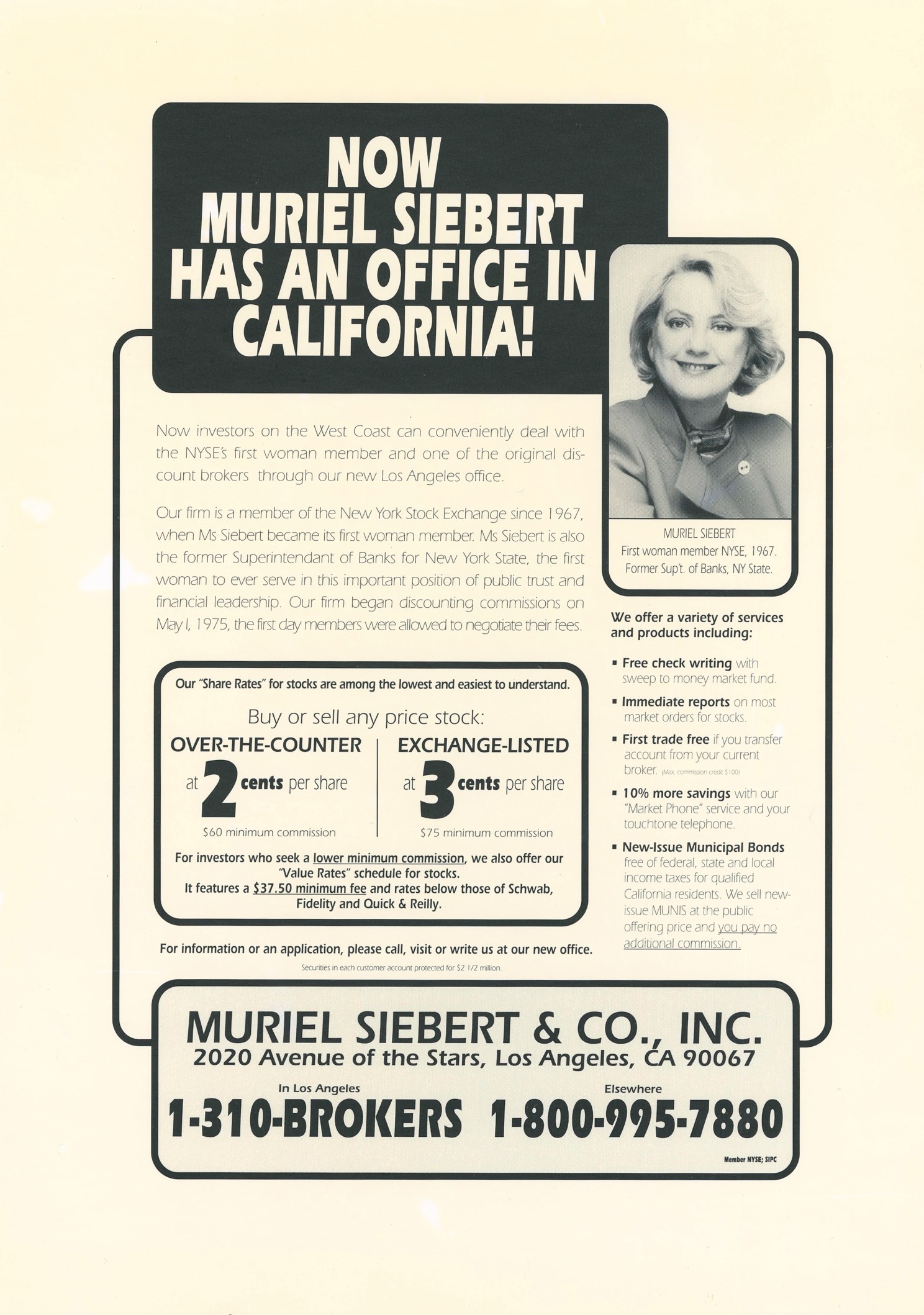
“Now Muriel Siebert has an office in California!” Advertisement.
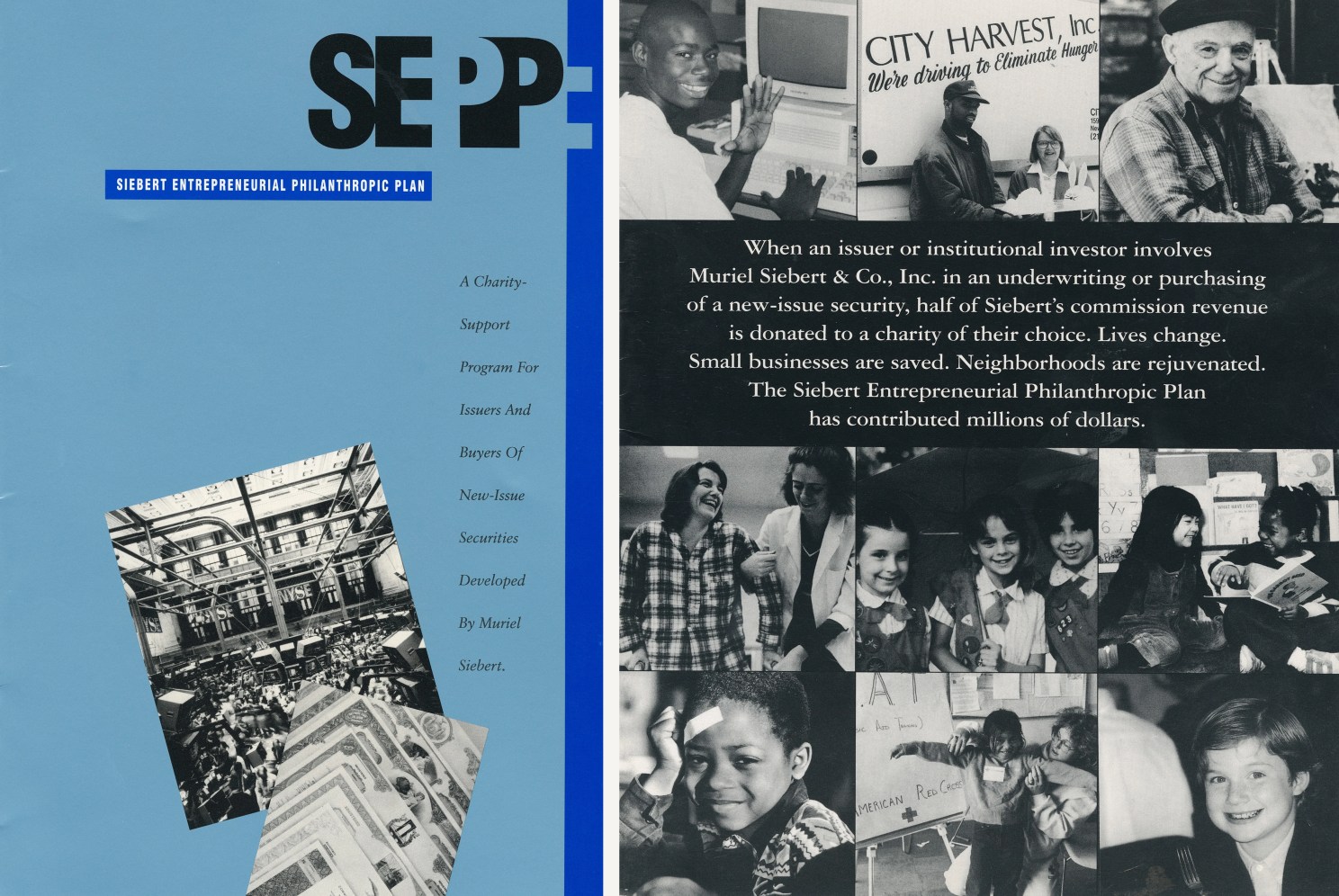
Siebert Entrepreneurial Philanthropic Plan (SEPP) brochure.
“When I left my position with New York State, I had some offers from major firms. Had I taken any of them, I probably would have made a lot more money, but … I felt an obligation to other women. Had there been ten other woman-owned firms, I might have chosen differently,”
Throughout her career, Siebert championed women in business. She was a founder of the Women’s Forum in the Committee of 200, organizations supporting women in business. In 1990, she established the Siebert Entrepreneurial Philanthropic Plan (SEPP), which directed to charity 50 percent of profits, after clearing costs, from the fees associated with the underwriting or purchasing of new securities.
“My motives have always been pride, principle and profit. I don’t know how you stay afloat and sleep at night without all three.”
Muriel Siebert
“Giving back is more than an obligation, it’s a privilege,” she said.
Siebert was inducted into the National Women’s Hall of Fame and the International Forum Women’s Hall of Fame. In 2016, three years after her death, the NYSE opened Siebert Hall, the first and only room in the Exchange dedicated to an individual.
“Muriel Siebert: Redefining Power and Possibility on Wall Street” is open at Harvard Business School’s Baker Library through December 2026. This article includes text drawn from the digital exhibition and exhibition catalog.