Featured series


Health
How realistic is ‘The Pitt’?
Photos by Warrick Page/HBO Max
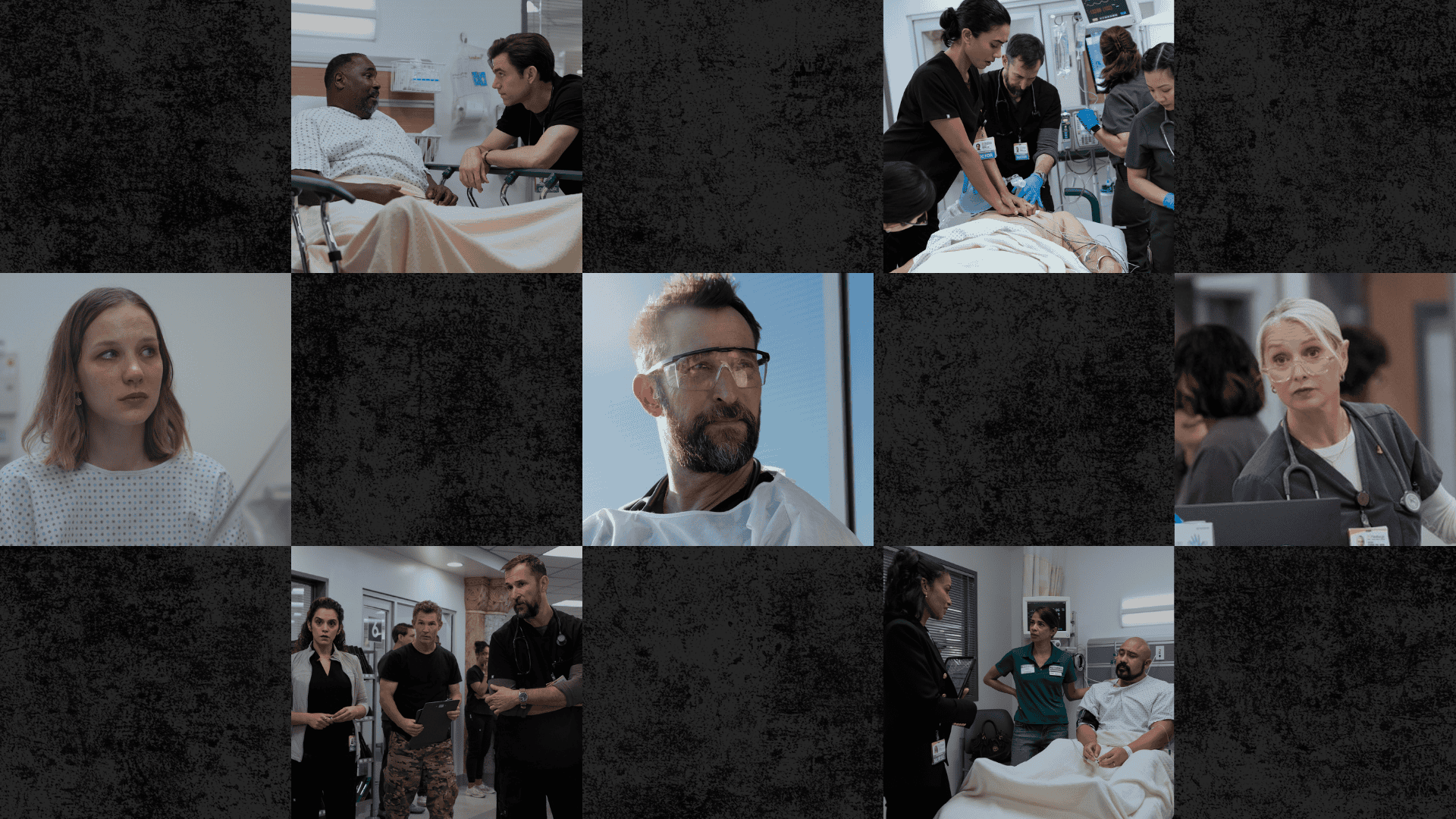
Doctors weigh in on what hit TV show gets right and wrong about life in the ER — from pacing and caseloads to workplace culture (and that waiting room from hell)
Every Thursday, viewers of the Emmy Award-winning HBO Max show “The Pitt” clock into their shift at Pittsburgh Trauma Medical Center’s emergency department to watch their favorite fictional doctors tackle any number of crises. But does “The Pitt” capture the reality of life as an emergency physician? The Gazette talked to four doctors at Harvard-affiliated hospitals about what the show gets right, what it doesn’t, and why they watch (or don’t). Their answers have been edited for clarity and length.
Ali Raja
Mooney-Reed Endowed Chair in the Department of Emergency Medicine at Massachusetts General Hospital; Professor of Emergency Medicine and Radiology at Harvard Medical School
The pacing is exceptionally accurate. But it’s not just the pacing. It’s also the fact that the characters are constantly getting interrupted. They’ll be talking about one case and be in the middle of a conversation, but they’re pulled into another case, or they’re answering pages and they’re juggling multiple patients at once.
It’s also the whiplash of going from one patient to another, and the emotional whiplash of going from a heartbreaking case in one room to a minor complaint in the next room, and trying to juggle the back and forth there.
There are a lot of cases that they get right. We have a huge mental health crisis in this country, and the show does a good job of portraying things like suicidal ideation or acute psychosis without sensationalizing it. These are often sad and complicated cases, and the show does a good job of showing that there’s not an easy solution, and sometimes there’s not a solution at all for the mental health crises that some patients experience. One other example they are not shying away from is the fact that a lot of our patients have crises of homelessness, of lacking insurance, of having unsafe home situations, of having immigration concerns.
“One other example they are not shying away from is the fact that a lot of our patients have crises of homelessness, of lacking insurance, of having unsafe home situations, of having immigration concerns.”
But there is a little bit of time compression. There are conditions that take days to unfold, but they unfold on the show in a couple of hours. Patients are being discharged after a big illness or injury a lot faster than they would be in the emergency department because they’ve magically recovered. There are lab results that come back within the same episode and these episodes are all one hour. If we’re getting a CAT scan on a patient in the emergency department, it normally takes an hour or two to wait, then you get the CAT scan that takes an hour or two to read. But on TV, that would be three episodes later and that story arc is already gone.
No medical show is going to be perfect.
Gianmichel Corrado
Director of Emergency Sports Medicine at Mass General Brigham; Senior Associate Athletic Director and Chief Medical Officer at Northeastern University; Head Team Physician for the New England Patriots
I can’t make it through a whole episode without turning it off, because it nails a lot of it really. I practiced emergency medicine solely for about six years, and then I continued to practice it part-time with sports medicine for another eight years or so. But I haven’t been in the ED for four years. I tried to go back when I joined Mass General and do a couple shifts, and I can’t do it. I can’t handle it, and I’m not good at it anymore. You have to be your best at every moment there.
“The Pitt” really, really nails the psychosocial stuff. I thought it was a little much when that guy was on the roof thinking about jumping. But there’s not one of us, I bet you, that hasn’t had the thought crossing your mind, especially when you’re going in to do an overnight shift and you know it’s going to be hell, or when it’s Christmas Eve and you’re not with your kids and you’re going through hell.
If you’re thinking about going into emergency medicine, watch the show and try to remember, as you get older, you get tired. You couldn’t get into a good emergency medicine residency when “ER” was on. And now “The Pitt” is here, and over the past 10 years or so, programs aren’t filling anymore. The word’s out that this is a tough job. Go look at 50-year-old ED physicians that stuck with it. They don’t look good.
Michael VanRooyen
Chair of the Department of Emergency Medicine at Mass General Brigham
I find the medical parts of the show realistic. Those of us who grew up in the era of “ER” years ago with Noah Wyle — that was an early kind of semi-realistic, not super realistic, view of the emergency department.
The way that they describe presentation of patients, the pathology that we see, procedures we do is realistic, surprisingly, more than any other show that I’ve seen. It’s the variety of patients that we get as they come through the door, the movement, all of it. It’s realistic in a way that it makes you feel like you’re at work.
“It’s realistic in a way that it makes you feel like you’re at work.”
The stuff that is not so realistic are the kinds of behavioral issues. While there’s cheeky commentary between people all the time, the sort of tense drama or interplay that we see that makes good drama is not necessarily standard in the emergency department.
It’s actually a quite collegial place to work. That’s why people like to work there, because it’s very much a team approach. We all like to work with the team.
Also there are times when the emergency room waits can be really long, because everybody’s coming at once. But that’s not the norm. It’s a busy place, but we are equipped to move people through. In the series, every time they go out to the waiting room, it’s absolute pandemonium, and it’s terrible out there. And that’s not exactly accurate.
Shan Liu
Attending physician in the Department of Emergency Medicine at Massachusetts General Hospital; Associate Professor of Emergency Medicine at Harvard Medical School
“ER” veered into a lot of the drama. And I really love that “The Pitt” is just the emergency department and the relationships that happen there. And I love that they’re highlighting the nurses and the security and how it really is a village. I think they added respiratory tech this year because we can’t function without our respiratory tech.
There are probably a handful of cases that no, we would never do it like that or you would have that once in your career, maybe, and they happen to have it in the first five hours of a shift. But I would say 97 percent of those cases are totally what we see.
We see a lot of abdominal pain that’s not featured. Or a cold. You’re not going to feature that every time, which is a little bit more of our cadence of like, ankle sprain, ankle sprain, ankle sprain, or back pain, back pain. Not every case is this amazing case report, but certainly all of that stuff is very plausible and real.
And then also, they illustrated COVID and the difficulty of it, and those decisions that many people had to make about resources and who was going to get what. We fortunately never ran out of ventilators, but there was a whole mask issue, and they were very tough times.
In the end, I’m very grateful for it, for the entertainment, but also the messaging. If people understand when they come to the emergency department that it is crazy, and have a little bit of better understanding that it’s not for lack of not wanting you to go upstairs, or not wanting you to be in the hallway, it makes my job easier when people are not so upset.
Oftentimes, MGH is crowded, and we’re always apologizing to our patients. Suddenly it’s a little more palatable, because they’re like, ‘It’s like “The Pitt.”’