Featured series

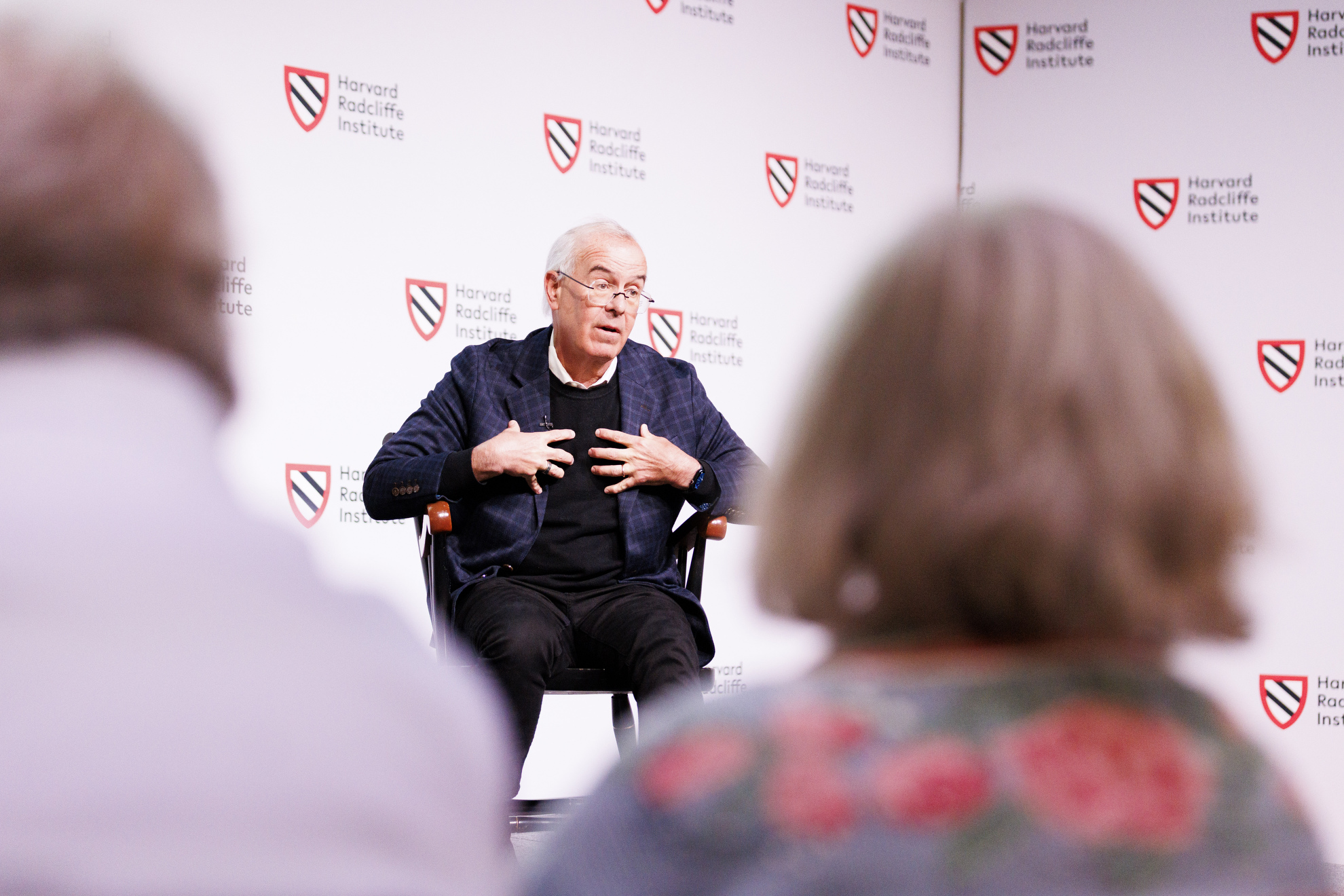
David Brooks.
Photos by Veasey Conway/Harvard Staff Photographer
Nation & World
How academia can help America heal
First step, says columnist David Brooks, is to understand its role in the problem
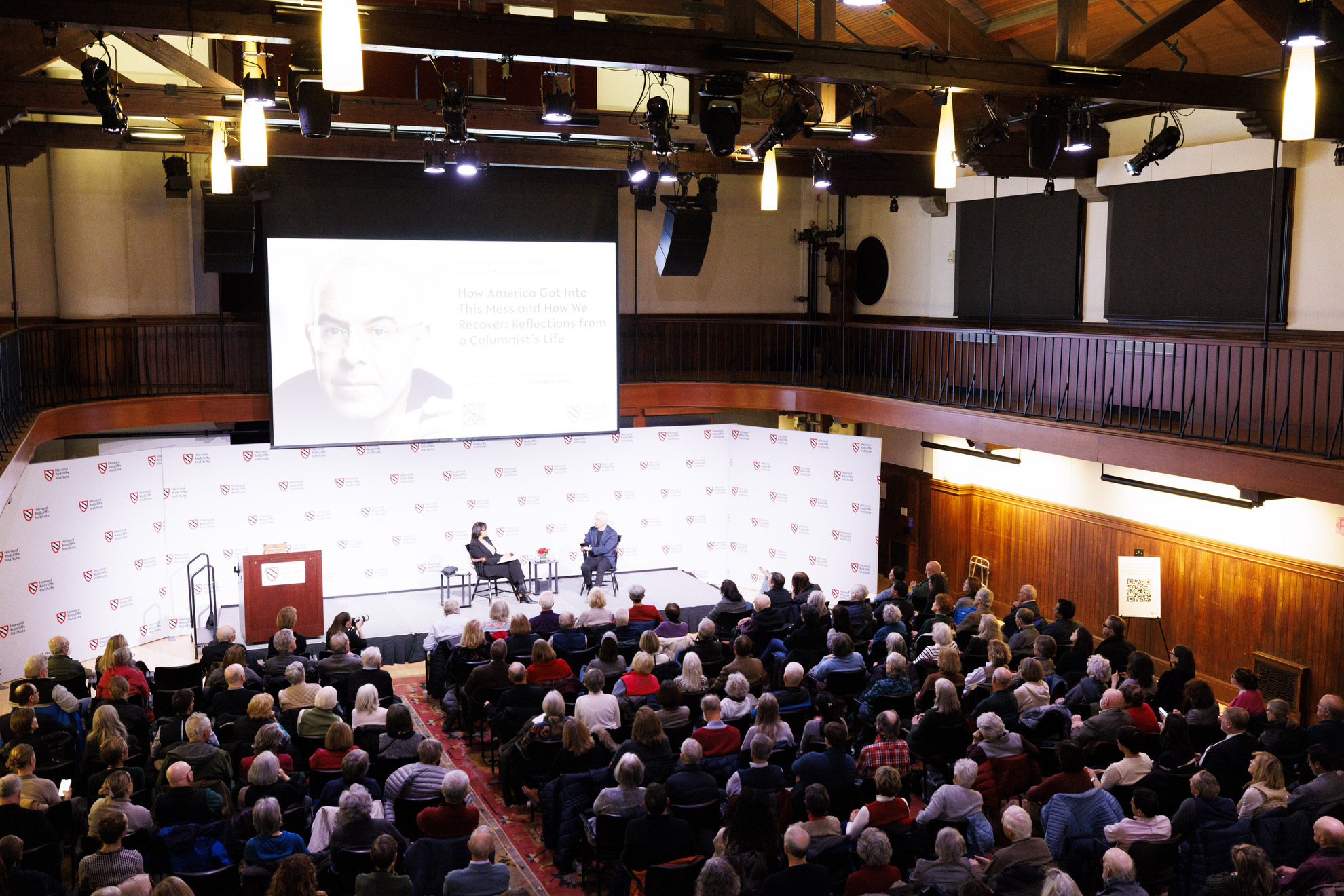
During a campus talk Thursday, conservative columnist David Brooks spoke about what he sees as the flaws in higher education that perpetuate social and economic inequality, and the leading role that schools like Harvard can and should play in bringing about change.
The Kim and Judy Davis Dean’s Lecture in the Social Sciences was part of a five-year initiative at the Harvard Radcliffe Institute to confront threats to academic freedom and examine how Harvard and other American colleges and universities have sometimes fallen short of their own intellectual ideals, said Tomiko Brown-Nagin, dean of the Harvard Radcliffe Institute.
Brooks, a former New York Times columnist who is now a staff writer for The Atlantic, attributed the current embrace of political populism on the right and left and the vilification of academia largely to an educational “caste system” that vaults graduates of a small number of elite universities to the apex of society while constraining social mobility for those without a college degree.
This inequity of opportunity leaves many Americans feeling resentful and distrustful of higher education, expertise, and institutions.
Gripped by a growing sense of isolation and interpersonal distrust, particularly among younger Americans, the country finds itself today in “a mess,” said Brooks, who’s also a senior fellow at the Jackson School for Global Affairs at Yale University.
“I think populism grows out of this pervasive loss of trust, of faith in the system,” Brooks said. “And you get this sense from people across the political spectrum, ‘We’ve just got to burn it all down.’”
Brooks expounded on his 2024 piece for The Atlantic, “How The Ivy League Broke America,” laying out what he sees as the many failures of higher education, particularly what he views as a false meritocracy.
Making student intelligence, rather than legacy status, the basis for college admissions over the last century has been a well-intentioned shift toward greater fairness, Brooks said. But schools now “overrate” intellect while traits like creativity, drive, good judgement, or the ability to get along with others, which are also important predictors of life outcomes, get overlooked.
That shift toward meritocracy has not had the kind of broad, democratizing effect on social mobility as was hoped, he said. Wealthy parents have gamed the system by providing their children with help that greatly boosts their chances for admission over similarly capable but less affluent kids.
“And so, you can have all the free tuition you want, but if you’re measuring kids by how they do on these metrics, rich kids just have a huge advantage,” Brooks said.
Brown-Nagin, who co-chaired a working group on fostering open and constructive dialogue on campus, asked what College faculty can do to help make everyone feel comfortable expressing their views.
Brooks suggested faculty assign more ideologically diverse syllabuses that expose students to different, even conflicting, points of view on topics. He also suggested they teach social and negotiation skills so that students learn to work well on a team and tackle the issue at the heart of a disagreement without getting caught up in emotion.
Social distrust, he said, which is at the root of the nation’s loneliness epidemic and a source of populist anger, can be overcome if enough people step up and promote unity — whether through sports and social activity clubs, civic groups, or neighborhood volunteering.
One of the most consequential things that can inspire and transform lives, he said, is getting to know people from different walks of life. “The act of meeting somebody and seeing a role model and seeing a pathway — that’s tremendously powerful,” Brooks said. “To create a society where there’s fluidity, to me, that ameliorates a lot of the wrongs that come with inequality.”