Featured series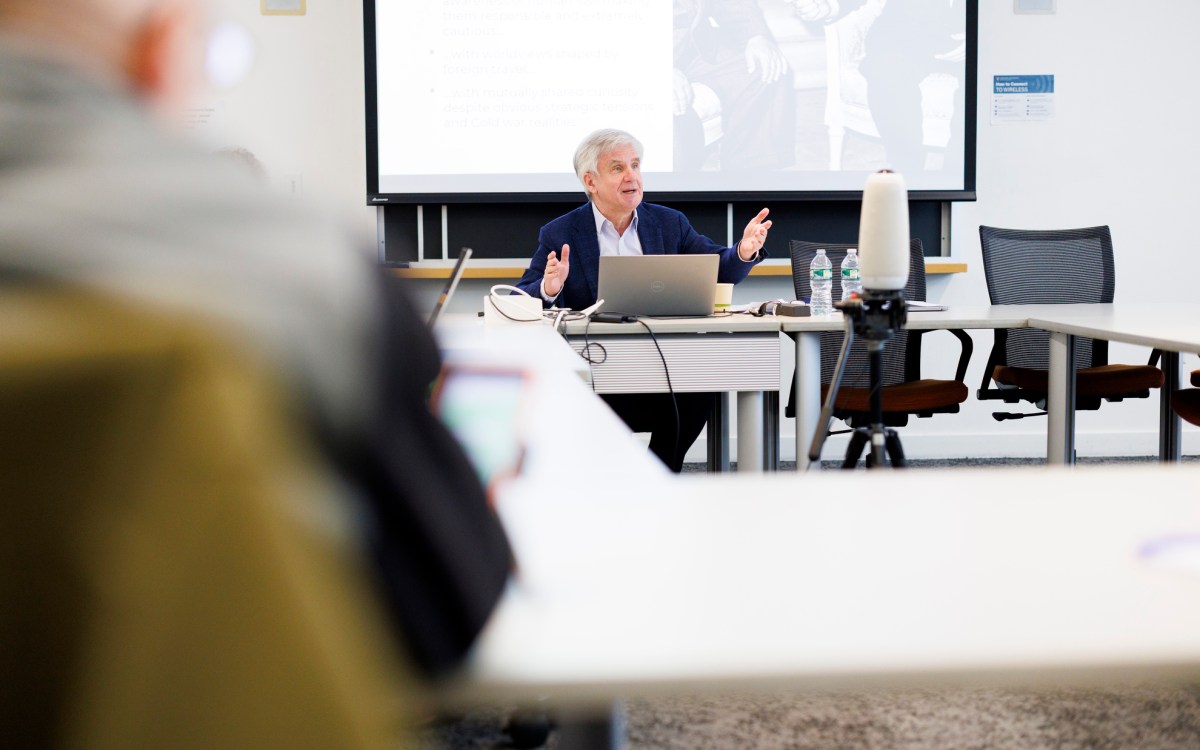
Nation & World
Can Russia be denied?
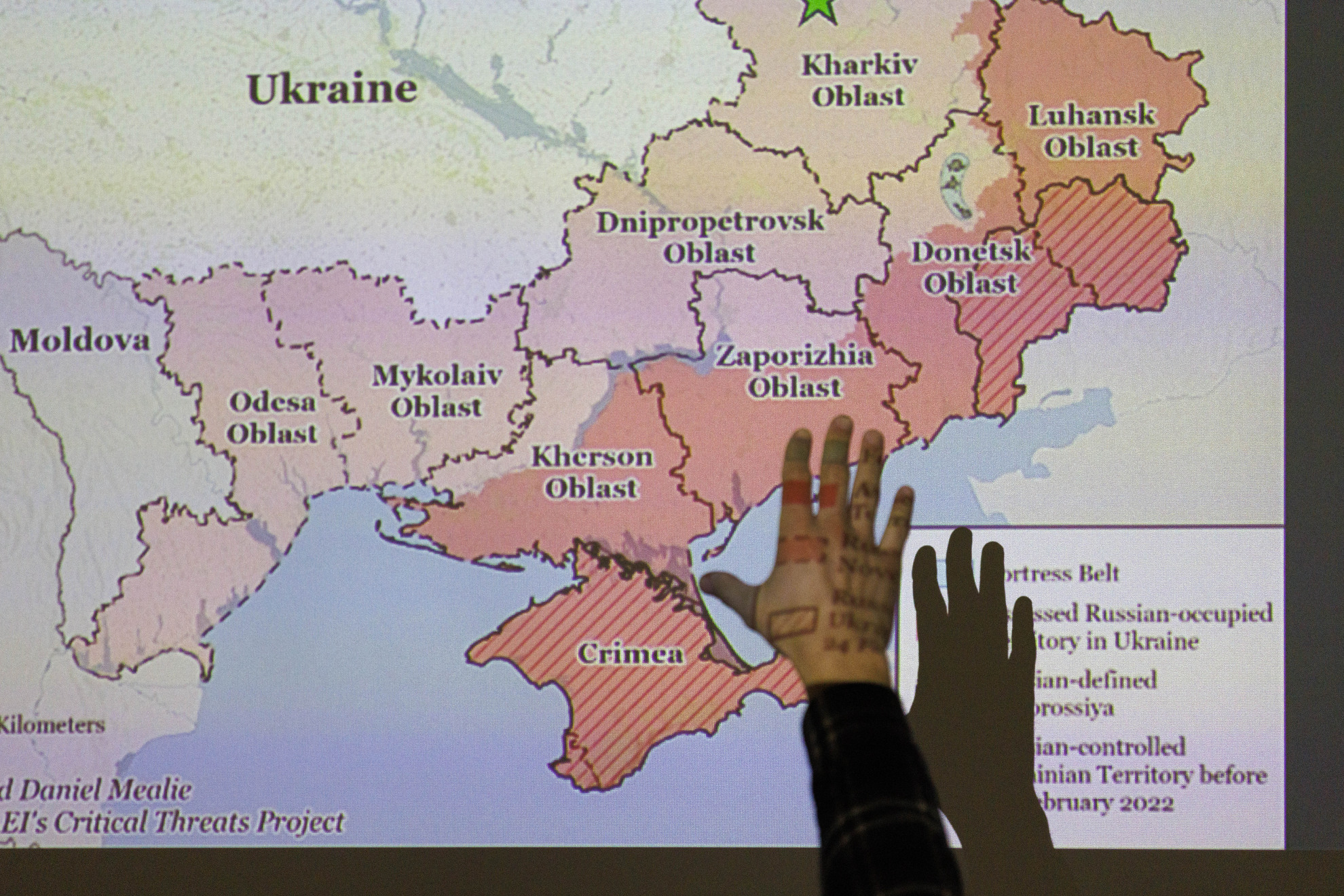
Yevhen Malik gestures toward a map of Ukraine.
Photos by Veasey Conway/Harvard Staff Photographer
Ex-POW joins discussion of four-year conflict ahead of another round of negotiations
Will the Kremlin budge on its territorial demands in peace talks with Ukraine?
Only if Russian President Vladimir Putin “runs out of the resources to recruit new soldiers and finance his own army,” argued Yevhen Malik, a veteran of Ukraine’s armed forces and former prisoner of war.
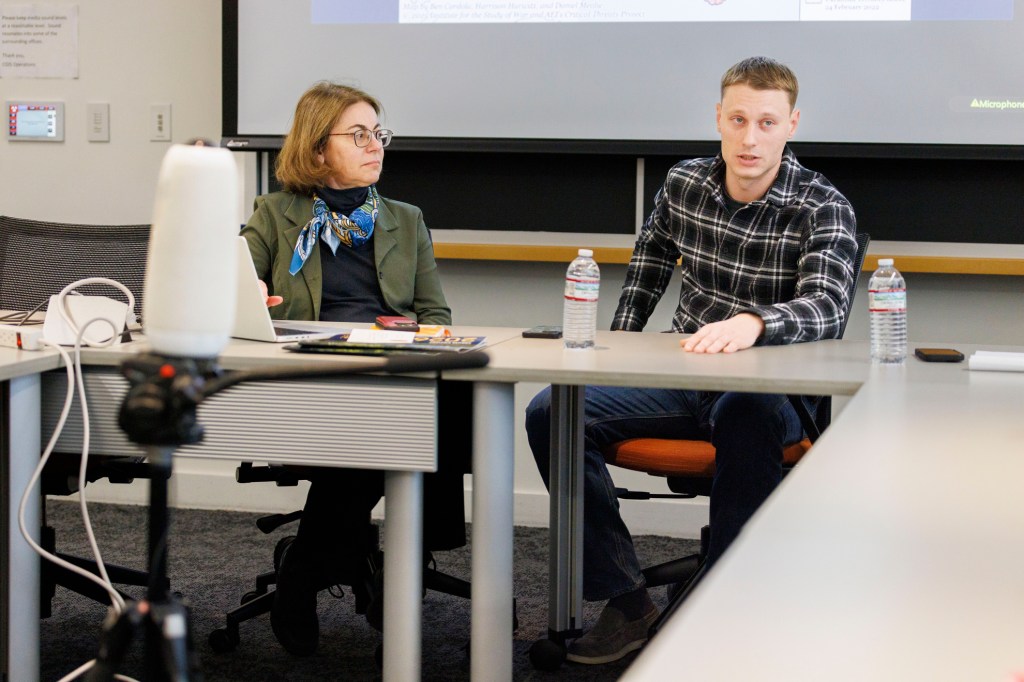
A recent event, hosted by the Davis Center for Russian and Eurasian Studies, put Malik’s observations from the front lines in conversation with empirical findings on conflict resolution. It was titled “How Does Russia’s War Against Ukraine End?”
“I long for the day where we will look up on the on the screen and see a talk titled, ‘How did this war end?’” offered moderator Steven Solnick, the Davis Center’s new executive director.
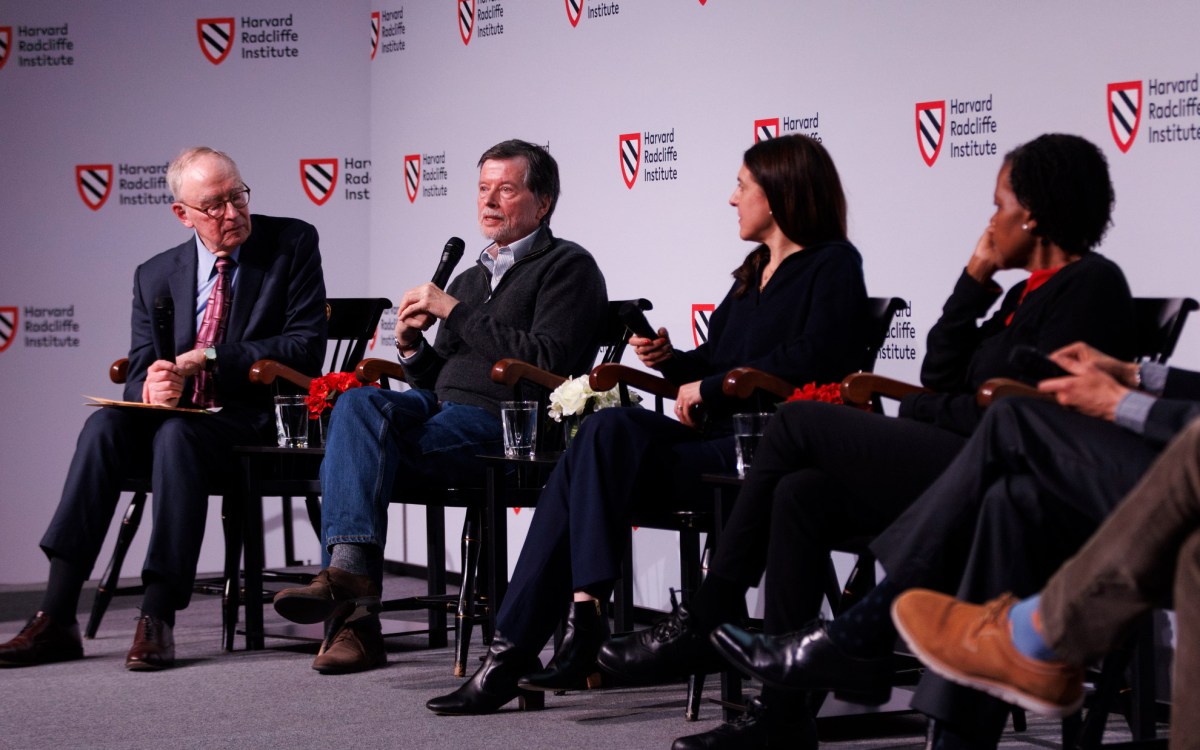
Solnick’s predecessor, Alexandra Vacroux, now vice president for strategic engagement at the Kyiv School of Economics, has been surveying the academic literature on historical peace talks, ceasefires, and outright victories. Drawing on a well-known text in the genre, she dismissed the poker-themed assessment President Trump offered Ukraine President Volodymyr Zelensky in the Oval Office last year.
“You might have heard that some people think that the Ukrainians don’t have the cards,” Vacroux said. “But if you look at war outcomes, it is not true that the stronger army always wins.”
“You might have heard that some people think that the Ukrainians don’t have the cards. But if you look at war outcomes, it is not true that the stronger army always wins.”
Alexandra Vacroux
Malik’s remarks went further, countering the common presumption of Russian military superiority. The combat veteran, who holds degrees in law and public administration, was held captive from April 2022 to September 2024. During this time, Russian forces failed to advance into several strategically important cities in eastern Ukraine’s Donetsk region, currently the epicenter of Putin’s military campaign.
Russia, whose invasion of Ukraine launched in February 2022, also appears to be taking far more battlefield casualties, Malik noted. According to one analysis, Russia’s 1.2 million dead, wounded, and missing over the four years of its invasion outnumber Ukraine’s by a factor of (at least) two-to-one. By Putin’s own accounting, his army totaled 700,000 soldiers in December 2025. Estimates from the UK Ministry of Defence put Russian casualties well over 400,000 for both 2024 and ’25, suggesting the need for a constant flow of recruits.
Also under stress is funding for Russia’s military benefits, including signing bonuses of up to $35,000 per recruit. According to media reports, some Russian regions have started to reduce the size of these bonuses due to stress on municipal budgets.
Malik says that these declining human and financial resources explain the Kremlin’s stubborn push for all remaining territory in the Donetsk region during peace talks. Today, a key sliver remains under Kyiv’s control.
“They try to win in negotiations something they can’t win with their military,” he said.
Vacroux shared recently published data on the circumstances that have stopped — or at least paused — more than 230 armed conflicts between 1945 and 2005. The majority of cases, she noted, lacked a decisive outcome. “Most end in ceasefires or peace talks, but the negotiations can take three or four or five years,” Vacroux said, noting that it took 158 meetings to end the Korean war.
So far, officials from Russia and Ukraine have sat for just a handful of peace talks, including U.S.-backed meetings in Abu Dhabi early this month. Within days of Malik and Vacroux’s Feb. 4 talk, Zelensky told reporters that President Trump had given both sides a June deadline for reaching a peace deal. Envoys from all three countries will meet again in Geneva on Tuesday and Wednesday.
“The Russians have an interest in trying to get Ukraine to make concessions as fast as possible,” Vacroux said, suggesting that the Ukrainian position may see stronger support following U.S. midterm elections this fall.