Featured series

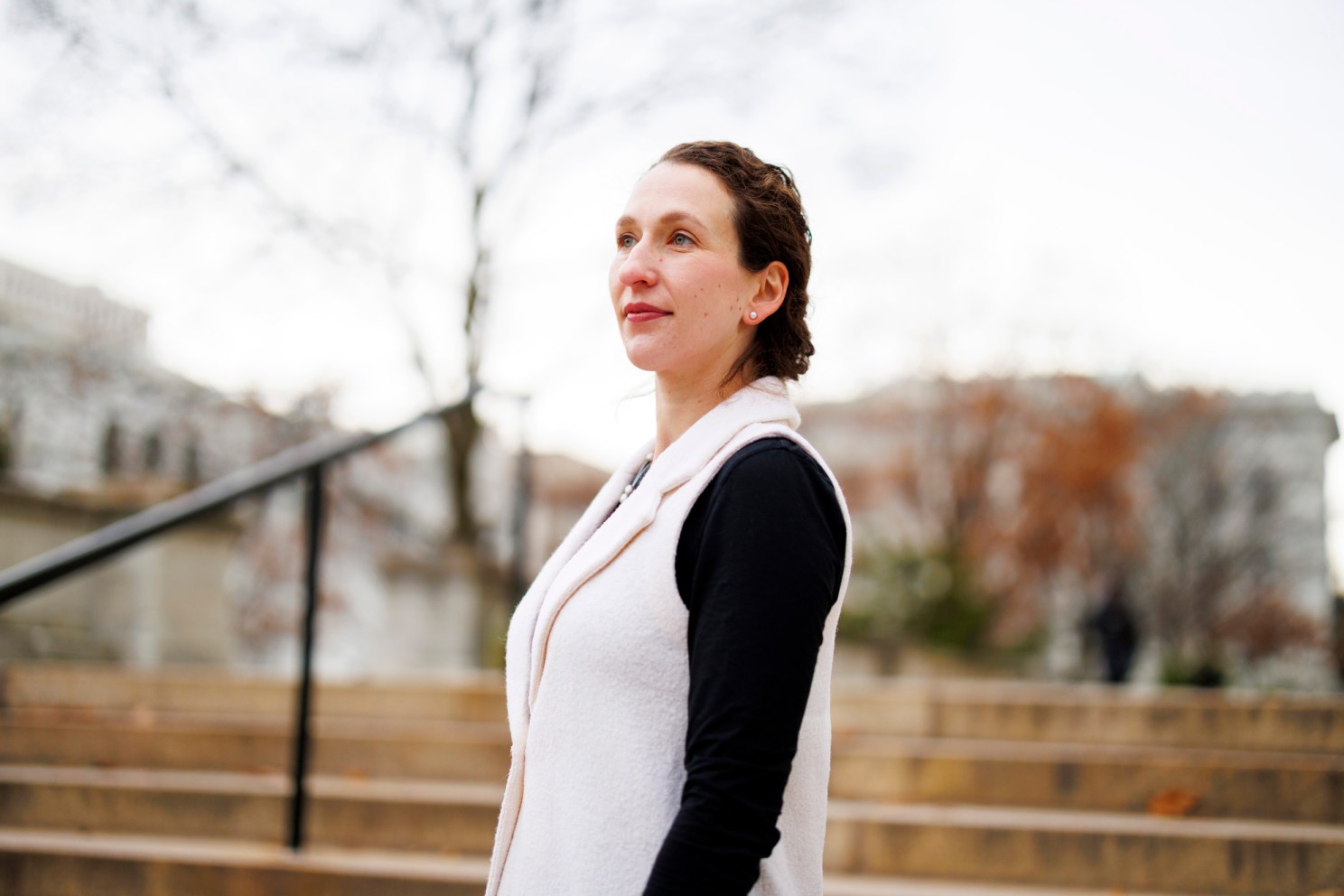
Leah Rand.
Stephanie Mitchell/Harvard Staff Photographer
Health
Just who gets a say at FDA public drug-approval hearings?
Researchers find vast majority of speakers tend to be supporters; unclear why so few detractors appear
Public input is a key part of the drug approval process, and it occurs during hearings before FDA advisory committees, which make recommendations to support or oppose allowing a treatment to advance.
New research shows testimony given at those meetings in recent years overwhelmingly supports drug approval, and nearly half of speakers report some kind of conflict of interest. This raises obvious questions about who gets to speak, why, and how much influence these individuals have on final FDA decisions.
In a two-year project sponsored by The Greenwall Foundation, researchers affiliated with Brigham and Women’s Hospital’s Program on Regulation, Therapeutics, and Law (PORTAL) and Harvard Medical School are seeking to answer these questions.
In this edited conversation, the Gazette spoke with Leah Rand, research scientist with PORTAL, lecturer on medicine at the HMS Center for Bioethics, and first author of an article in JAMA Internal Medicine on the work. Rand said the research raises a key unanswered question: Why are voices with negative experiences largely missing from the hearings?
Why is this topic important to study?
We live in a democracy, so it seems important that people participate in regulation. But the FDA is making highly technical decisions, which raises the question of whether there should be public input and what to do with the information that people offer.
“There’s a lot of uncertainty about the FDA process and whose voice is weighing in on decisions that affect the public’s health.”
A second reason is that advisory committee meetings are an opportunity for the FDA to be transparent about its decision-making process. The FDA has been convening advisory committees for a long time, but my colleague Joseph Daval has shown that in the last 10 years, there’s been a decline in committee meetings and, under the current administration, pretty much all the meetings have been canceled.
Instead, we’ve seen ad hoc advisory committees convened that have apparent intellectual conflicts of interest around certain pet topics of the administration. So there’s a lot of uncertainty about the FDA process and whose voice is weighing in on decisions that affect the public’s health.
How much weight do these advisory committee recommendations have?
The committees make recommendations, and they are asked in most meetings to vote on questions that the FDA puts to them. The most frequent type of meeting — the ones that we looked at in this paper — are on new drug approvals or new indication approvals.
The questions they vote on usually include “Should this drug be approved?” or “Does the benefit outweigh the risk of this drug?”
Joseph Daval looked at meetings from 2010 to 2021 and found high concordance between advisory committee recommendations and what the FDA does. Out of 298 committees, the FDA action matched what the committee recommended 262 times.
You went through a lot of testimony for this study. What stood out to you?
What stood out was hearing patients’ and family members’ experiences with the drug and the condition that the drug treats. They offer insight about drugs that are not yet available on the market because they’ve taken them through clinical trials.
“It’s often very emotional because many drugs are for conditions that devastate patients and their families.”
It’s often very emotional because many drugs are for conditions that devastate patients and their families.
I was also struck by the arguments they make about the FDA’s standards of approval: what the benefit/risk balance is and who gets to determine it, and the FDA’s responsibility to patients and the public to ensure that the drugs available are effective and safe.
What were your main findings?
We looked at 161 meetings on new drug approvals from 2015 to 2023. Those meetings occur when a company is bringing a drug to the market or for new indications, where an available drug is being studied for a different condition.
There were 1,481 testimonies given to the advisory committees during those meetings.
Our main findings were that the largest single group of speakers, 48 percent, were patients and their family members and that 43 percent of all speakers disclosed some sort of conflict of interest.
People who disclosed a conflict of interest were 11 percent more likely to recommend drug approval than our reference group, speakers who did not disclose a conflict.
“Our main findings were that the largest single group of speakers, 48 percent, were patients and their family members and that 43 percent of all speakers disclosed some sort of conflict of interest.”
We also found that the group most likely to recommend approval were patients and their family members who had had experience with the drugs; 99 percent recommended that the FDA approve the drug.
There was a group whose members, on average, did not recommend approval.
We called this group public health advocates, and they come from a variety of organizations that are not condition-specific. This included Public Citizen, the National Center for Health Research, and organizations representing a group’s interests, like older adults, for example.
Seventy-two percent of those speakers opposed approval.
It was interesting to see that there are some groups that are active in opposing drug approval, who talk through the FDA standards and highlight the available data to explain why they don’t support approval.
Is there any reason that the voice of public health advocates, though in the minority, should be given added weight?
I won’t comment on who they are and what their agenda is, but there’s a question about the diversity of views at these hearings.
If 99 percent of patients who use the drug or their family members support approval, that raises the question whether there are people who had negative experiences who we’re not hearing from. They may think, for example, that the side effects were not worth the chance of a small benefit.
There’s a real challenge of how you diversify viewpoints or perspectives that you’re hearing and how you get input from a broader swath of the patient population who might disagree but aren’t represented at those meetings.
Another issue the study mentioned is conflicts of interest. Do we know what kinds of conflicts were present and how that weighs into FDA decision-making?
It’s important to be aware of conflicts and to have them disclosed. The FDA encourages but does not require speakers to disclose conflicts of interest.
So it’s possible that we undercounted conflicts of interest, and they are more pervasive. That would likely skew our results toward an even stronger association between a conflict of interest and recommending approval.
“It’s important to be aware of conflicts and to have them disclosed. The FDA encourages but does not require speakers to disclose conflicts of interest.”
That said, we didn’t adjudicate anyone’s conflict of interest. If someone said, “I’m disclosing that the organization I work for receives funding from the sponsor,” we didn’t go back and try to figure out how much money they got and whether this person is conflicted. We took them at their word.
Experts often work with sponsors on new drugs, and you still want to hear their expertise.
When meetings are in person, most patients can’t afford to show up in suburban Maryland at FDA headquarters on a random Wednesday afternoon, so a sponsor flies them there to have their voices heard. Once you dig into them, the conflicts are more varied than, “I work for the sponsor,” or “They fund my research,” or “I have stock in this company.”
Do we know what proportion of patients were there in a sponsored capacity, even if it is just receiving a plane ticket?
Forty-four percent of patients and family members disclosed a conflict of interest, and the majority of those were for travel. Some of them are involved in advocacy organizations, and those organizations might receive sponsor funding as well.
Conflicts of interest are a big focus of the FDA right now. The new commissioner, Marty Makary, issued a statement reaffirming that the FDA would not seat anyone on the advisory committee with an industry conflict of interest. A focus now is the extent of these conflicts, who are we hearing from, and what varieties of interest they might have.
Is it likely that overly positive recommendations mean that drugs that perhaps shouldn’t are getting approved?
We can’t associate what a speaker said with advisory committee recommendations, and advisory committee recommendations with FDA action, because the advisory committees and the FDA look at a lot of other evidence as well in making their decision.
What’s next for this two-year project?
We’re conducting interviews and asking advisory committee members what they’re hearing from patients, how they interpret what patients say, and whether it influences decision-making.
We’re also asking former FDA employees about how they understand and incorporate patient commentary into their decision-making.
And we’ve been talking to those who spoke about why they gave testimony, whether they feel they’ve been fairly listened to.
In the end, we will convene our own panel of experts to make recommendations about how to improve incorporating public voices into the FDA process. This project is a good reminder that there are a variety of ways of being involved in our government and having your voice heard.