Featured series


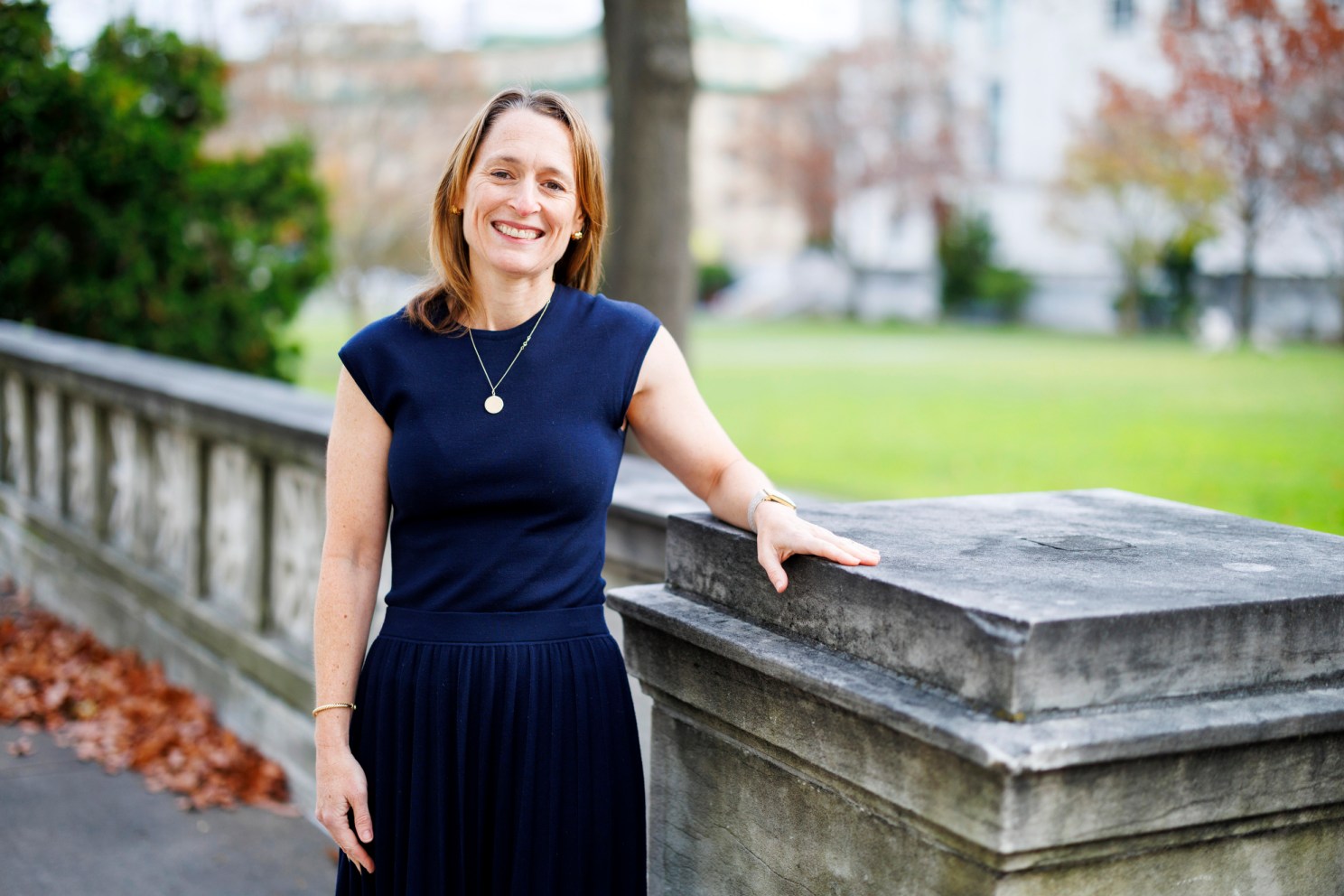
Anna Sinaiko.
Stephanie Mitchell/Harvard Staff Photographer
Health
Is cost curbing use of weight loss drugs?
40 percent of GLP-1 prescriptions go unfilled, study finds
Popular new anti-obesity medications can help people lose 10 to 20 percent of their body weight, yet a new study indicates that about 40 percent of those prescriptions go unfilled. Affordability, say researchers, is likely a factor.
Anna Sinaiko, associate professor of health economics and policy at the Harvard T.H. Chan School of Public Health, embarked on the research with colleagues to fill in knowledge gaps about how GLP-1 drugs are used by patients. She said a lot of attention has been paid to the medications’ high cost — $900 per month for those not using insurance — and to issues such as whether they should be covered by Medicare.
What hasn’t been studied is use of GLP-1s by people whose medication is covered by insurance. To learn more, Sinaiko and colleagues from Harvard, the Harvard Pilgrim Health Care Institute, Brigham and Women’s Hospital, Duke University, and the University of Colorado turned to a database of electronic medical records at the University of Colorado Health System that they linked to pharmacy claims. In the work, published recently in the JAMA Health Forum, researchers analyzed 9,848 prescription orders from 6,094 individual patients. Overall, 60.1 percent of GLP-1 prescriptions were filled, but Black and Hispanic patients at 55.3 percent and 58.4 percent respectively were less likely to fill their prescriptions than white patients at 60.9 percent.
They also found that, even with insurance, the co-pays and other out-of-pocket costs averaged $71.90 per prescription. That varied significantly by group, with Black patients paying an average of about $41.15, Hispanic patients $63.69, and white patients $78.37.
“We were motivated by the question of what people are paying for their GLP-1s when they have health insurance but realized we also could look at who is picking up their orders and who isn’t, because of this unique data set that we’re working with,” Sinaiko said.
Information about why prescriptions went unfilled was unavailable, Sinaiko said, and reasons might include things like concern about side effects. But it’s likely, she said, that financial pressures were a factor. Records indicated that the severity of a patient’s condition played a role: Those with diabetes and obesity were more likely to fill prescriptions than patients with diabetes only, who were more likely to fill than those with obesity only. Those with obesity only also faced the highest out-of-pocket costs.
“That’s suggestive that the cost, even though there was insurance, may have been driving some of the non-adherence,” Sinaiko said. “Even though these patients are not paying the full price, they’re still paying $60 or more for a prescription — and a lot of the prescriptions were closer to $100 a month — and I think that may still be unaffordable for patients.”
Sinaiko said the results highlight significant challenges in the healthcare system. One is that the disparities in access to care experienced by those in racial and ethnic minority groups and by lower-income patients likely extends even to those who have insurance with prescription drug coverage.
Another is the challenge of medication non-adherence, particularly for chronic conditions like obesity and diabetes. One question for future research, Sinaiko said, is how physicians respond when patients don’t pick up needed medications, suggesting, for example, a switch to lower-cost drugs.
“One of the challenges in our healthcare system — with patients with chronic conditions — is medication non-adherence,” Sinaiko said. “Even with a drug like a GLP-1 that is so high-value and seems to be very effective, we still have these non-adherence challenges.”
Another challenge is the shifting marketplace for these drugs, with new GLP-1s being developed and pricing shifts likely. Coverage by private insurers is expected to change in the new year as insurers seek to save money by restricting access to patients with diabetes and obesity or diabetes alone. In early November, President Trump announced a deal with drugmakers Eli Lilly, maker of Zepbound, and Novo Nordisk, maker of Wegovy, to lower prices to as little as $149 per month for Medicare, Medicaid, and people who pay for the drugs on their own.
That price is a significant cut from the full price, but Sinaiko said their research shows it may have limited impact on access and in reducing health disparities in this area, since even $149 is above the out-of-pocket costs in their study, where 40 percent decided not to fill their prescriptions.
“This really suggests to me that affordability is a big concern in our healthcare system at multiple levels,” Sinaiko said. “When we think about improving access to high-value drugs, we need to be thinking about affordability.”