Featured series
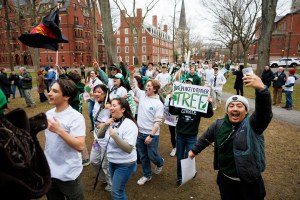
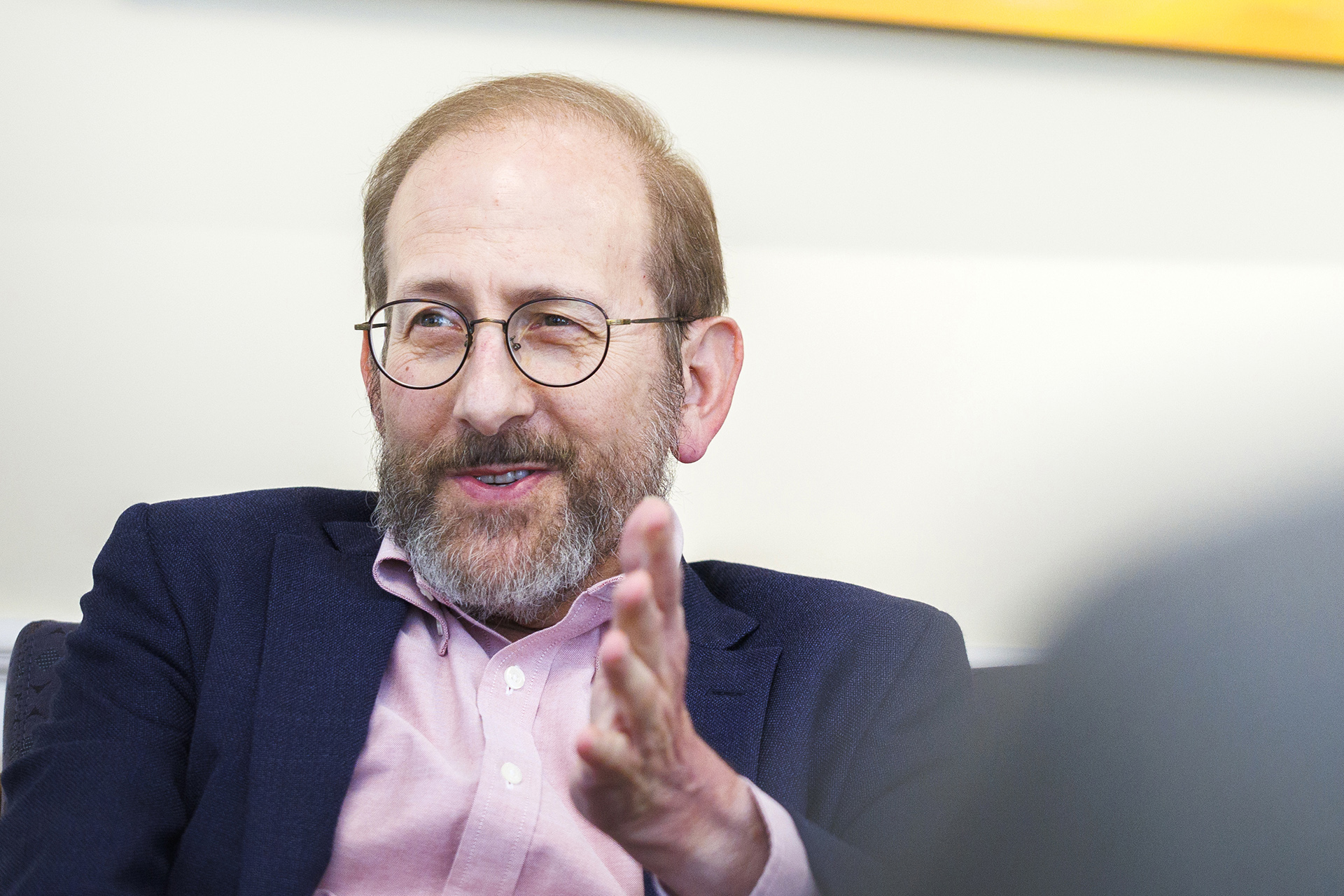
File photo by Stephanie Mitchell/Harvard Staff Photographer
Campus & Community
Garber to lead Harvard beyond 2026-27 academic year
‘Our progress has made me prouder than ever to be part of the University — and determined to see us through this uniquely challenging period in our long history.’
Alan M. Garber has agreed to extend his service as president of Harvard University for an indefinite term beyond the end of the 2026-27 academic year, Penny Pritzker, senior fellow of the Harvard Corporation, announced Monday.
A native of Rock Island, Illinois, who holds A.B., A.M., and Ph.D. degrees from Harvard, Garber was appointed the University’s 31st president in August 2024, with plans to remain in the role through June 30, 2027. He had been named interim president in January 2024 after having served since 2011 as provost.
“Since taking up the duties of the presidency in January 2024, Alan has demonstrated even more fully the remarkable qualities apparent during his 12-plus years as Harvard’s provost and chief academic officer,” Pritzker said.
“He is a servant-leader with uncommon intellectual breadth and unbounded curiosity,” she said. “He is both principled and pragmatic, both deliberative and decisive, and both respectful of tradition and intent on innovation. And, most importantly, he models open-mindedness and civility, with compassion toward others, a selfless concern for Harvard’s best interests, and an unwavering focus on how Harvard can best serve the wider world.”
The announcement comes as “Harvard and other universities continue to navigate a period of extraordinary challenge and work to affirm higher education’s indispensable role in driving discovery and improving lives,” said Pritzker.
In his own message, Garber noted his appreciation for the Harvard community.
“Your commitment to pursuing opportunities to learn and discover, to building a stronger and more welcoming community, and to addressing our shortcomings with urgency and resolve has only deepened my appreciation for our work together,” he said. “Our progress has made me prouder than ever to be part of the University — and determined to see us through this uniquely challenging period in our long history. I am profoundly honored by the trust that the governing boards have placed in me by extending my appointment and deeply grateful for the support I have received from you and from many others.”
Garber also spoke of his aspirations for Harvard beyond the current moment and the important work of advancing Harvard’s commitment to academic excellence in the years ahead.
“Through the centuries, Harvard has drawn its strength from the perpetual curiosity that treats all knowledge as subject to scrutiny, refinement, and revision,” he said. “We meet the present guided by purpose and imagine a future lit by possibility. We continually strive to achieve excellence in the pursuit of knowledge and understanding. We promote the free exchange of ideas and foster constructive dialogue. And we build our capacity, as individuals and as a community, to find as much opportunity in challenge as in encouragement. At the heart of our endeavors lies a willingness to consider risk not as an insurmountable obstacle but as a necessary ingredient in achieving our boldest aspirations. Nurturing that inclination will serve us well in the years to come.”
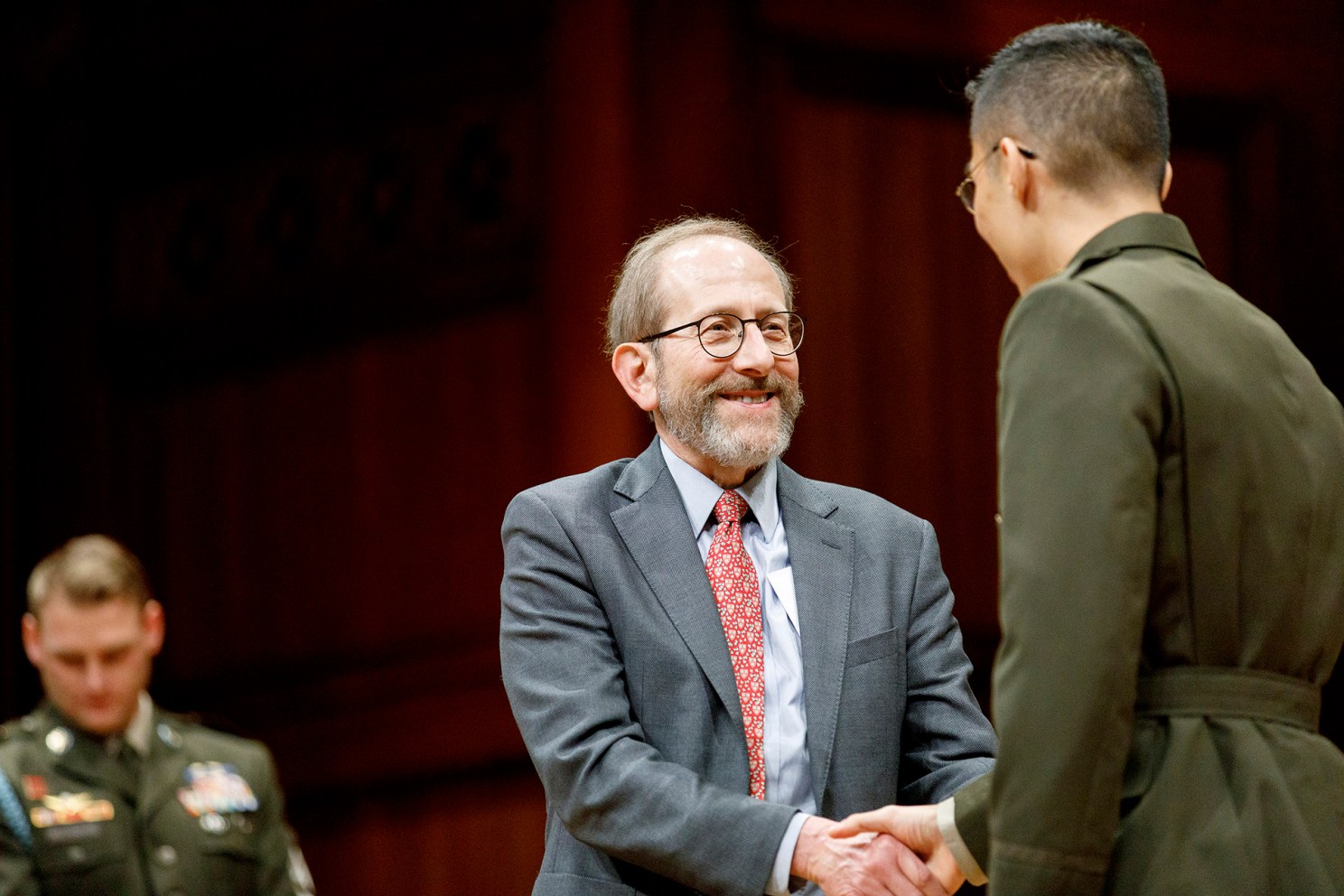
Garber hosts the ROTC commissioning ceremony earlier this year.
File photo by Veasey Conway/Harvard Staff Photographer
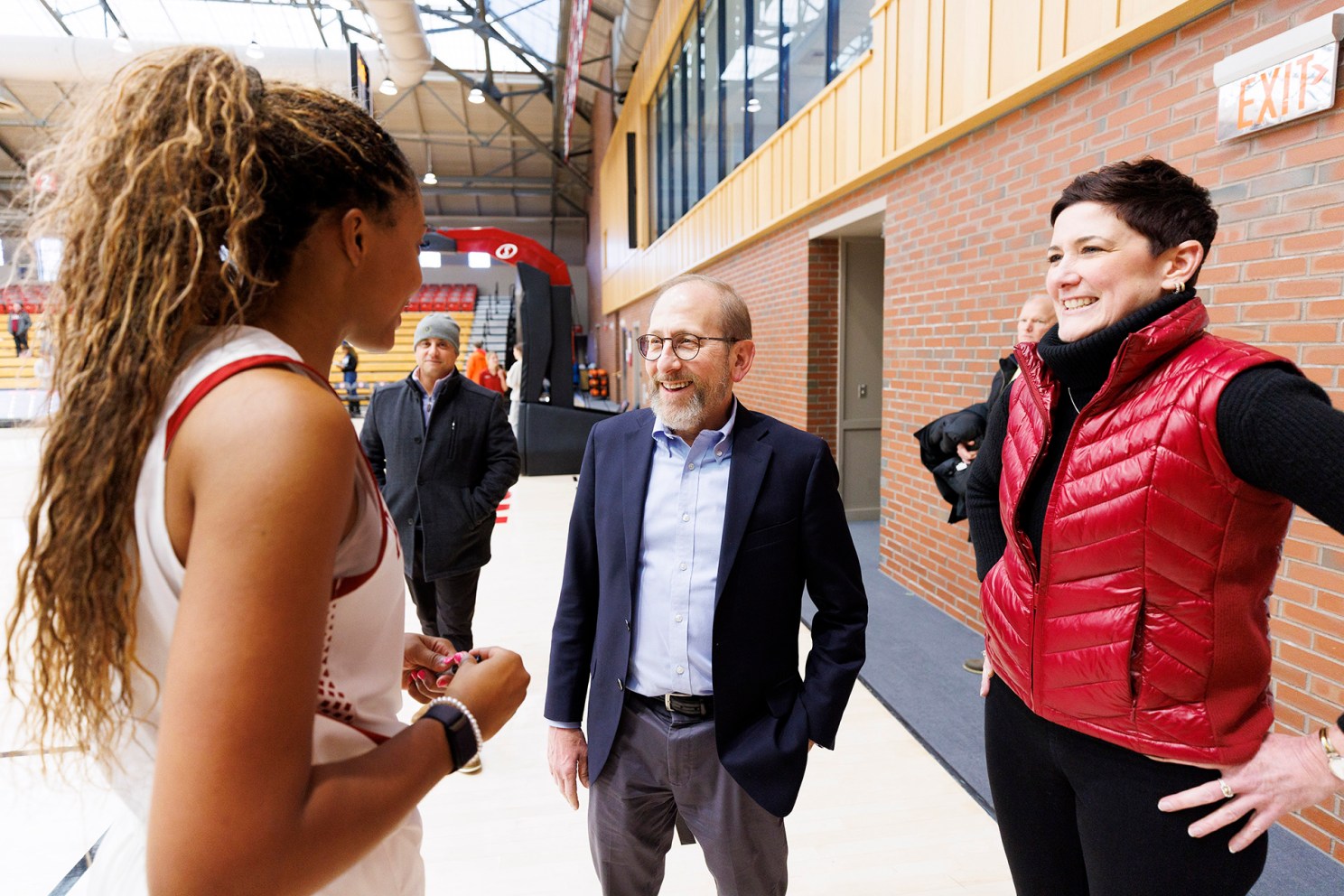
He chats with Crimson basketball player Aubrey Shaw (left) and Athletics director Erin McDermott after a game this month.
File photo by Veasey Conway/Harvard Staff Photographer
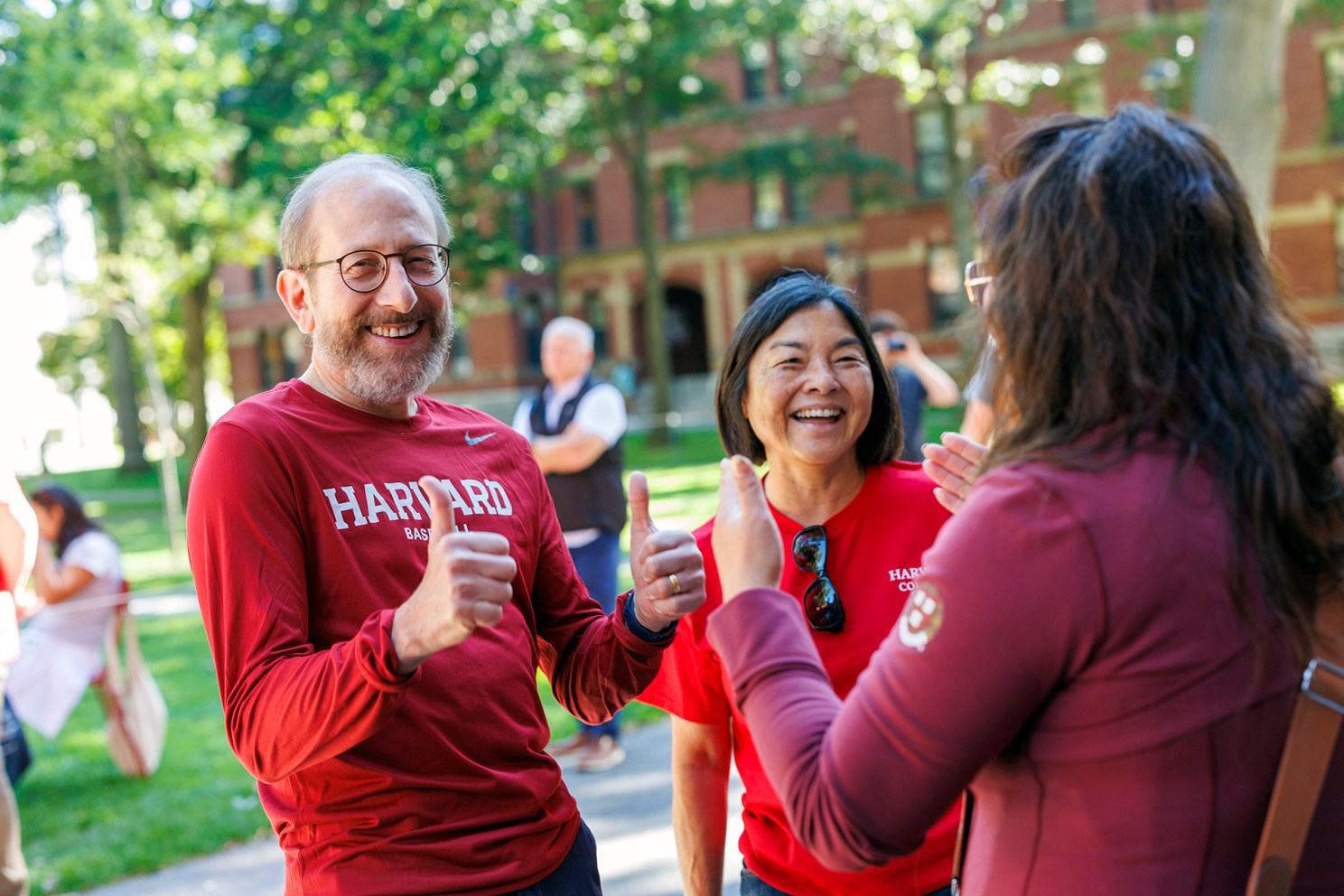
With wife Anne Yahanda, he welcomes first-years during move-in day in August.
File photo by Stephanie Mitchell/Harvard Staff Photographer
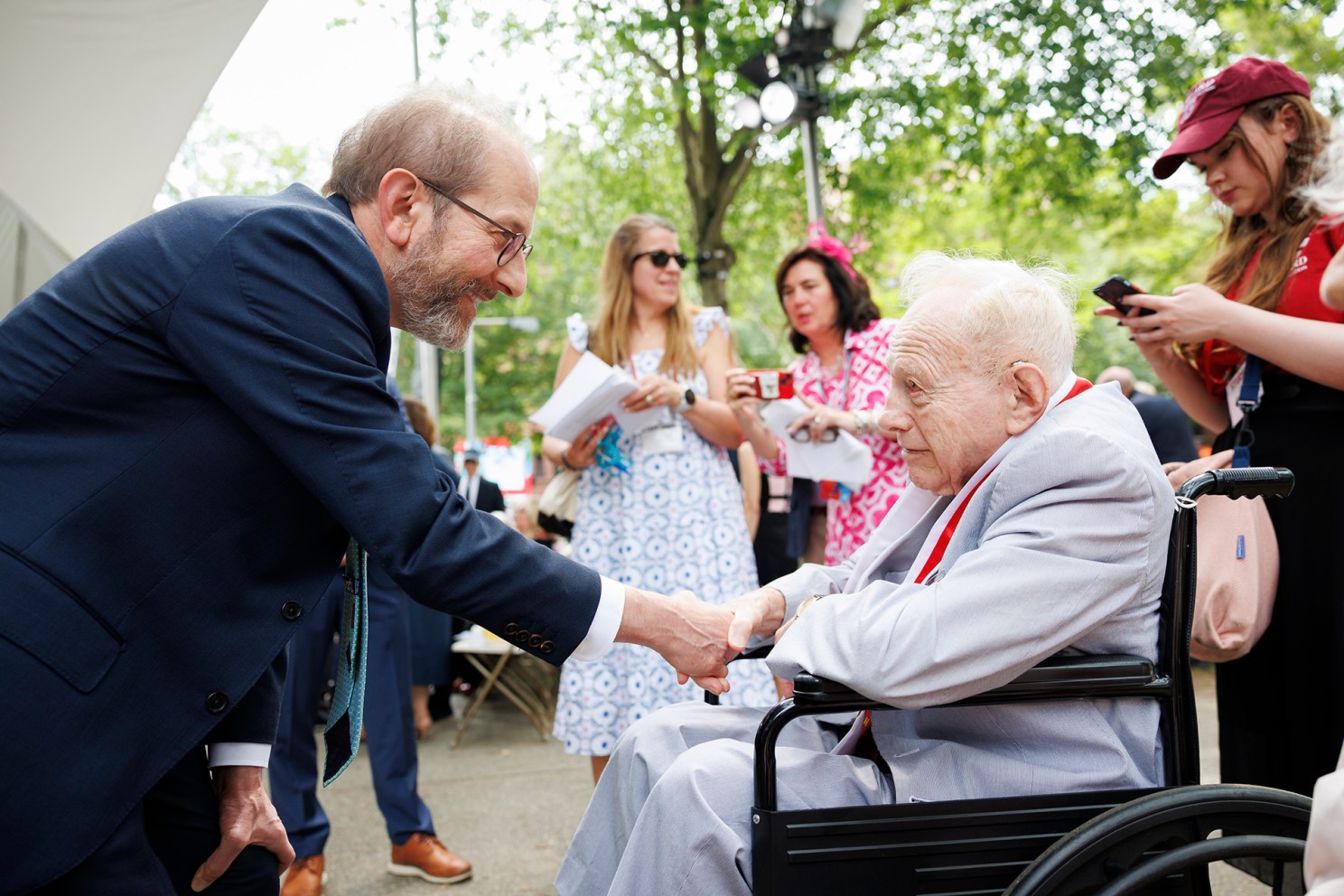
At Alumni Day festivities in June, he greets Stanley Karson ’48, the oldest male alum.
File photo by Niles Singer/Harvard Staff Photographer
Since becoming president, Garber, working closely with Provost John Manning and the deans of the Schools, has led a series of initiatives to advance Harvard’s academic mission, sought to defend core principles of the University and higher education, and introduced a series of reforms designed to strengthen campus culture.
Under Garber’s leadership, the University has announced an institutional voice policy, launched an initiative to advance open inquiry and constructive dialogue, sought to bring a wider range of perspectives and ideas to the Harvard community, and overseen efforts to implement recommendations of task forces on antisemitism and anti-Israeli bias and on anti-Muslim, anti-Arab, and anti-Palestinian bias.
In a period of extraordinary challenge, he has also led the University’s response to wide-ranging demands made by the federal government, affirming Harvard’s commitment to academic freedom, vital research, and the crucial role of international students and scholars in advancing the mission of U.S. higher education.
Responding to an April 11 letter from the government, Garber underscored the singular value of the decades-long ties between the federal government and research universities, writing that “these partnerships are among the most productive and beneficial in American history.”
“New frontiers beckon us with the prospect of life-changing advances — from treatments for diseases such as Alzheimer’s, Parkinson’s, and diabetes, to breakthroughs in artificial intelligence, quantum science and engineering, and numerous other areas of possibility,” he said. “For the government to retreat from these partnerships now risks not only the health and well-being of millions of individuals but also the economic security and vitality of our nation.”
The University has continued to make progress in areas such as quantum science, AI, the life sciences, the arts and humanities, and public service under Garber’s leadership.
Announcing the extension of Garber’s presidency, Pritzker noted the feedback she and other members of the governing boards have received in conversations and correspondence with faculty, students, staff, and alumni, saying they have “consistently heard expressions of admiration and appreciation for Alan’s service.”
Speaking to the Gazette in October, Pritzker said that during a period of increasing engagement with the wider community, she and others on the Corporation were “hearing a lot of support for President Garber and how he has led the University during an extraordinarily challenging time.”
“He’s been very clear and proactive in conveying the principles that we stand for and in foregrounding the vital importance and work of research universities,” she said. “There’s a great deal of appreciation for his purpose-driven leadership. Not everyone agrees with every step we are taking as a university, but there’s a widespread belief, I think, that Alan and the entire leadership team have the best interests of Harvard in mind as they make decisions.”
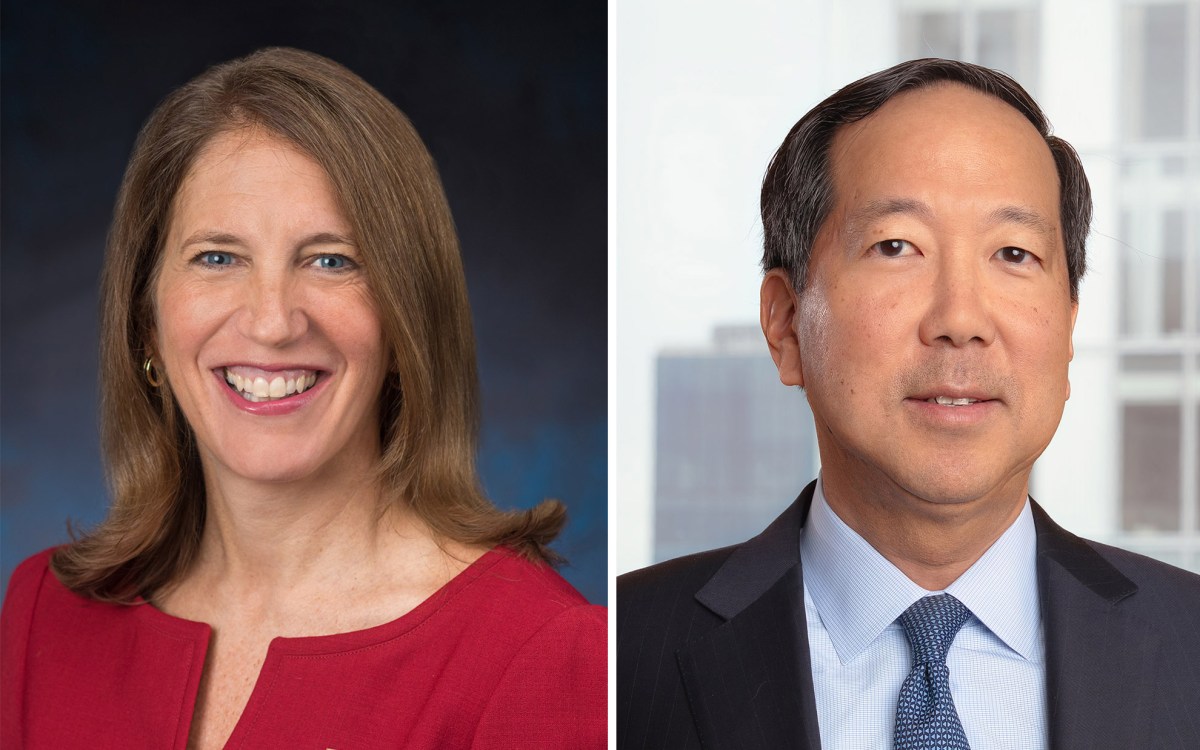
Sylvia Burwell, president of Harvard’s Board of Overseers and former president of American University, also lauded Garber.
“Harvard is blessed to have a leader who brings deep humility, a powerful commitment to the purpose and promise of research universities, and the trust and support of the Harvard community,” said Burwell.
“We have seen Alan’s leadership amidst a period of intense challenge,” she continued. “Equally important, however, is that he has the wisdom, vision, and values to take advantage of the many opportunities that will arise in the years ahead and to drive forward academic excellence in Harvard’s vital teaching and research mission.”
An economist, physician, and expert on health policy, Garber holds faculty appointments in medicine, economics, government, and public health. After graduating summa cum laude from Harvard College in three years, he went on to receive a Ph.D. in economics from Harvard and an M.D. from Stanford University, where he served on the faculty and cared for patients at the Palo Alto VA Medical Center for 25 years, also founding and directing two academic centers.