Featured series

Campus & Community
Digging for old Harvard

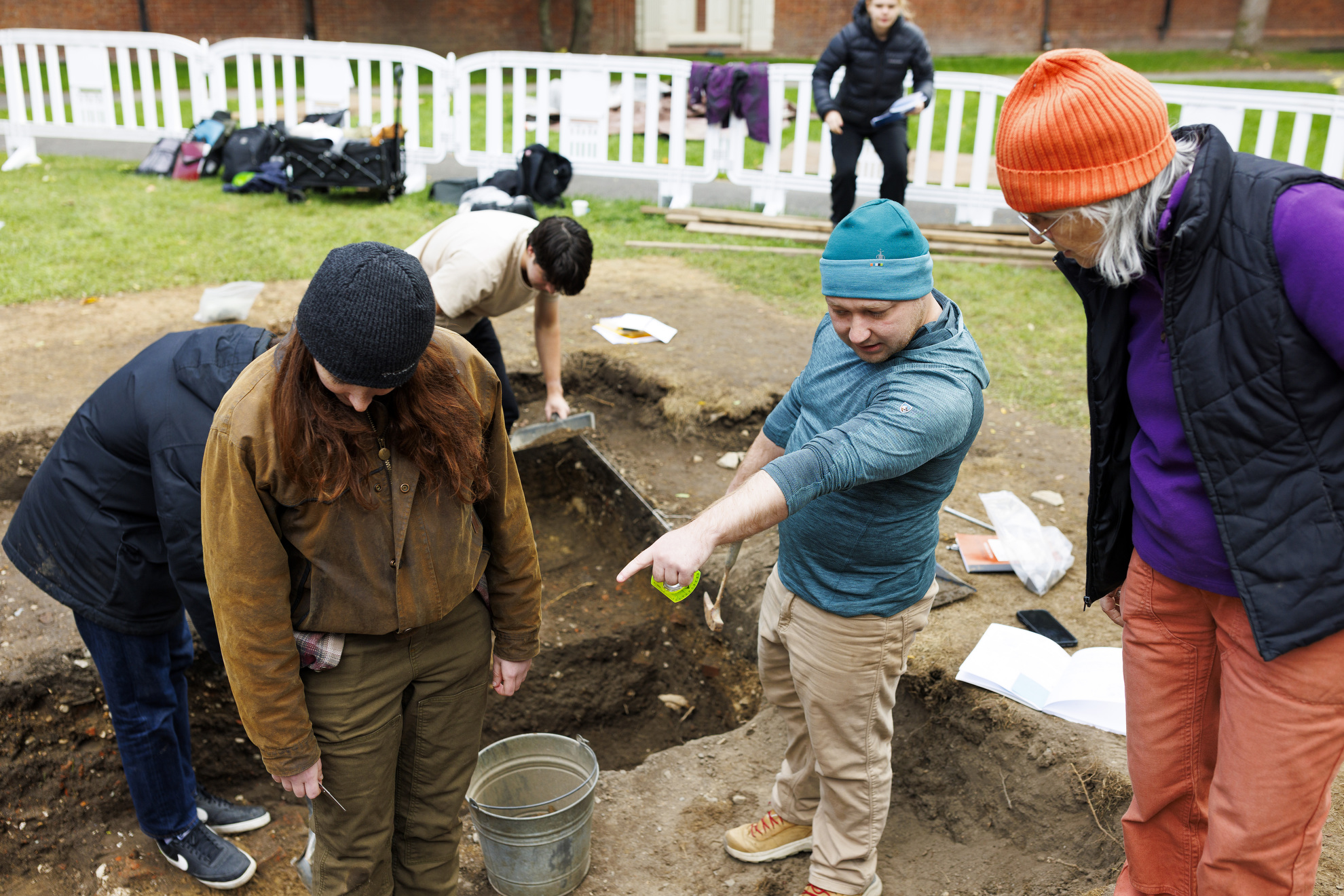
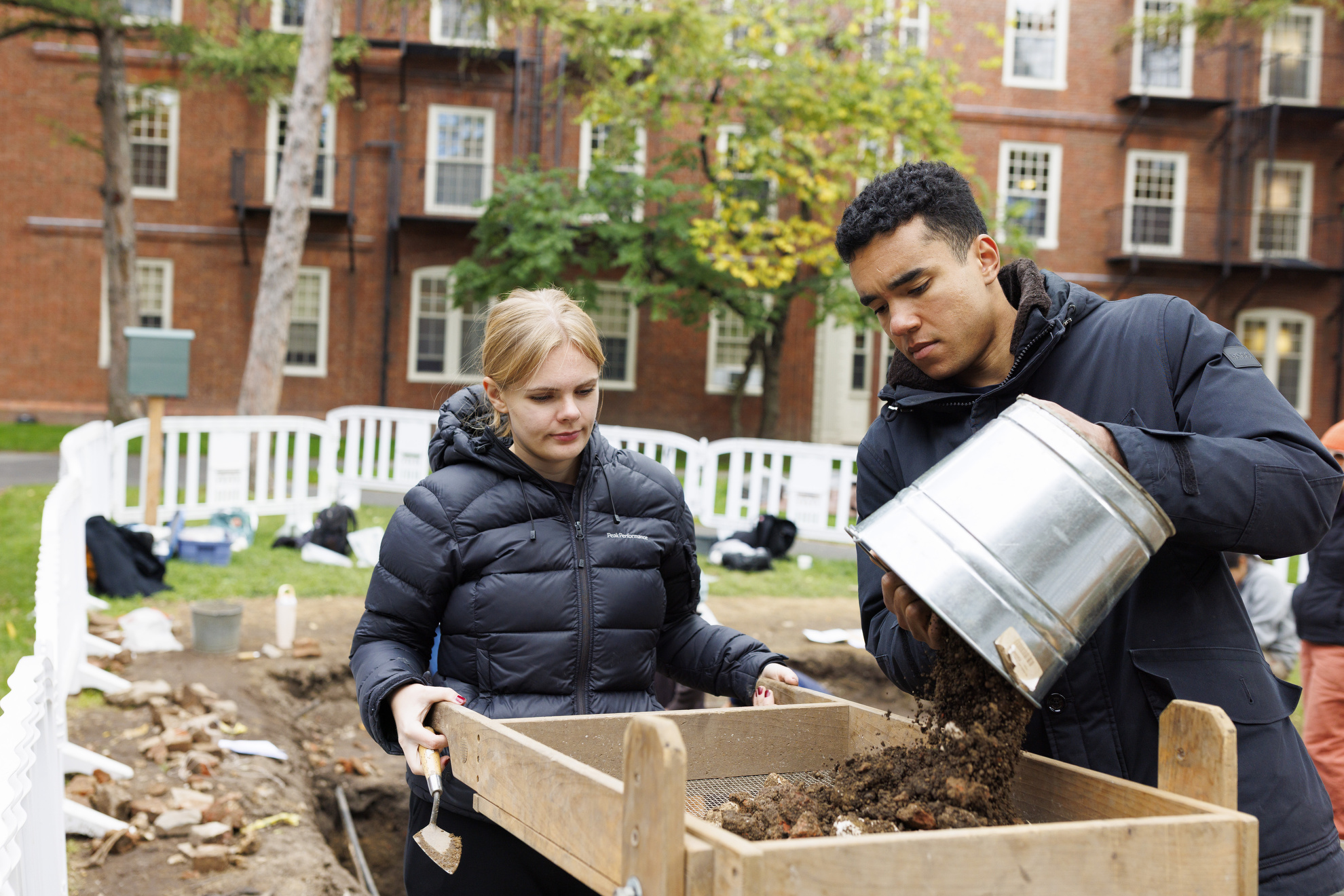
Harvard Yard Archaeology Project members, including J.J. Drummond ’27 (center), work at their dig site. One of the goals of this year’s dig is to find artifacts from the old Harvard Hall, which burned down nearby in the winter of 1764.
Photos by Veasey Conway/Harvard Staff Photographer
Archaeology Project members get their hands dirty exploring lives of earlier students
Tucked behind Hollis Hall in a quiet part of Harvard Yard, students are digging into the ground. It’s the 20th year of the Harvard Yard Archaeology Project, and the 10th dig. The project, which explores the lives of the students who attended Harvard College in the 17th century, and its associated classes, Archaeology of Harvard Yard I and II, are devoted to understanding the history of Harvard from the ground up.
This year, the project zeroed in on a section of earth near Holden Chapel. Students hoped to find artifacts from the old Harvard Hall, which was built nearby in 1677 and burned down in the winter of 1764, along with John Harvard’s bequeathed library of books.
The Harvard Hall fire could represent a snapshot that holds clues of Harvard’s transition from a religious institution to one that incorporated more scientific study. The burned hall contained an array of spaces and items: a kitchen, student chambers, study rooms, library, lecture halls, and scientific equipment. This diversity adds to the site’s archaeological potential.
Video by Maureen Coyle, additional footage by Veasey Conway/Harvard Staff
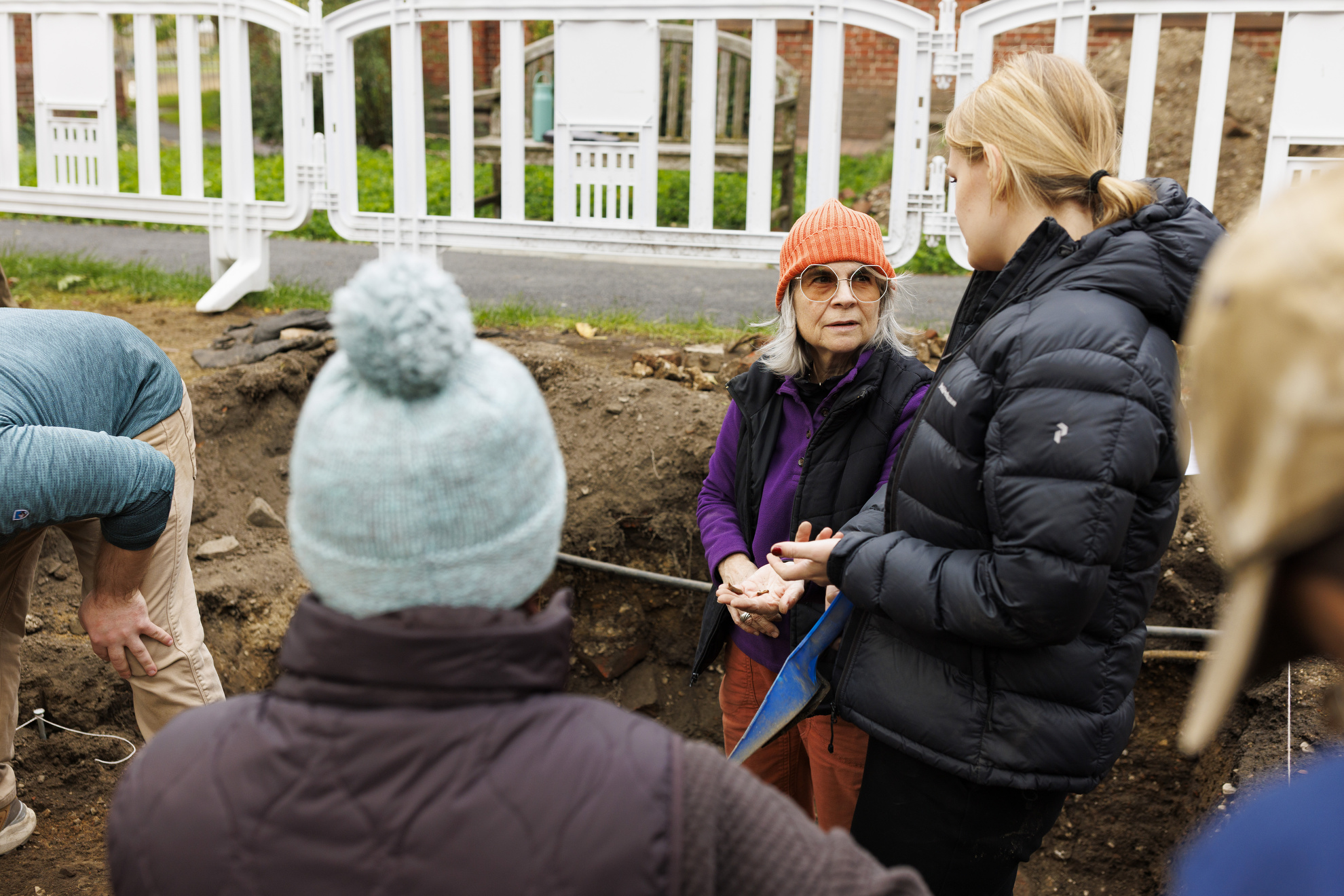
“We think of college buildings now as, you know, either dormitory or administrative. This was a building that was everything,” said Diana Loren, co-lecturer of the course and deputy director for curatorial affairs and senior curator at the Peabody Museum.
“It’s a really unique experience for students excavating in the Yard. If you think about it, this is their home for four years. They live in the Yard, they live in the Houses, and the Yard is the landscape they become familiar with,” she added.

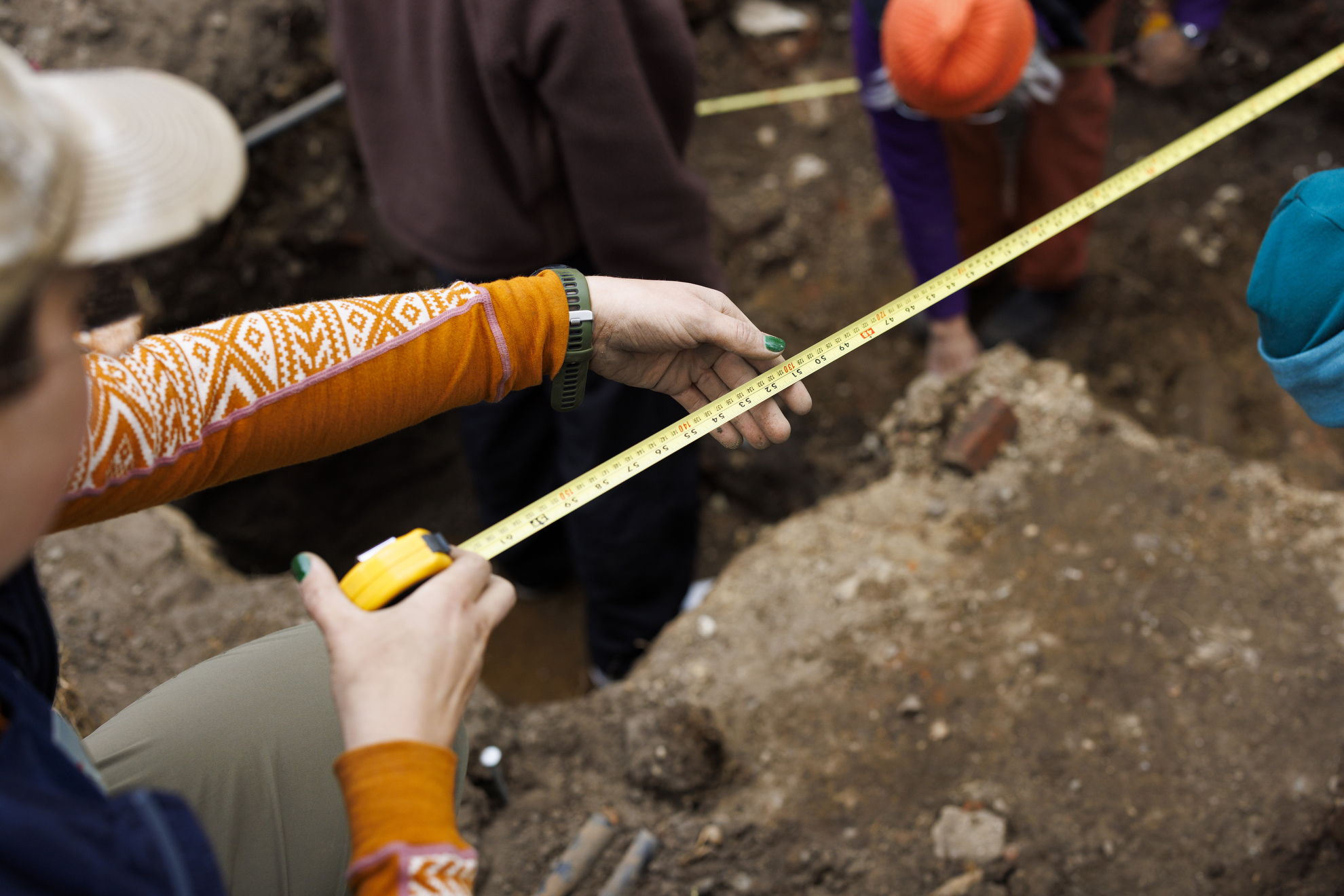
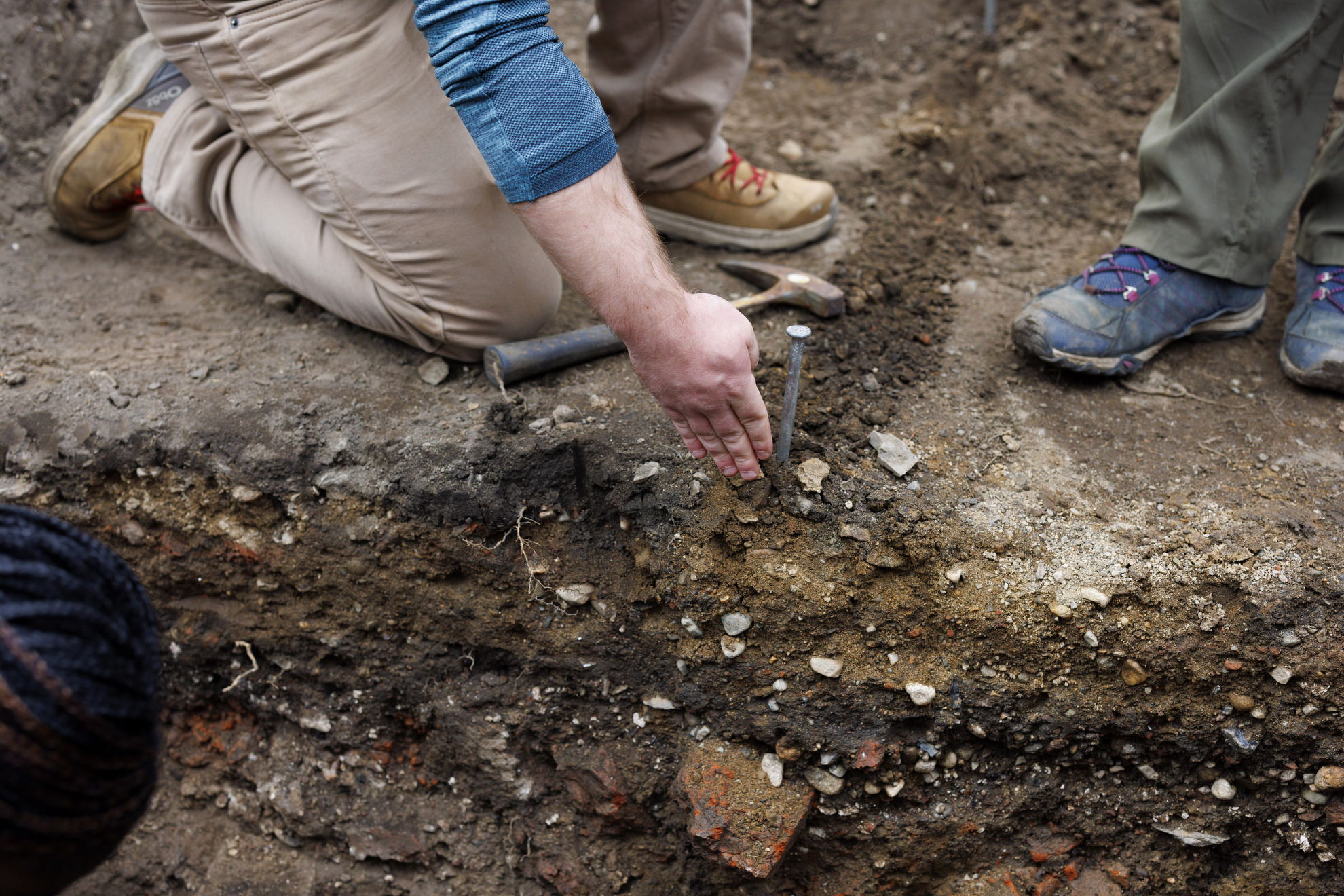
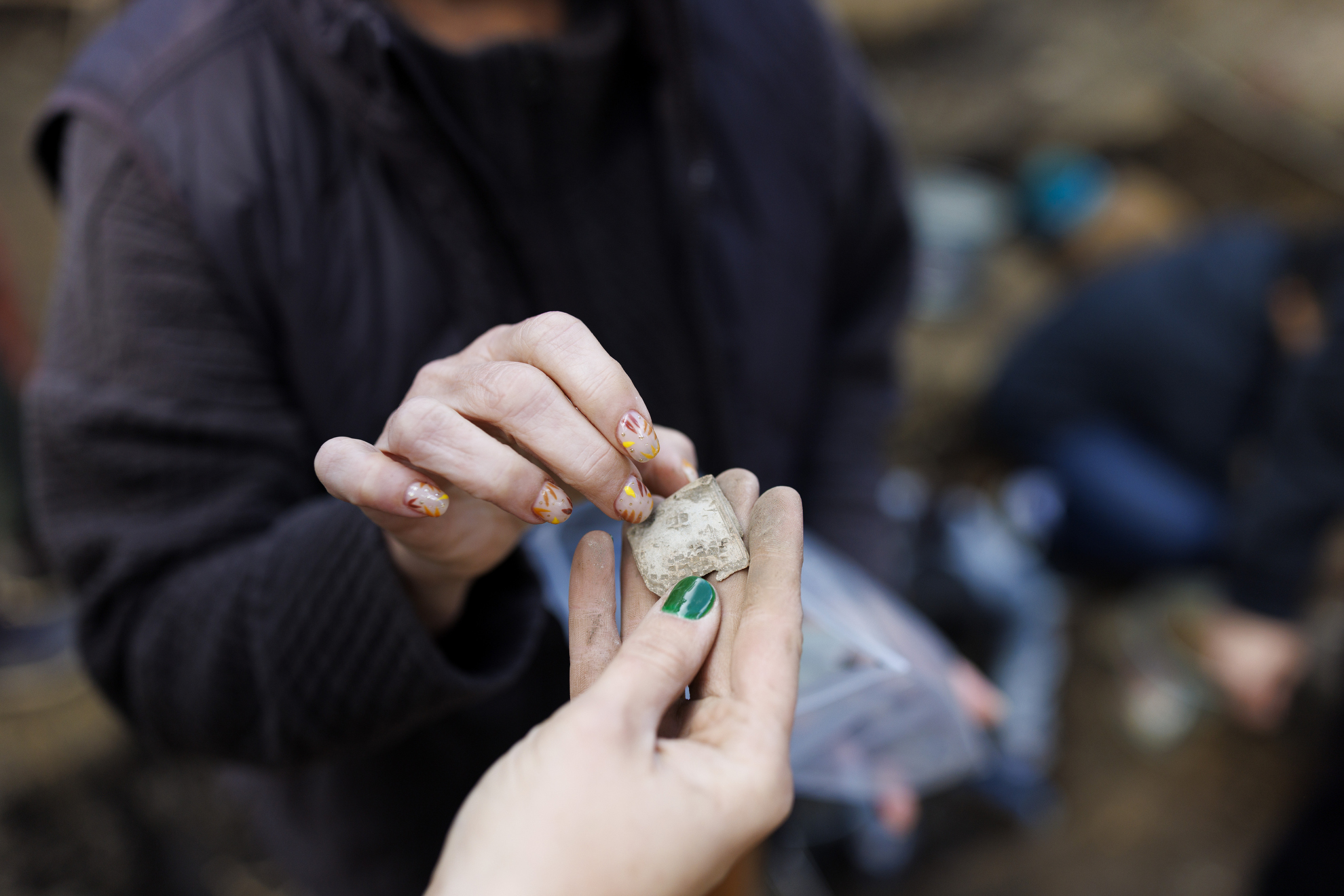
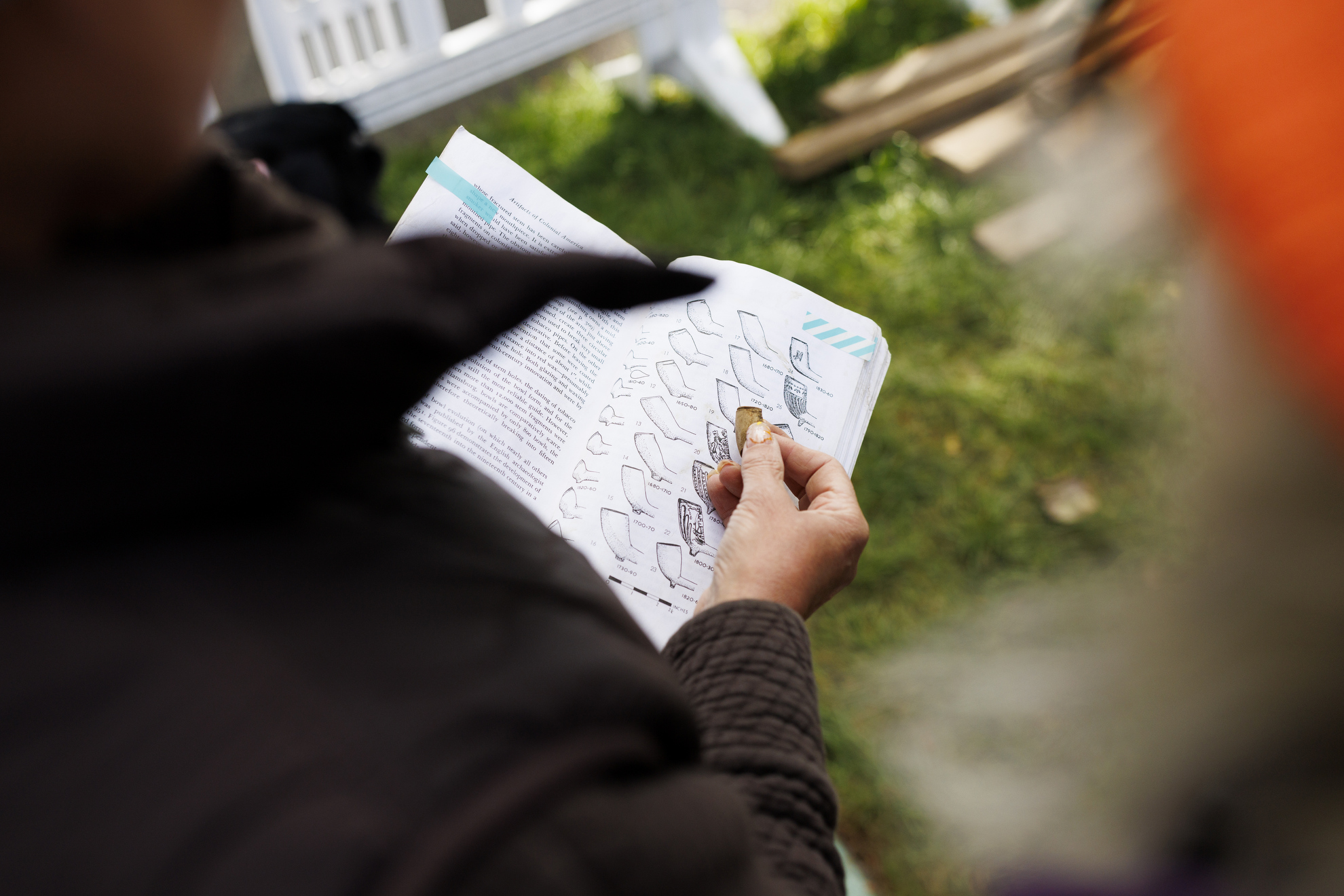
At the dig site, students used dustpans, trowels, buckets, and sifting screens. Periodically, an object would reveal itself: animal bones, pieces of pottery, tobacco pipe stems, a metal piece of a book cover, lead printing type. The students wipe off the dirt, hold the object up to the daylight, and pass off their find to a classmate.
In the companion spring semester class, students perform detailed analyses of the excavated materials, putting the recovered items into historical context before they are accessioned into the Peabody Museum collection.
“It’s important for students to have this experience to understand the potential for stewarding cultural resources in their community,” said Patricia Capone, co-lecturer in the class and a curator of North America collections at the Peabody Museum.
Digging Veritas, an exhibit dedicated to the project’s history over the years, is on view at the Peabody Museum.