Featured series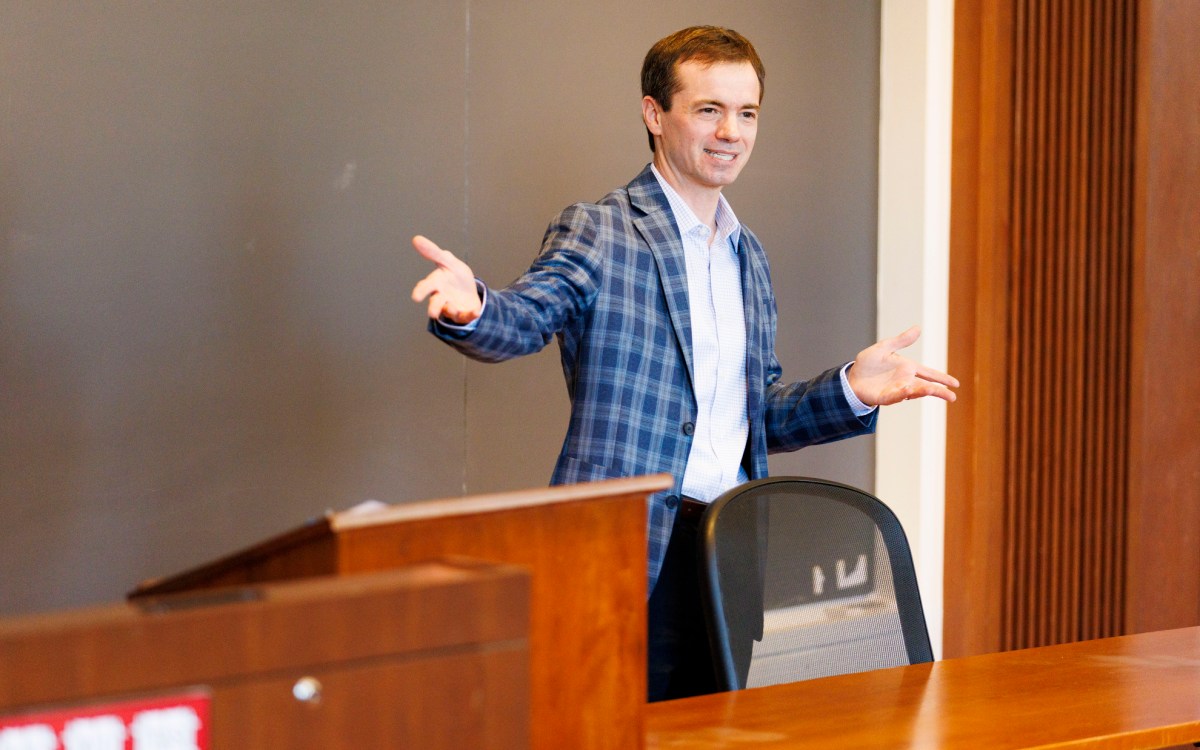
Nation & World
A call for corporate America to step up on homeless crisis
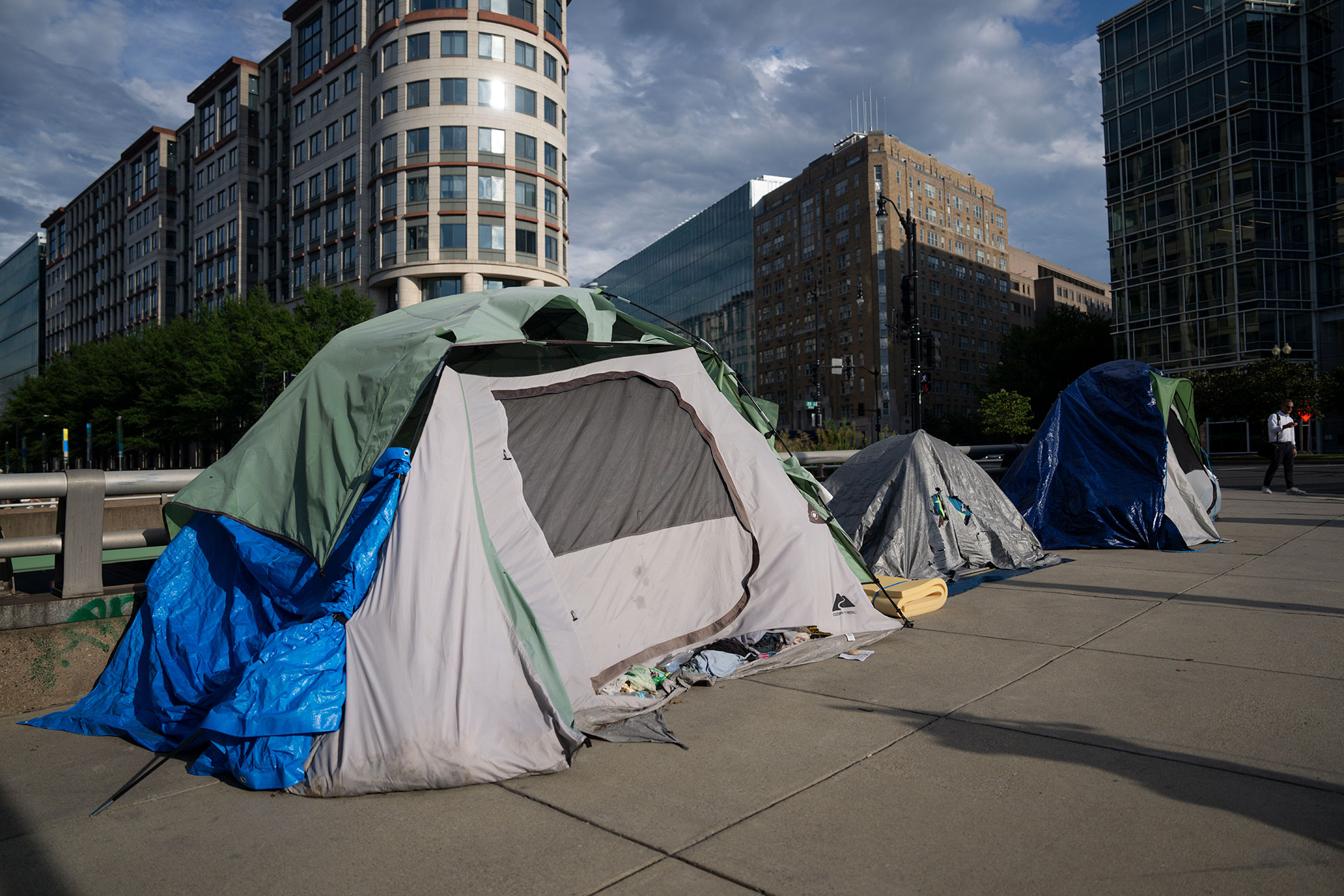
Homeless encampment in August near Washington Circle in D.C.
Kayla Bartkowski/Getty Images
Inter-faculty initiative brings together leaders from business, government, academia
Many give much of themselves to help the homeless.
Take Mike Jellison. He knows about drug addiction, familial estrangement, prison, and recovery and brings it all to bear on his work as a recovery coach. And Katherine Koh. The Harvard Medical School assistant professor of psychiatry works with Jellison to help unhoused clients as part of the street team at Boston Healthcare for the Homeless Program.
Program president and founder Jim O’Connell, a physician, HMS assistant professor of medicine, and longtime advocate for Boston’s homeless, praised Jellison and Koh’s work at a conference at Harvard Business School on Friday. But he also noted that solving the crisis was beyond the reach of nonprofits like his, and requires government and corporate America to step up.
“We can take care of people; we can’t cure them,” said O’Connell, whose work with Boston’s homeless people was the subject of author Tracy Kidder’s 2024 book, “Rough Sleepers.” “We want to fix things, but we can’t fix things unless we work with all of you.”
That theme resonated throughout the two-day “Beyond Shelter Deep Dive” hosted by Harvard’s Advanced Leadership Initiative, the Harvard T.H. Chan School of Public Health’s Initiative on Health and Homelessness, and the Bloomberg Center for Cities at Harvard University.
The sessions focused on what business can do to address America’s stubborn problem of homelessness. It brought leaders from business, government, and academia to Harvard Business School and the American Academy of Arts and Sciences in Cambridge for discussions that laid out the dimensions of the problem and its history dating to Colonial times, and explored innovations such as modular housing and efforts like Amazon’s Affordable Housing Fund and Denver’s innovative system of programs, which has helped reduce unsheltered homelessness.
Howard Koh, the Harvey V. Fineberg Professor of the Practice of Public Health Leadership, founder of the Harvard Chan School’s initiative, and co-chair of the event, said it’s time to set aside the idea of homelessness as a fixture in American society.
“We will never be able to make sustained progress unless all of us join together as one to address this public health, humanitarian crisis and reject the status quo as somehow normal or acceptable,” said Koh, who served as Massachusetts’ commissioner of public health and as assistant secretary for health in the Obama administration. “After all, that’s what leadership is all about.”

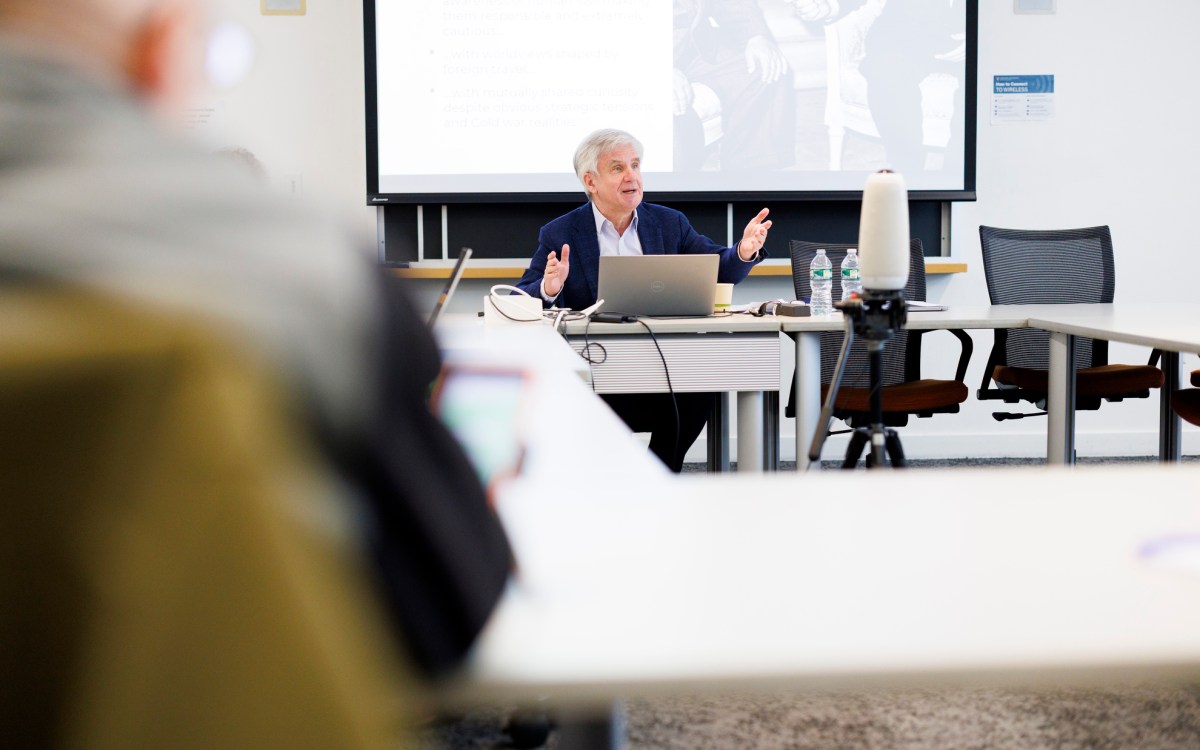
Howard Koh.
Photos by Russ Campbell @russcamphoto
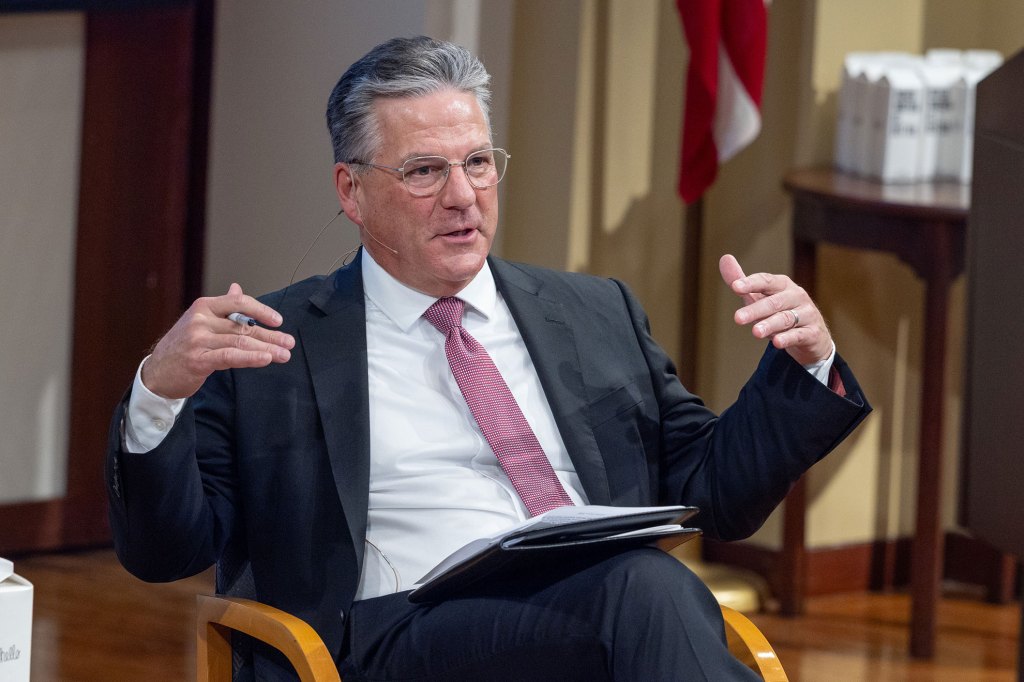
Peter Levesque, event co-chair and a senior fellow at the inter-faculty Advanced Leadership Initiative, said statistics show that 770,000 Americans are homeless on any given night, with 35 percent living on the streets and 65 percent in shelters, cars, and on the sofas of friends.
Even those statistics, he said, don’t capture the true extent of the problem, as many more live in overcrowded housing, just a step away from homelessness. And, while American businesses haven’t caused the problem, Levesque said corporate America has an interest in its solution.
“Corporate America is not on the periphery of these problems. They are instead at the center of it, not as a cause, but as a powerful catalyst for systems change,” Levesque said. “Corporate America has proximity to homelessness and a vested economic interest in solving it. Because to have a healthy economy, you need to have a healthy community, and stable housing is the foundation of a stable workforce.”
Jeff Olivet, senior adviser to the Chan School’s initiative, said homelessness’ roots go back to Colonial times, when people with physical disabilities and mental illness, along with those displaced by wars, lived on the streets.
The roots of homelessness today date to the 1970s and the end of a massive post-World War II building boom that left the nation with a surplus of 300,000 housing units and little homelessness. That boom faded in the decades that followed and combined with societal trends such as the closing of large mental hospitals, the return of Vietnam veterans, some with severe PTSD, and a disinvestment in housing.
Today, Olivet said, the 300,000 housing unit surplus has become a 7 million unit deficit.
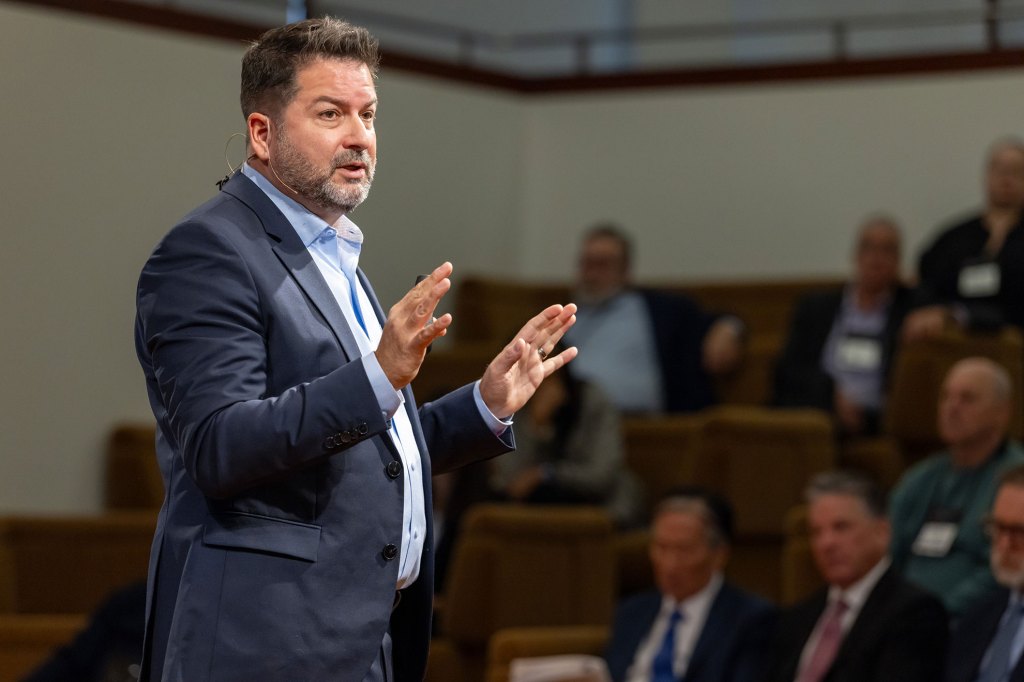
Jeff Olivet.
Photo by Russ Campbell @russcamphoto
That deficit hits those with low incomes hardest. Today, only 35 percent of the nation’s lowest-income residents, and just 50 percent in the next-lowest income category, can find housing they can afford.
More resources are needed, and some of them can come from business, speakers said.
One example is Amazon’s $3.6 billion Affordable Housing Fund, which provides grants and low-interest loans to developers and has already funded 21,000 affordable homes in three areas: Nashville, Washington State’s Puget Sound region, and the Capitol region around Washington, D.C., and Virginia.
Michael Carney, president of the U.S. Chamber of Commerce Foundation, said businesses also have the ear of politicians and, as they have in the past, can work together to sway policy.
During the COVID-19 pandemic, in 2021, for example, the Delta variant hit India first and hard, causing huge amounts of death and suffering. Washington, though, was focused on domestic issues, not India. So the U.S. Chamber of Commerce, the Chamber Foundation, and the Business Roundtable convened a meeting of 45 global CEOs, Carney said.
“It was horrific what was happening. It was so bad that crematoria were melting,” Carney said. “In this Zoom meeting these CEOs came together and said, ‘This is unacceptable.’”
Within a week of that meeting, he said, the U.S. government shifted some attention onto India, and the business group, using corporate contributions, becamethe world’s largest private purchaser of ventilators, which they sent to India.
“That is the power of business,” Carney said, adding that those insights also apply to homelessness. “The big lesson we learned from our experience during COVID was that the-whole-of-society problems require the-whole-of-society solutions.”