
 Featured series


Tag: National Cancer Institute
-
Nation & World
New weapon against breast cancer
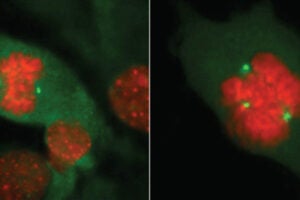
Levels of a molecular marker in healthy breast tissue can predict a woman’s risk of getting cancer, according to new research from the Harvard Stem Cell Institute.
-
Nation & World
How much exercise is enough?
“We found that adding low amounts of physical activity to one’s daily routine, such as 75 minutes of brisk walking per week, was associated with increased longevity: a gain of 1.8 years of life expectancy after age 40, compared with doing no such activity,” explained Harvard Medical School Professor of Medicine I-Min Lee.

-
Nation & World
When skin cancer cells resist drug treatment
Harvard researchers have found that although tailored drugs can eradicate melanoma cells in the lab, they often produce only partial, temporary responses in patients. Researchers have now learned that normal cells that reside within the tumor, part of the tumor microenvironment, may supply factors that help cancer cells grow and survive despite the presence of…

-
Nation & World
Insight on triple-negative breast cancer
Scientists from Harvard-affiliated Brigham and Women’s Hospital and Dana-Farber Cancer Institute and their colleagues have found a genetic marker that predicts which aggressive “triple-negative” breast cancers and certain ovarian cancers are likely to respond to platinum-based chemotherapies.

-
Nation & World
Red meat raises red flags
A new study by Harvard School of Public Health researchers has found that red meat consumption is associated with an increased risk of total, cardiovascular, and cancer mortality.

-
Nation & World
Right time for ‘end-of-life’ talk
A study by Harvard-affiliated Dana-Farber Cancer Institute finds that most terminally ill cancer patients discuss end-of-life care with physicians but that such discussions often occur late in their illness.
-
Nation & World
Breathing easier with lung regeneration
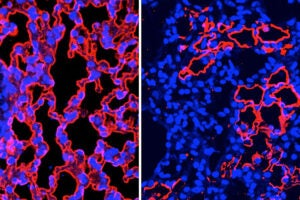
Harvard researchers have cloned stem cells from the airways of the human lung and have shown that these cells can form into the lung’s alveoli air sac tissue. Mouse models suggest that these same stem cells are deployed to regenerate lung tissue during acute infection, such as during influenza.
-
Nation & World
Health care disparities for disabled
Two decades after the Americans with Disabilities Act went into effect, people with disabilities continue to face difficulties meeting major social needs, including obtaining appropriate access to health care facilities and services.

-
Nation & World
Grant backs study of cancer-obesity link
The Harvard School of Public Health has been awarded a five-year, $10 million grant from the National Cancer Institute for a new research center to study the relationship between obesity and cancer.

-
Nation & World
When to alter cancer screenings
Not only is it important for physicians to be fully informed about any cancer in their patients’ family histories, but a massive new study led by a Harvard researcher at Massachusetts General Hospital (MGH) and a University of California scientist indicates that it is important to update that history whenever there are contemporaneous changes in…
-
Nation & World
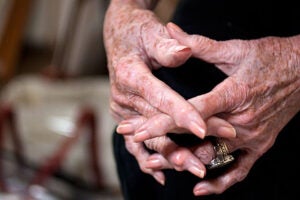
The ‘core pathway’ of aging
Harvard researchers at the Dana-Farber Cancer Institute have identified the root molecular cause of a variety of ills brought on by advanced age, including waning energy, failure of the heart and other organs, and metabolic disorder.
-
Nation & World
Genes tied to prostate cancer uncovered
For the first time, researchers have laid bare the full genetic blueprint of multiple prostate tumors, uncovering alterations that have never before been detected and offering a deep view of the genetic missteps that underlie the disease.

-
Nation & World
When ‘watch and wait’ works best
Harvard researchers have found that as many as 50 percent of young girls treated for germ cell ovarian tumors might be spared chemotherapy using a “watch and wait” strategy to determine if the follow-up treatment is needed.
