Featured series


Tag: JAMA
-
Nation & World
Daily soft drink linked to increased risk of liver disease
Study finds women who consumed sugar-sweetened beverage daily had higher risk of developing liver cancer, chronic liver disease.

-
Nation & World
Sharper vision, sharper mind?
A new study in JAMA Internal Medicine makes a strong case that removing cataracts may reduce your risk for developing dementia.

-
Nation & World
Walk this way
For many older women, the 10,000-step-a-day paradigm may seem daunting, but a new study suggests just 7,500 confers the same mortality-lowering benefit.

-
Nation & World
Study sees little danger from ondansetron during first trimester of pregnancy
A new study from Brigham and Women’s Hospital finds that pregnant women taking the common anti-nausea medication ondansetron during the first trimester have no increased risk of cardiac malformations and only a slight increased risk of oral clefts.

-
Nation & World
Older, heavier, more at risk
A new study shows weight gain during young and middle adulthood may increase risk of chronic diseases and premature death, and decrease the likelihood of achieving healthy aging.

-
Nation & World
Weighing the benefits
A report by Harvard researchers has concluded that the benefits of stopping smoking far exceed the risks from any associated weight gain.

-
Nation & World
Weight and mortality
In January, when the Journal of the American Medical Association (JAMA) published a meta-analysis of 100 studies that probed the relationship between body mass index and mortality — studies that found slightly overweight people have lower all-cause mortality than normal weight and underweight people — media around the globe trumpeted the news.

-
Nation & World
Doctor knots
Harvard researchers have developed a method to determine the effect of social networks among doctors on cost and quality of care across the nation.

-
Nation & World
When a calorie is not just a calorie
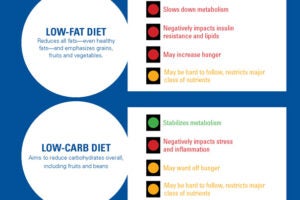
A new study by Harvard researchers and published in the Journal of the American Medical Association (JAMA) challenges the notion that “a calorie is a calorie.”
-
Nation & World
PFCs may hinder vaccine response
Perfluorinated compounds (PFCs), widely used in manufactured products such as non-stick cookware, waterproof clothing, and fast-food packaging, were associated with lowered immune response to vaccinations in children in research led by Philippe Grandjean of the Harvard School of Public Health.

-
Nation & World
Canned soup linked to higher BPA levels
A new study from researchers at the Harvard School of Public Health has found that the volunteers who consumed a serving of canned soup each day for five days had a more than 1,000 percent increase in urinary bisphenol A (BPA) concentrations compared with the group who consumed fresh soup daily for five days. The…

-
Nation & World
When to alter cancer screenings
Not only is it important for physicians to be fully informed about any cancer in their patients’ family histories, but a massive new study led by a Harvard researcher at Massachusetts General Hospital (MGH) and a University of California scientist indicates that it is important to update that history whenever there are contemporaneous changes in…