
 Featured series
Tag: Egypt
-
Nation & World
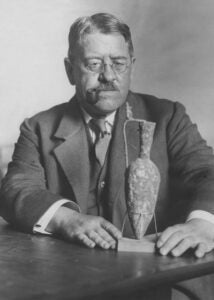
Life seeking answers at Giza, Nubia
Egyptologist George Reisner transformed the field, and a biography by Peter Der Manuelian explores not just his career, but his life during what some consider the golden age of Egyptian archaeology.
-
Nation & World
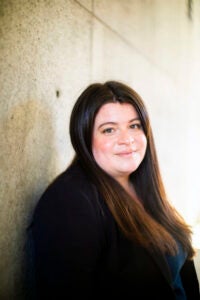
What coin tells you about realm
New classics professor Irene Soto Marín mines answers to question about ancient Egyptian life, economy from everyday artifacts.
-
Nation & World
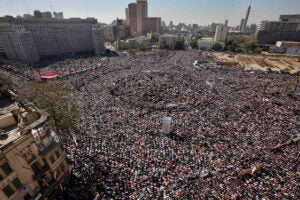
10 years later: Was the Arab Spring a failure?
Ten years later, Arab scholars and analysts on campus take a closer look at the uprising known as the Arab Spring.
-
Nation & World
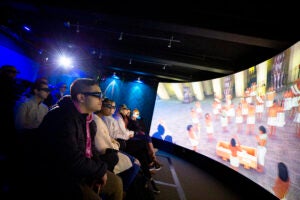
Armchair travels with a purpose
Digital Giza Project lets scholars virtually visit sites in Egypt and beyond and, even print them in 3-D.
-
Nation & World
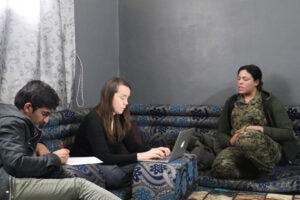
In the crosshairs of an academic crackdown
Sociologist Amy Austin Holmes, an associate professor at the American Unviersity in Cairo and a visiting scholar at the Weatherhead Center, thought her research was “safe” — until she was labeled an operative by Egypt’s authoritarian regime.
-
Nation & World
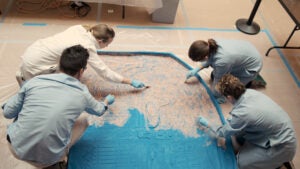
A cast fit for an Egyptian king
Harvard students have created a replica of the ‘Dream Stela’ that rests between the paws of the Great Sphinx in Giza.
-
Nation & World
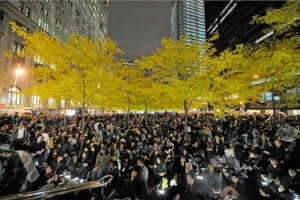
Potential en masse
Michael Kimmelman of The New York Times talks about the importance of public space, his role as a critic, and the art and beauty of architecture. Kimmelman spoke at the Radcliffe Institute on Feb. 6.
-
Nation & World
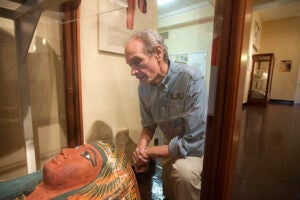
‘Wonderful things,’ indeed
Bob Brier of Long Island University traced the history of “Egyptomania” in a Harvard talk.
-
Nation & World
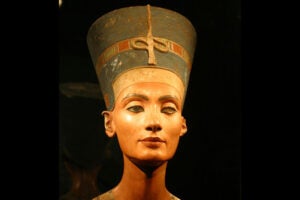
Nefertiti as sensual goddess
A visiting lecturer suggests that ancient Egypt’s Queen Nefertiti wasn’t just the powerful independent woman people imagine she was, but something of a sex goddess, too.
-
Nation & World
Piecing together Egypt’s rupture
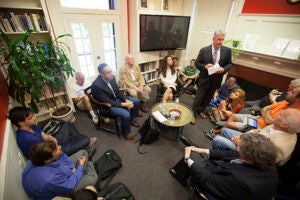
It was the Muslim Brotherhood’s success at the ballot box and the poor prospects for opposition candidates in future elections that were at the root of last summer’s military takeover in Egypt, a Harvard Kennedy School Middle East specialist said Sept. 5.
-
Nation & World
Egypt boils over
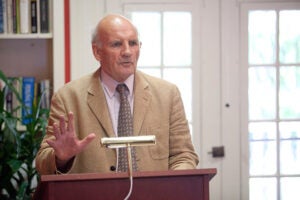
The Gazette spoke with Harvard’s E. Roger Owen, A. J. Meyer Professor of Middle East History Emeritus, about the build-up to chaos in Egypt.
-
Nation & World
A different take on Tut
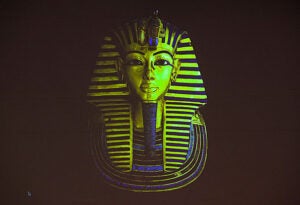
French Egyptologist Marc Gabolde offered a different interpretation of the DNA evidence on King Tut’s lineage in a talk at Harvard’s Science Center.
-
Nation & World
‘A Whisper to a Roar’ sparks discussion
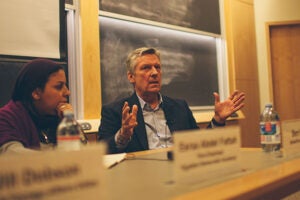
Panelists convened at the Harvard Kennedy School on Monday to discuss individuals’ motivations to risk their lives to fight for democracy.
-
Nation & World
Egypt’s revolution: A work in progress
Despite increasing dissatisfaction with the progress of political reforms, an Egypt expert said Monday that the nation’s revolution, which began during the Arab Spring uprisings, is still just beginning.
-
Nation & World
Power, personified
In a talk on his book “The Rise and Fall of Arab Presidents for Life,” Professor Roger Owen described how the Arab world’s dictators came to power — and how their curious political network helped fuel the eventual uprisings against some of them.
-
Nation & World
The revolution continues
In a conversation that ranged from the recent parliamentary elections to the ongoing sexual abuse of women to a new wave of journalists, panelists at the Feb. 2 Harvard Kennedy School Forum on Egypt expressed both fear and hope for a country still in the midst of a revolution.
-
Nation & World
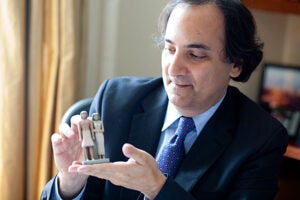
The future of archaeology
Smitten as a boy with the wonders of ancient Egypt, archaeologist Peter Der Manuelian deep into excavations but also wedded to the Web.
-
Nation & World
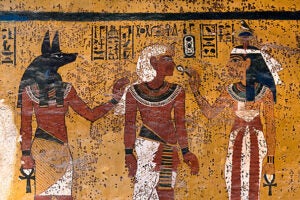
Tut, tut!
Ralph Mitchell, a Harvard professor and authority on cultural heritage microbiology, investigates “fingerprints” left on the walls of Egyptian King Tutankhamen’s tomb by ancient microbes.
-
Nation & World
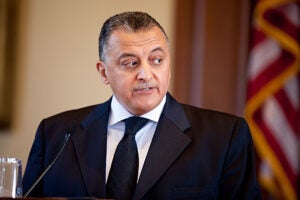
Whither Egypt
Though a street revolution in Egypt succeeded against long odds, the country faces the harsh reality of forging a new social contract for governance. Not even the deputy chief justice of the Supreme Constitutional Court of Egypt, who spoke at Harvard Law School April 14, could predict that Egypt will successfully make the transition to…
-
Nation & World
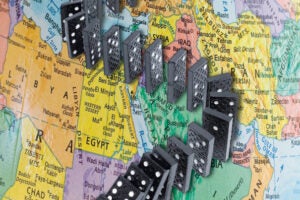
The tipping point
Seemingly overnight, people in the Mideast and North Africa have risen in anger to demand more freedom. Is this the beginning of democracy in the Arab world, or a new era of political chaos? Harvard analysts offer insights on what is likely to come next.
-
Nation & World
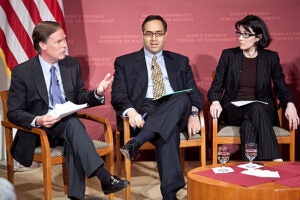
Focus on Egypt
Harvard Kennedy School faculty members and scholars offer their varied perspectives on the situation in Egypt via a website that is being updated regularly.
-
Nation & World
An ‘extraordinary moment’
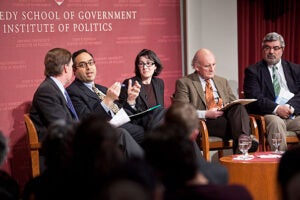
The protests that have rocked the Arab world in recent weeks have left many observers wondering if the region’s citizens will achieve self-government after decades of dictatorial rule. As Egyptians continued to demonstrate, a crowd flocked to the John F. Kennedy Jr. Forum at the Institute of Politics Feb. 3 to hear several Harvard analysts’…
-
Nation & World
Hip-hop’s global reach
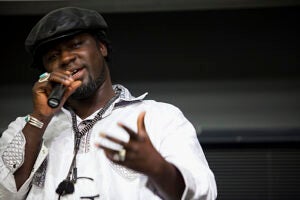
A two-day conference explores the global reach of hip-hop and examines how teachers can use it in the classroom to convey important lessons about art, culture, language, and society.
-
Nation & World
Harvard University and Arab Republic of Egypt announce fellowship program to advance public health, education, and government
Harvard University and the Arab Republic of Egypt announced today the creation of a new fellowship program to provide financial support to students from Egypt accepted to the Harvard Graduate School of Education, Harvard School of Public Health, or Harvard’s Kennedy School of Government. This program has been established by an endowment of $10 million…
-
Nation & World
Free tour through ancient times
The Semitic Museum will sponsor a docent-led tour of its “Ancient Egypt: Magic and the Afterlife” and “Cyprus, the Cesnola Collection” exhibits on April 12 at 12:15 p.m. The event is free and open to the public.