Featured series
Tag: Civil Rights
-
Nation & World
‘Living witness’ to a country’s turbulent progress
Memoir details Drew Gilpin Faust’s coming-of-age amid the transformations of mid-century America.
-
Nation & World
Heading South in search of the real heart of America
Imani Perry returns to Alabama to interview Angela Davis, another daughter of Birmingham, in excerpt from new book
-
Nation & World
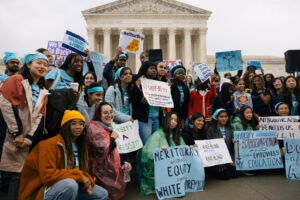
‘Defend Diversity’
Harvard students join others from around nation in Supreme Court rally supporting race-conscious admission policies.
-
Nation & World
Harvard files brief with Supreme Court in admissions case
In a brief filed Monday with the Supreme Court, Harvard defended its interest in pursuing the benefits of student-body diversity and the consideration of race as one factor among many.

-
Nation & World
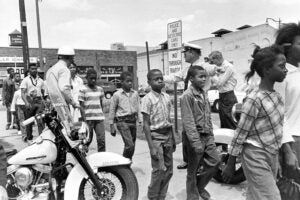
Rescuing MLK and his Children’s Crusade
A book by Radcliffe Dean Tomiko Brown-Nagin traces Martin Luther King’s desperation and the savvy legal tactics of Constance Baker Motley.
-
Nation & World
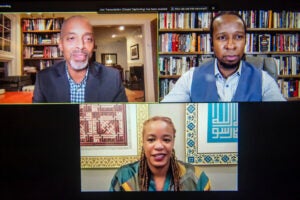
Where are we now, 16 months after George Floyd?
As part of the Truth and Transformation conference at Harvard Kennedy School, Ibram X. Kendi and Heather McGhee spoke about the challenges the movement faces.
-
Nation & World
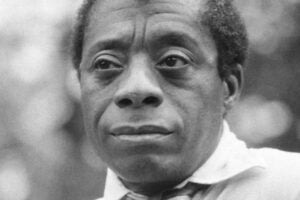
Lessons from James Baldwin on betrayal and hope
Princeton’s Eddie Glaude and Harvard Professor Cornel West discuss Glaude’s “Begin Again: James Baldwin’s America and Its Urgent Lessons for Our Own,” and the hope Baldwin saw for change.
-
Nation & World
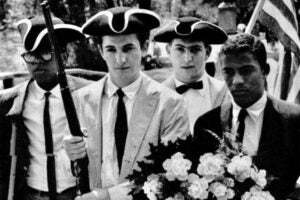
As the nation shifted from ‘Negro’ to black
Kent Garrett and Jeanne Ellsworth’s “Last Negroes at Harvard” chronicles the lives of the groundbreaking 18 black members of the Class of 1963.
-
Nation & World
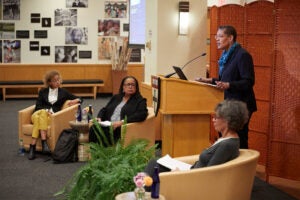
How slavery still shadows health care
“400 Years of Inequality” focused on how the effects of slavery have persisted, maintaining a basic disparity in health care.
-
Nation & World
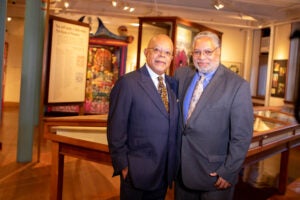
The story of a museum and of America
Lonnie G. Bunch III, secretary of the Smithsonian Institution, recalls his challenges in founding the National Museum of African American History and Culture
-
Nation & World
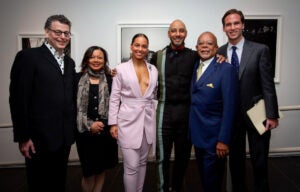
Bringing art to the people it depicts
The rapper and record producer Kasseem Dean, also known as Swizz Beatz, and his wife, Alicia Keys, own the largest private collection of Gordon Parks’ photographs in the world. They’re sharing it at Harvard’s Ethelbert Cooper Gallery, and that’s just the beginning.
-
Nation & World
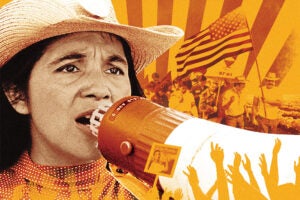
Dolores Huerta to receive Radcliffe Medal
Dolores Huerta, the civil rights icon who fought to build a nationwide coalition protecting farm workers, will receive the Radcliffe Medal on May 31. A webcast will be available during the event.
-
Nation & World
Racial and economic disparities intertwined, study finds
While African-Americans have moved to higher ranks on the income distribution scale in the decades since the Civil Rights Movement, those improvements have largely been blunted by rapid income growth for the richest members of society and income stagnation among lower- and middle-income families.
-
Nation & World
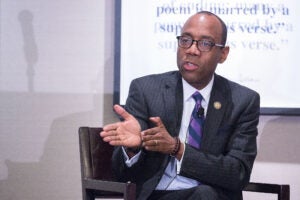
Former president, CEO of NAACP joins Kennedy School
The former president and CEO of the NAACP, Cornell William Brooks, has joined the Harvard Kennedy School as professor of the practice of public leadership and social justice. He is the first leader of a national Civil Rights organization to join the School’s senior faculty.
-
Nation & World
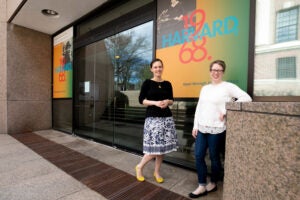
A year that changed students, and students changed the world
“Harvard, 1968,” a new exhibition at Pusey Library, explores student and faculty experiences from a time of turbulence.
-
Nation & World
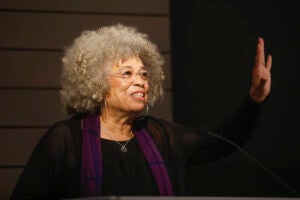
People everywhere are on the move
Famed activist Angela Davis was guest speaker at a Harvard Art Museums event co-sponsored by the DACA Seminar.
-
Nation & World
Opening the gates, closing the education gap
In Washington, D.C., gathering, Faust and faculty discuss closing the education gap through equity.
-
Nation & World
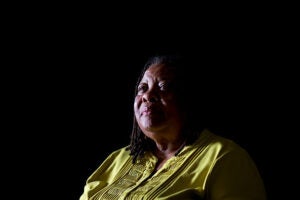
For Ruby Sales, long road to hope
Civil Rights icon Ruby Sales will talk about her life and activism in a visit to the Divinity School.
-
Nation & World
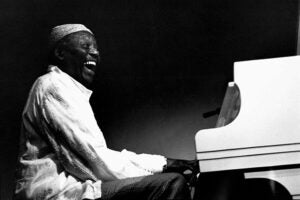
The sweep of jazz history
Pianist and composer Randy Weston visits campus on the eve of Harvard acquiring his personal archive.
-
Nation & World
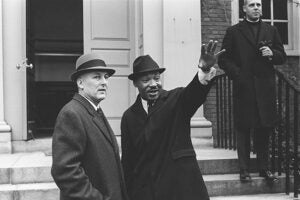
King’s Harvard connections
Civil Rights leader Martin Luther King Jr. may be most associated with his efforts to desegregate the South, but the minister also had a valuable and lasting relationship with New England, and with Harvard.
-
Nation & World
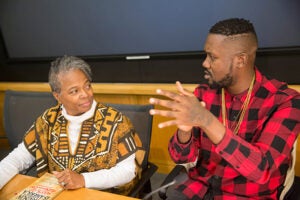
Civil rights, then and now
Through the prism of St. Louis and Ferguson, a panel on Civil Rights discussed how the movement has evolved, and where common ground remains.
-
Nation & World
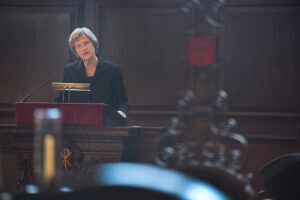
Remembering, and returning to, Selma
Harvard President Drew Faust delivered Morning Prayers on Friday, offering those gathered in Appleton Chapel for the solemn service a deeply personal reflection on her experience with the Civil Rights Movement 50 years ago.
-
Nation & World
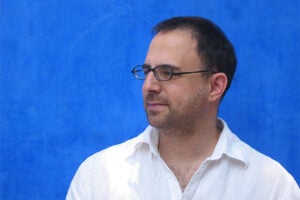
Ferguson: Through a global lens
The events unfolding in Ferguson, Mo., are being watched around the world. The way the grand jury’s decision and its aftermath are being perceived abroad may be categorically different than how they are understood at home, according to Harvard Kennedy School historian and Associate Professor Moshik Temkin on this week’s episode of PolicyCast.
-
Nation & World
Public Service Fellows gather
President Drew Faust welcomed the Presidential Public Service Fellows back to campus Oct. 2 with lunch at the Harvard Faculty Club.

-
Nation & World
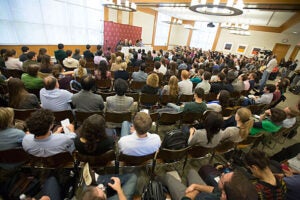
The Supreme Court, redux
Scholars from Harvard Law School reviewed some of the critical decisions the U.S. Supreme Court handed down in its spring rulings.
-
Nation & World
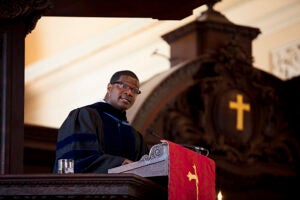
Recalling King’s later legacy
The Rev. Jonathan Walton, Harvard’s Pusey Minister of Memorial Church and Plummer Professor of Christian Morals, galvanized Boston’s 43rd annual Martin Luther King Jr. Memorial Breakfast with a keynote speech that contrasted the present-day ”sanitized and sterilized” version of the civil rights leader’s dream for America with the real message of economic inclusiveness that he…
-
Nation & World
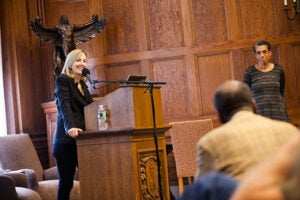
Back to Birmingham
Historian Diane McWhorter, a Harvard fellow, finds a surprising nexus between the racial segregation of Birmingham, Ala., in the early 1960s and some of the attitudes of the Third Reich.
-
Nation & World
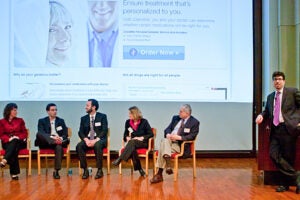
Ethics and genetics in the digital age
Two panel discussions, organized by the Harvard School of Engineering and Applied Sciences, examined the “promise and perils” of creating digital repositories of genetic records and considered the policy implications of an individual’s right to access, control, and interpret his or her own genetic data.
-
Nation & World
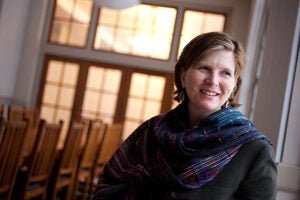
History in the making
When the Berlin Wall fell, student Mary Lewis knew she should study the past. Now a professor, she is an authority on how France evolved.
-
Nation & World
Slavery in the North, and more
Du Bois Institute hosts a book party celebrating former and current fellows’ recent publications, including a title that examines little-known slavery in the North.